

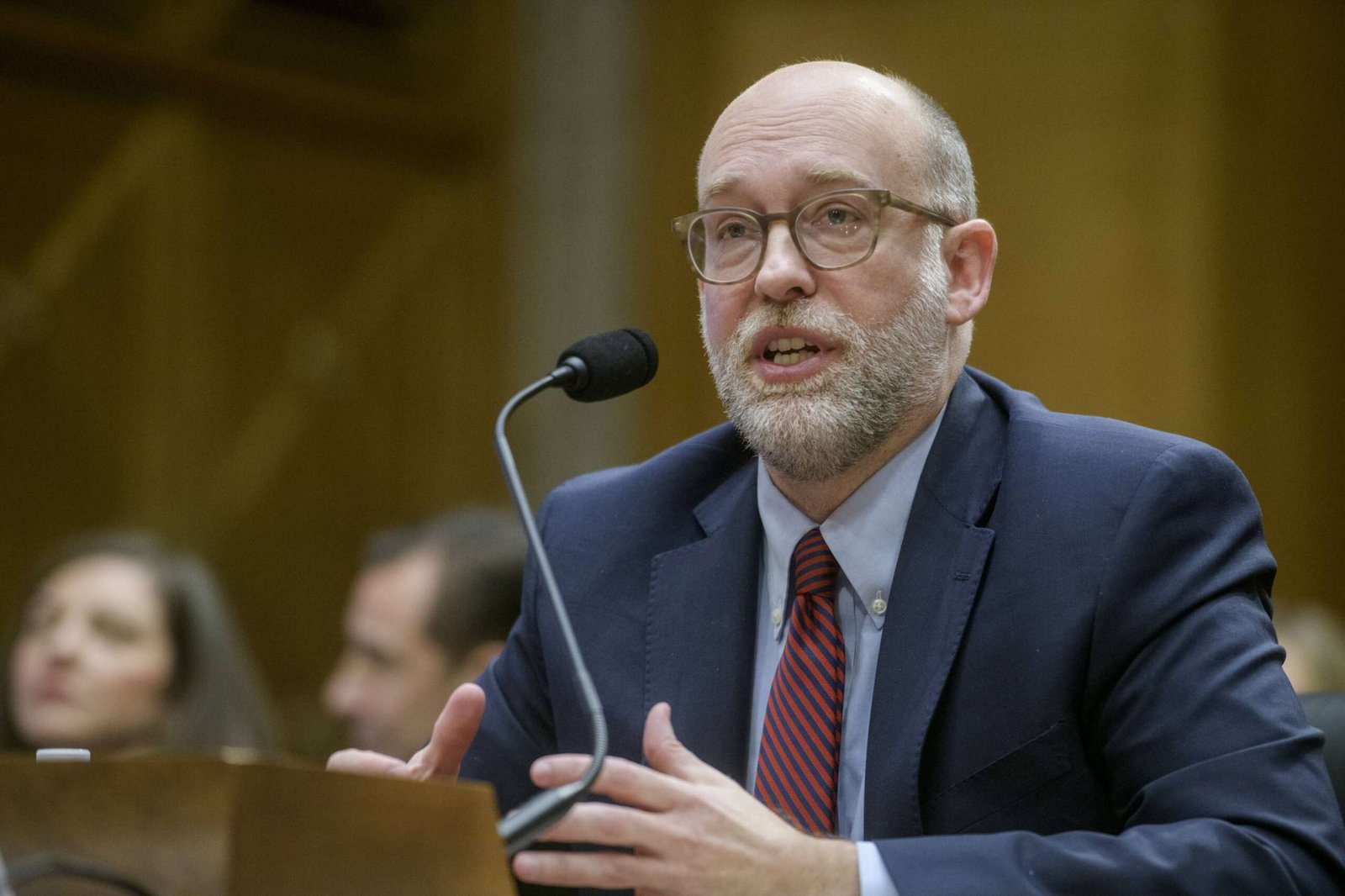
OMB Director Russell Vought says there are no plans to do a closing report on DOGE’s controversial, cost-cutting blitz across government.
With the Department of Government Efficiency’s official mandate coming to an end on the Fourth of July, the Office of Management and Budget has no plans to complete a final report on DOGE-led efforts to drastically reshape the federal government and cut hundreds of thousands of federal employees.
During a June 30 House Appropriations financial services subcommittee hearing, Chairman David Joyce (R-Ohio) pointed to how the Trump administration’s fiscal 2027 budget request includes no mention of DOGE.
“Is there something that you’re going to present or is there somewhere we can find what exactly DOGE accomplished as far as reductions in dollars spent, people at agencies, or whatever? Is there going to be some documentation of what took place?” Joyce asked OMB Director Russell Vought.
“We have no plans to do kind of a closing DOGE report,” Vought responded. “We’re always happy to give you our assessment of that work. I think it made some really important strides. You all passed many of the reductions that — that DOGE found just through the normal appropriations process when you ended the year so much lower than the year before. We did some of that in the rescissions package. And so many of their — the fruits of their labor are sprinkled all across the government, but I’m always happy to work with you on what you feel like you need.”
President Donald Trump’s Jan. 20, 2025, executive order establishing DOGE directed a termination date of July 4, 2026. Reuters reported that DOGE effectively disbanded as a centralized entity eight months ago, though Trump administration officials claimed otherwise. Some former high-ranking DOGE officials have been hired as permanent staff in federal agencies.
Still, DOGE in 2026 has been far quieter compared to the group’s spring 2025 blitz across government agencies. The U.S. DOGE Service – which houses the temporary DOGE organization – has lately been focused less on pure cost cutting and more on citizen services projects, similar to its predecessor, the U.S. Digital Service.
And DOGE.gov went offline sometime earlier this month.
The group’s muted final days are in stark contrast to its central role in the early days of Trump’s second term. Elon Musk, DOGE’s original leader, set a goal of cutting $2 trillion from the federal budget. DOGE would eventually claim $215 billion in savings, though even those figures remain disputed by experts.
More than 260,000 federal employees left government last year under DOGE-led efforts. Some agencies have started hiring again after acknowledging they lost too many staff.
During the hearing with Vought this week, Rep. Glenn Ivey (D-Md.) pointed to how some agencies like the Nuclear Regulatory Commission had to quickly re-hire staff who were cut by DOGE.
“I think part of the concern with respect to DOGE, and I think most of my colleagues would agree, cutting employees that aren’t needed is fine, but it’s clear that what DOGE did was they advocated cutting a lot of people, a lot of federal government employees who were doing great work,” Ivey said. “They didn’t know what they were talking about when they advocated for those cuts, then they quickly realized that they had to bring people back. And that really devastated the individuals’ lives who were caught up in that scenario.”
OMB’s slow hiring
Meanwhile, Vought also provided an update on OMB efforts to hire more staff. OMB received $100 million in last year’s reconciliation bill to implement agency reorganizations plans, including by hiring more staff at the White House office.
But Vought said less than $10 million of that money has been spent, pointing to slow hiring. He said OMB’s goal is to increase its current staff of 500 to about 675 full-time equivalent employees.
“We haven’t spent that money yet because we’re not going to obligate or apportion to the need until we are ready to actually hire people,” Vought said. “And I will tell you, it is not quick to be able to hire the FTEs, but it is one of my highest priorities, to be able to scale to that.”
Copyright
© 2026 Federal News Network. All rights reserved. This website is not intended for users located within the European Economic Area.
