

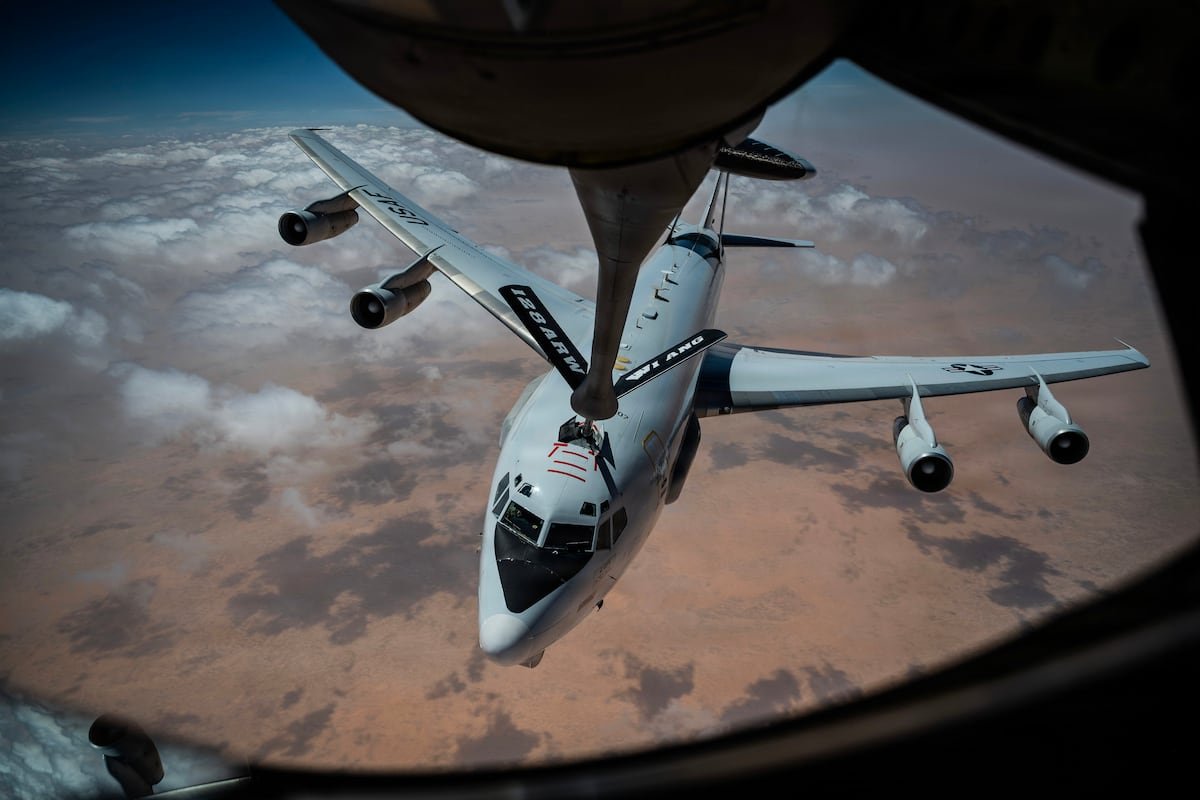
An updated report from the Congressional Research Service, or CRS, now lists 81 U.S. military aircraft as lost or damaged since the United States launched Operation Epic Fury against Iran on Feb. 28. That is nearly double the 42 aircraft the research service counted in May, as Defense News reported at the time.
The Oct. 5 revision adds jets damaged in a September Iranian strike on a base in Jordan, helicopter losses drawn from a Pentagon inspector general report and a sharply higher count of lost Reaper drones.
CRS cautions that the total is not a count of destroyed aircraft, noting, “Some damaged aircraft may have been returned to active service.”
The research service works from public information, drawing on news reports and statements from the Defense Department and U.S. Central Command. This version also draws on the inspector general report published Sept. 14. CRS said its count “may remain subject to revision due to multiple factors, which may include classification, ongoing combat activity, and attribution.”
The deadliest loss on the list remains the March 12 crash of a KC-135 Stratotanker. Two of the seven KC-135s in the report were involved in an incident over friendly airspace. One crashed in western Iraq, killing all six crew members. The other made an emergency landing at Ben Gurion Airport in Israel, Defense News reported. Central Command said the loss was not the result of hostile or friendly fire.
A Navy squadron commander was lost when one of the newly listed aircraft went down. An MH-60S Sea Hawk from the aircraft carrier George H.W. Bush made an emergency landing in the Arabian Sea on July 1. The Navy said there was no indication of hostile action.
Three of the four crew members aboard were recovered. The Navy identified the fourth as Cmdr. Gabriel Edwards, commanding officer of Helicopter Sea Combat Squadron 5, and suspended its search for him July 5 after more than 102 hours. Acting Navy Secretary Hung Cao directed that Edwards be posthumously promoted to captain.
Several of the aircraft on the list trace to the April mission to recover the two-person crew of an F-15E Strike Eagle shot down over Iran. Both crew members were rescued in separate search-and-rescue operations. That jet is one of 12 Strike Eagles on the list.
An A-10 Thunderbolt II supporting the rescue mission crashed after taking enemy fire, Joint Chiefs Chairman Air Force Gen. Dan Caine said. The pilot flew the damaged jet out of Iran and ejected over friendly territory, where he was quickly recovered.
An HH-60W Jolly Green II combat rescue helicopter in the same task force was damaged by small-arms fire, Caine said.
The second crew member was rescued nearly two days later in a separate special operations mission. Two MC-130J Commando II transports that had flown the commandos into Iran suffered a mechanical failure and could not take off, Reuters reported.
U.S. troops pulled the rescue force out in stages and destroyed the two transports and four helicopters rather than leave sensitive equipment behind. The inspector general later said U.S. forces destroyed four AH-6 Little Bird helicopters during rescue operations, likely those four. The May version listed no Little Birds, a gap Defense News noted at the time.
Iranian strikes on two air bases account for 15 of the aircraft on the list, all damaged on the ground.
An Iranian missile strike on Prince Sultan Air Base, Saudi Arabia, damaged five KC-135s on the ground in mid-March, Defense News reported, citing two U.S. officials who spoke to The Wall Street Journal. Iran hit the base again on March 27, damaging an E-3 Sentry in what the CRS report, citing a September article, described as “a direct hit.”

The seven KC-135s on the list come from a fleet that was already stretched thin. As of March, the Air Force had 373 KC-135s and 103 KC-46As, the Government Accountability Office, or GAO, said in a June report. GAO found the fleet fell short of the Air Force’s own readiness goals every year from fiscal 2019 through 2025.
The E-3 fleet is far smaller. The Air Force operated only 16 E-3s before the war began, and six had deployed to Prince Sultan. CRS cites the E-3 as an example of aging, scarce aircraft where losses could leave the military short elsewhere in the world, and suggests Congress may want to weigh that risk.
The other base struck by Iran, Muwaffaq Salti Air Base in Jordan, came under ballistic missile attack Sept. 8-9. The second A-10 on the list lost a wing, and eight F-15Es took light damage and were returned to service, a U.S. official told Reuters.
The official said U.S. forces fired roughly 30 Patriot interceptors to defend the base. Three Army soldiers were killed there in a separate missile attack in July.
Drones account for most of the increase since May. The report now counts 45 MQ-9 Reapers lost, citing an Aug. 13 article in which three U.S. officials said the military had lost “at least 45.” That is up from as many as 30 destroyed through June 30, according to the inspector general report.
Air Force Chief of Staff Gen. Kenneth Wilsbach has called the Reaper perhaps the most valuable player of Operation Epic Fury. The Air Force had 135 MQ-9As as of May, down from 351 in fiscal 2022 as the service retired older models and lost aircraft to accidents and combat, according to a separate Sept. 23 CRS report.

The service had already stopped buying the drone in favor of a planned successor, and its fiscal 2027 request included no money for new Reapers, Military Times reported.
The remaining three of the 12 Strike Eagles on the list were the war’s first aircraft losses. A Kuwaiti F/A-18 Hornet mistakenly shot them down over Kuwait on March 1-2, Defense News reported. All six aircrew ejected and were recovered, Central Command said.
The list also includes an Army AH-64 Apache that the inspector general said was shot down over the Strait of Hormuz. U.S. officials said a Navy drone boat rescued its two-person crew after the June 8 crash, calling it the first rescue of its kind.
Iranian ground fire also damaged an F-35A Lightning II during a combat mission over Iran on March 19, forcing an emergency landing at a U.S. air base in the region. The aircraft landed safely, and the pilot was in stable condition, Central Command spokesman Navy Capt. Tim Hawkins said at the time.
The report also counts three MQ-1 drones downed by Iran, one confirmed by Central Command in May and at least two more reported by U.S. officials in September. Central Command has not specified which variant was lost. The Air Force retired its MQ-1 Predators in 2018, but the Army still flies the related MQ-1C Gray Eagle.
A Navy MQ-4C Triton surveillance drone crashed April 9 at an undisclosed location, according to Naval Safety Command data, which did not give a cause.

The revision leaves unresolved two discrepancies Defense News flagged in May.
The report still lists the E-3 as damaged. Multiple outlets reported the aircraft was destroyed. Photos published by The War Zone purportedly show tail 81-0005 with its rear fuselage burned through, and Air & Space Forces Magazine reported the damage likely renders the aircraft unrepairable.
The report also still counts one damaged HH-60W. At an April 6 news conference, Caine described two helicopters in the rescue flight taking fire, with a crew member on the trailing aircraft suffering a minor injury.
The war’s cost has also climbed significantly since May. Acting Pentagon Comptroller Jules Hurst told House appropriators on May 12 that it was closer to $29 billion. The Congressional Budget Office, or CBO, estimated in September that the war had cost the Pentagon about $38 billion through Aug. 1.
That total includes the cost of replacing equipment lost in battle, which CBO put at $1.9 billion, or as much as $3.3 billion if the Pentagon sought emergency funding to replace all of it. Among that equipment is a THAAD missile defense radar Iran destroyed. CBO said its estimate relied on government databases and public reports because the Defense Department did not respond to its requests for information.
The White House asked Congress in June for $87.6 billion in emergency funding, including $67.1 billion for the Pentagon. Congress has not approved the request.
Michael Scanlon is a defense journalist covering air and space warfare. A former U.S. Air Force A-10 crew chief, he has supported land and sea programs for the U.S. Army, Navy, Marine Corps and Coast Guard.
