

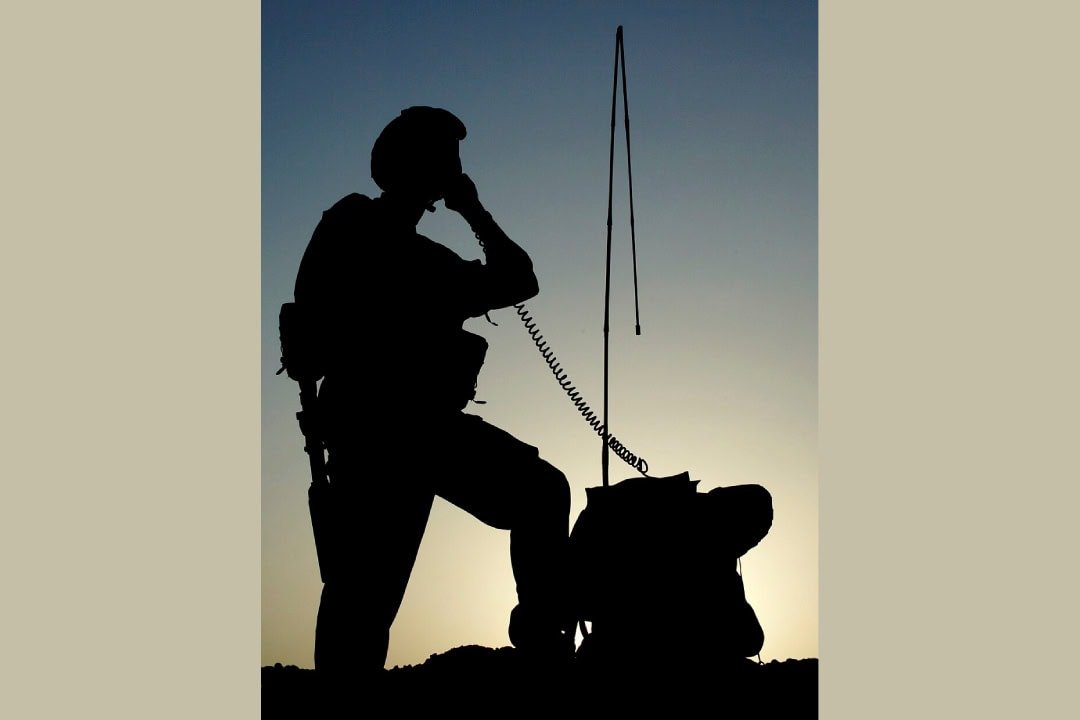

In June the United Kingdom’s Ministry of Defence awarded the first contract under its Tactical Communications Framework procurement vehicle.
The Tactical Communications Framework (TCF) is an eight-year project which provides “central government and wider public sector organisations with specialised military grade tactical communications and information systems”, according to the UK Ministry of Defence (MOD). Worth around $11 billion the TCF undertaking represents an important step in the MOD’s troubled efforts to furnish the country’s land forces with new tactical communications and Command and Control (C2) systems.
Frameworks
TCF comprises three frameworks, contracts for the first of which were awarded on 26th June. Framework One runs from 26th June 2026 to 25th June 2029. Framework Two commences on 26th June 2029 concluding on 25th June 2032 with Framework Three beginning on 26th June 2032 and finishing on 25th June 2034. TCF capabilities will be delivered via three specific ‘lots’ of work: Lot One covers services, specifically “(a)rchitecture design, system integration, field support, training and system sustainment activities” according to MOD literature. Lot Two focuses on rapidly deployable, secure communications and information systems. The MOD states the latter will include “complete system solutions to meet the needs of a specific user community”. Other Lot Two deliverables include “pre-integrated multicomponent capability packages that provide (the) major building blocks of a complete system”. Examples given by the ministry include vehicle-mounted and dismounted soldier systems. Finally, Lot Three sees the procurement of “discrete hardware and software components”.
Framework One will be delivered via three specific contracts, each of which corresponds to one of the Lots of work discussed above. For example, Contract One relates to Lot One work and so on. Almost 100 UK and international companies and organisations have been awarded work to fulfil Framework One. Some of these suppliers are working on all three contracts, with others working on one or two. From examining the MOD’s literature concerning Framework One, it appears the ministry has elected to procure elements of all three lots of work simultaneously with each consecutive framework. The ministry has not presented exactly what products and services each company is providing to fulfil Framework One. Nonetheless, more information to this end may arrive in the public domain as deliveries commence. MOD sources did share with Armada that, as of late August, no capabilities have been delivered through Framework One as it has only just become operational.
Morpheus and LDC4
Regular Armada readers will be familiar with the MOD’s Project Morpheus debacle. The Morpheus effort had sat within the MOD’s wider Land Environment Tactical Communications and Information System (LETACCIS) programme. LETACCIS was an overarching effort across the MOD and the UK military to overhaul the communications and C2 systems used at strategic, operational and tactical levels to support land warfare.
LETTACCIS has since evolved into the Land Domain Command, Control, Computers and Communications (LDC4) initiative. According to MOD literature, “The LDC4 programme consists of multiple projects with the aim of delivering the next generation of tactical military communications in the land environment and providing the means to make informed and timely decisions”. The ministry held a supplier’s day in February “to update the market on the current (LDC4) programme, explore key challenges and opportunities, and gain a clearer understanding of (relevant) current market capabilities and offerings”. An MOD source shared that LDC4 “is one programme that could look to use the new framework to deliver scalable, rapidly deployable tactical communications”.
Questions remain
In total, efforts to replace the existing Bowman tactical communications and C2 system have taken around a decade but have not resulted in any new systems being delivered to UK land forces. At first blush the award of the Framework One contracts are an important step in finally ending this logjam. Nonetheless, in some ways, this award raises more questions than it answers: First, exactly what capabilities will be delivered via Framework One and when will these enter service? Second, what are the timelines for the LDC4 initiative? The MOD source told Armada that “the TCF has no direct link to Project Morpheus or the legacy LETACCIS initiative. However, the LDC4 programme … is one programme that could look to use the framework to deliver scalable, rapidly deployable tactical communications systems”.
It appears that the deliverables promised by TCF and LDC4 look strikingly similar. It would be helpful if the MOD articulated exactly which capabilities are being delivered via which of these programmes. Moreover, if the LDC4 programme does not use the TCF to procure capabilities, what contracting vehicle will it use instead? The TCF Framework One contract award is a welcome development, but questions remain concerning the modus operandi, and timelines, for delivering UK land forces’ tactical communications writ large.
by Dr. Thomas Withington
