

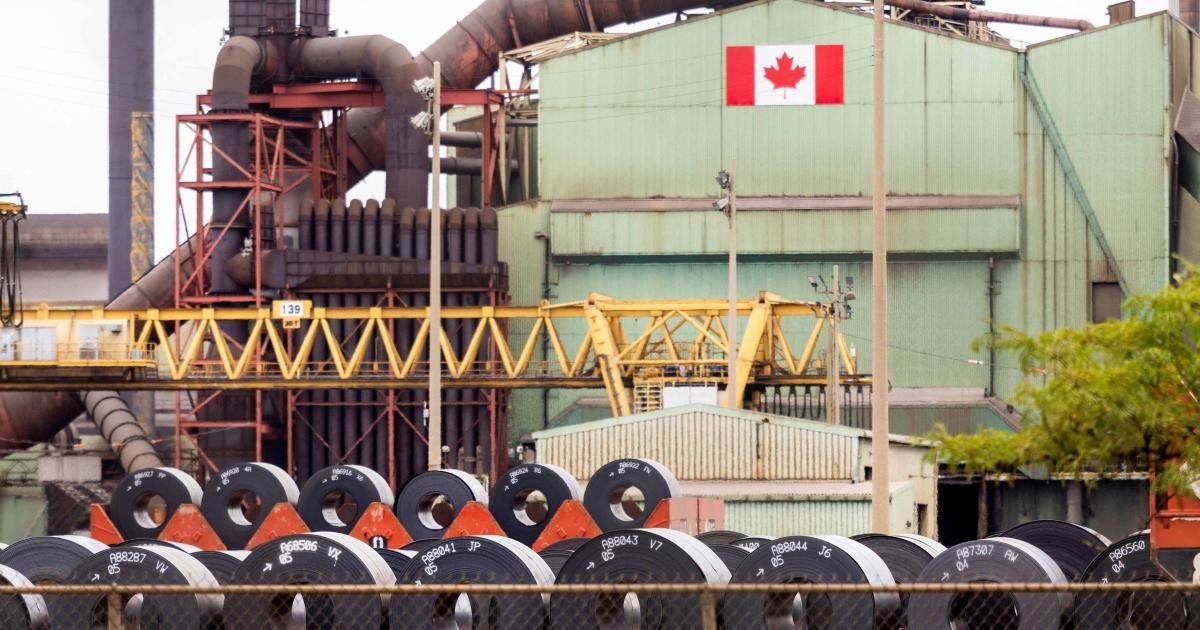
In late October 2025, the automaker Honda had to indefinitely shutter a Mexican plant that manufactures its SUVs, thanks to an unanticipated shortage of parts. More than 2,000 miles away, in Canada, it had to slash the production of its popular Civic model in half. The shortage panicked companies across North America. Stellantis created a war room to monitor the availability of critical components, and Ford began to track the run-out dates for its inventory. Hundreds of thousands of Mexican and Canadian jobs were at risk if the impact of the parts shortage spread across supply chains that were highly integrated with those in the United States. Honda would later report production-related losses of roughly $300 million from the incident.
The cause was a simple but deliberate Chinese policy. Beijing had suddenly banned global exports of semiconductors made by Nexperia, a little-known Chinese company whose parts go into airbags, braking systems, and other automotive essentials. Chinese President Xi Jinping made the move as retaliation against actions taken by the Dutch government and by U.S. President Donald Trump. Xi reversed the throttling of Nexperia’s exports only when Trump agreed, later that month, to delay the implementation of a new U.S. export control regime.
This episode bluntly revealed just how integrated North American supply chains have become—and how exposed they now are to Chinese economic coercion. An auto component can cross the U.S.-Canadian or U.S.-Mexican border seven or eight times before it ends up in a fully assembled vehicle. If Beijing targets even one country, the entire North American supply chain could shut down.
Yet all three North American governments are looking the other way. Trump’s tariffs on Canada and Mexico in 2025 and his escalating trade war with Canada this year have turned the countries’ attentions inward, onto disputes among the three partners, at precisely the moment when the threat is coming from the outside.
Washington’s refusal to renew the U.S.-Mexico-Canada Agreement (USMCA) on July 1 has set up an implicit renegotiation of the pact. The debate must not focus on the terms the three countries impose on one another; rather, it should focus on the terms they set to help one another counter China. China’s monopoly power across a variety of sectors fundamental to the North American economy is growing fast—and the more it expands, the more Mexico City, Ottawa, and Washington each become vulnerable to the relationships the other two have with Beijing. On a continent that is already tightly integrated, Washington cannot fix its own exposure to Chinese coercion unless Mexico City and Ottawa fix theirs, too.
Since 2018, Washington has begun experimenting aggressively with a mix of policies to fight back against China’s growing market dominance. Canada and Mexico will need to make a more coherent and concerted effort to join these campaigns—and the United States will need to work much harder to invite them along. The USMCA renegotiation is the place to start.
MISSING THE FOREST
In his 1992 presidential campaign, the American entrepreneur Ross Perot famously warned that the North American Free Trade Agreement would create a “giant sucking sound” as U.S. industries relocated south of the border to take advantage of Mexican workers’ lower wages. Although the pact did depress the earnings of U.S. blue-collar workers in areas with industries most exposed to new import competition from Mexico, the antipathy was mostly misplaced. One comprehensive 2015 study that added up NAFTA’s impact on consumers, workers, and industries found that it increased the United States’ economic well-being, albeit modestly, by 0.08 percent. (The impact on Mexico was slightly more positive, at 1.30 percent, and slightly negative for Canada, at negative 0.06 percent.)
NAFTA nonetheless became a political vulnerability for Democrats. After Trump entered the White House in 2017, he made renegotiating it an immediate priority. When the USMCA officially replaced NAFTA in 2020, Trump declared that its improvements constituted a “colossal victory.” The reality, however, is that the two agreements differed very little. Both mainly reduced trade barriers and committed all three governments to avoid policies that inhibited commercial flows with one another. (The second Trump administration, with its tariffs on Canada and Mexico, has subsequently proved that commitment to be meaningless.)
Both agreements, in other words, were designed to encourage trade among the three countries—not to deal with the risks posed by Chinese monopoly power. But that threat is now pressing. Xi’s 2025 semiconductor ban was his second attack on North American auto supply chains in less than six months. His first responded to Trump’s April 2025 imposition of a 145 percent tariff on imports from China; Beijing then halted global exports of rare-earth permanent magnets, another essential input for car seats, windshield wipers, motors, and cameras. Because China controls 90 percent of the world’s supply of rare-earth magnets, the shortage required Ford, among other companies, to temporarily shut down its Explorer SUV plant in Chicago—and forced Trump to reverse his tariff.
Beijing’s effective use of export restrictions in 2025 was the culmination of its so-called dual circulation strategy, which aims to make China less dependent on North American and European supply chains and simultaneously make foreign economies more dependent on China. The restrictions proved that Beijing, as Xi put it in 2020, can implement “powerful countermeasures and deterrent capabilities based on artificially cutting off supply to foreigners.”
Europe’s experience with Chinese investment reveals risks for North America.
If left unchecked, China’s monopoly power—and its value as a weapon—is likely to grow in the years ahead. The country already possesses 85 percent of the world’s battery manufacturing capacity. It accounts for over 90 percent of global refining for rare earths and graphite and more than 60 percent for cobalt, lithium, and nickel. And China has an ever-increasing global presence in other foundational sectors, including steel, aluminum, chemicals, and telecommunications equipment.
Chinese leaders have acknowledged that the country’s statist economy leads to involution, or excessive domestic competition and superfluous production—a situation that is unlikely to change any time soon. That means China’s monopoly power, and its ability to weaponize it, will expand as its surpluses force more and more foreign companies out of business.
But China’s economic juggernaut goes beyond exports. In high-tech sectors, Chinese multinational companies such as BYD, CATL, and Ming Yang are now global leaders in electric vehicles, batteries, and wind turbines, investing abroad to acquire or build up manufacturing capacity in foreign countries. Consider the growth of Chinese companies in Europe, the target of nearly a quarter of all Chinese outbound investment in 2025. Hungary has received the largest of those investments to date, with the Chinese automotive industry establishing not only a new center of gravity for European supply chains but also additional competitiveness concern for legacy French, German, and Italian carmakers.
The European experience with Chinese investment reveals multiple additional risks. Chinese subsidiaries manufacturing electric vehicles, security inspection equipment, and wind turbines in Europe have all been accused of competing unfairly with local firms by benefiting from Beijing’s subsidies. Hungary’s reliance on Chinese investment has increasingly put it at odds with the EU on other priorities, including efforts to sanction Chinese firms for their support of Russia’s invasion of Ukraine.
ONE market, ONE RISK
Washington knows it cannot unilaterally change Beijing’s economic approach. After China acceded, in 2001, to the World Trade Organization, the United States initially focused on containing the threat of unfair Chinese trade practices by imposing narrowly targeted import restrictions. When those had little effect, the first Trump administration launched a trade war; by the administration’s end, new tariffs covered roughly two-thirds of what the United States imported from China. The Biden administration maintained and made modest additions to those tariffs.
But tariffs alone proved insufficient to tackle the security risks that come with Chinese monopoly power, and Washington has begun to experiment with many more tools of industrial policy. Like the Biden administration, the second Trump administration has used government support to incentivize U.S. and allied companies to build new sources of supply outside China, including for critical minerals, chips, and batteries. Washington has discouraged Chinese firms from investing in the United States and expanded the list of American products that cannot be exported to China. It has also renewed an American interest in stockpiling.
Although the USMCA was negotiated relatively recently, it was not designed to counter the threat of Chinese market dominance. Beijing’s 2025 export restrictions showed how vulnerable each country now is to an attack on another—and revealed how much more resilient all three could be if their economies and policies were more in sync. Coordinating their efforts effectively requires some alignment of the three countries’ tariff regimes toward China, an issue on which the USMCA is mostly silent. The negotiators of the original pact did not need to contemplate how the three countries would implement complementary subsidies, investment restrictions, or export controls, as such policies were not then in vogue. Now they are.
North America’s economic integration is worth trying to save.
The more the United States undertakes comprehensive efforts to reduce its vulnerability to Chinese economic coercion, the more important it becomes for Canada and Mexico to align their own policies. Misaligned tariff rates across the three countries incentivize the transshipment of Chinese goods to U.S. consumers. They also create concerns that industries may unfairly locate in one country because it allows access to cheaper Chinese inputs not available to firms operating in the other two.
Indeed, it may be impossible to retain an integrated North American market without policy alignment. And North American integration is worth trying to save: the greater scale offered by one large USMCA consumer market permits companies to spread their fixed costs over more units of production. Fundamental differences among the three countries allow for specialization based on what workers and companies in each do best. Diversifying sourcing across a wider geography mitigates threats from climate change and public health crises, not only geopolitical risk.
Policy alignment to create alternative sources of supply outside China will entail costs. In addition to the fiscal burden of subsidies, North American consumers will have to give up some access to cheaper Chinese products today to curtail excessive dependence in the future. And all three countries will need to prepare for the unavoidable costs of Chinese retaliation.
THREE-PART HARMONY
Trump’s 2025 and 2026 tariffs pursued too many contradictory objectives. Beijing’s economic coercion clarified the most important task: to quickly create new sources of supply outside China. The ongoing USMCA negotiations present a political opportunity to pursue that objective by better aligning the countries’ tariff policies along three dimensions. First, Washington needs to reduce tariffs on imports from Canada and Mexico back to their January 2025 levels. If Ottawa and Mexico City are to bear some costs for jointly strengthening non-Chinese supply chains, they must be able to share in the jobs, profits, and other benefits that come from some North American production.
Then, Canada and Mexico need to raise some of their tariffs on China. In 2024, Canada had already matched most of the tariff increases that the United States had imposed on Chinese steel, aluminum, and electric vehicles during the first Trump administration and the Biden administration. Mexico, too, has taken steps toward tariff alignment over the past few years, including a major hike in December 2025 that covered Chinese steel, autos, and auto parts. The United States, Canada, and Mexico may need to work together to raise tariffs strategically in the future to address other vulnerabilities.
Future downward tariff adjustments with China will also need to be done in concert, lest they undermine collective North American interests. For example, Trump has proposed that the United States and China reduce their tariffs on each other on a limited set of “non-sensitive” products under a so-called U.S.-China Board of Trade. But unilaterally increasing U.S. clothing imports from China, for instance, would come at the expense of Mexico’s export opportunities. Expanding U.S. agricultural exports to China would be unhelpful if it displaces Canadian sales to China. If managed trade proves necessary to deal with China’s statist model, solidarity requires something more akin to a North America–China Board of Trade.
Aligning subsidies is also critical, because maintaining fair competition among North American companies and scaling up entire cross-border supply chains will be difficult without harmonizing how each country’s government supports its industry. Lining up industrial policies across countries is an even harder task than coordinating tariffs. Canada has a smaller economy than the United States, and Mexico is poorer, affording each a smaller budget. And asking taxpayers to fund subsidies that could end up benefiting another country’s workers is not a winner on the campaign trail.
Some progress has already been made on aligning subsidies in North America. In 2020, the first Trump administration established a Canada-U.S. Joint Action Plan on Critical Minerals Collaboration, which allowed Ottawa and Washington to co-fund some small-scale Canadian cobalt, graphite, tungsten, and rare-earth projects. Or consider the bipartisan U.S. CHIPS Act of 2022. Although it focused on creating more U.S. semiconductor manufacturing, the program also supported developing workforces in Mexico for the final supply chain step of finishing chips. Beijing’s 2025 export restrictions worked only because chip factories outside China had to ship wafers back to Nexperia’s plants in China for finishing.
Some subsidies built into the Inflation Reduction Act of 2022 reinforced a North American agenda. For example, its consumer tax credits for electric vehicles required those vehicles to be assembled in North America, not simply in the United States. (Canada subsequently offered Volkswagen support to manufacture batteries in Ontario to better align with the IRA’s generous tax credits.) The IRA’s subsidies for critical minerals were also not limited to mining and processing within the United States. The act effectively sought to create a North American and allied supply chain preference, rather than a purely “Buy American” rule, by offering subsidies to companies that mined or refined critical minerals in Canada, Mexico, and other free-trade-agreement partners or recovered critical minerals through recycling within North America.
Trump has forced Canada to divert resources away from the China challenge.
So far, however, the second Trump administration’s approach to subsidies has been mostly national. In response to the 2025 rare-earth magnet crisis that its own China tariffs triggered, the administration moved quickly to fund alternative supply chains for numerous critical minerals—deploying money from the Department of Energy and the Department of Defense, including the latter’s Office of Strategic Capital, to grant loans, set up offtake agreements, and guarantee price floors. It has even taken equity stakes in entities such as MP Materials and Lithium Americas’ Nevada mine. But these interventions are aimed at production on U.S. soil and none were coordinated with Ottawa or Mexico City. Canada holds substantial deposits of many of the same minerals and has its own critical minerals strategy; Mexico nationalized its lithium reserves in 2022. Nothing in the USMCA obliges the three governments to work together, let alone keep their subsidy programs from bidding against one another.
More recent announcements suggest that the Trump administration may have recognized the speed and cost benefits that come from supporting mining and refining in allied countries. In August, it provided a $400 million loan to an Australian firm to develop a scandium mining project in New South Wales. The administration also announced a U.S.-Mexico Action Plan on Critical Minerals in February, although it has not yet led to any projects.
Nevertheless, Trump is simultaneously undermining any such alignment with his trade policy. Ottawa, in particular, has been forced to divert attention and fiscal resources away from the China challenge to address the challenge to its economy from Trump’s tariffs. Instead of escalating a trade war with a longtime ally, Washington should be encouraging Canada to put its considerable critical mineral resources to better collective use.
ALIGN OR DIE
Canada and Mexico have already shouldered costs from Chinese retaliation because of their policy alignment with the United States. In 2018, after the U.S. Department of Justice asked Canadian authorities to arrest a Huawei executive, China detained two Canadians for nearly two years. In 2024, when Ottawa aligned its import restrictions on electric vehicles, steel, and aluminum with those imposed by Washington, Beijing imposed retaliatory tariffs on Canadian exports of canola, pork, and seafood. And in 2025, when Mexico raised duties on Chinese autos and steel, China put tariffs on Mexican pecans. China’s retaliatory playbook often entails targeting exports from politically powerful industries with few alternative markets—especially farm products with a short shelf life.
But North American leaders can better protect their countries against such retaliation. One way is by keeping their import markets open to one another. Another is by directing government funds to further diversify exports away from China to alternative markets. Trump’s deployment of tens of billions of dollars to U.S. farmers hurt by Chinese retaliation during both his first and second terms was politically expedient. Knowing a bailout is coming, however, may inadvertently encourage farmers to sustain their dependence on the risky Chinese export market.
Stockpiling critical inputs should also be a tool of alignment. An input that is essential at one stage of a North American supply chain is essential at every stage. Because each country would benefit from more stockpiling, each needs to share in the costs. And if stockpiles grow large enough and their size is adequately advertised, they could even deter China from restricting exports in the first place.
In early 2026, the Trump administration launched Project Vault, a multibillion-dollar public-private initiative to stockpile critical minerals for commercial use in the United States. Canada recently announced its own critical minerals stockpiling regime for defense purposes. Each of these efforts needs to go much further and be more North American in scope to contribute to the fight against Chinese market dominance.
Canada, Mexico, and the United States cannot afford to become a “Fortress North America.”
When it comes to Chinese investment, Washington has thus far mostly worried that Chinese firms could use Mexico as a back door to circumvent U.S. tariffs and regulations. The concerns were driven, in part, by reports in 2024 that BYD and Tesla were scouting Mexican locations for massive new plants and encouraging their Chinese suppliers to follow suit; pushback from Washington undoubtedly contributed to the fact that relatively few such projects have been completed.
But the United States, Canada, and Mexico may someday want to attract more Chinese investment that does not pose security risks, especially in high-tech sectors that might benefit North American competitiveness. And at that point, the three countries will need to align their policies to avoid the confusion that has accompanied Chinese investment in Europe and to protect North American economic integration. Each must strengthen its investment screening regulations. Even Washington, for example, will have to expand the scope of the Committee on Foreign Investment in the United States, which scrutinizes only the acquisition of existing American companies, not factories foreign investors build from scratch. All three countries will also need to create new regulatory regimes to make sure that Chinese firms operate fairly and do not continue to benefit from Beijing’s subsidies or from its discriminatory allocation of exports of essential inputs.
As daunting as it might seem to get all these policies aligned, renegotiating the USMCA is just a first step to tackle China’s market dominance. Even an integrated North America does not have enough scale to compete with China and its 1.4 billion domestic consumers. And so Canada, Mexico, and the United States also cannot afford to become a “Fortress North America,” completely shielded from trade with other like-minded, market-oriented democracies that share their concerns about Chinese monopoly power. Any efforts to align North American policy under a new USMCA must retain an openness to trade with these other countries to facilitate a broader alignment in the future.
China’s market dominance demands that all three North American countries work together to take on more activist policies. The most immediate need is for the Trump administration to stop implementing policies and circulating rhetoric that undermine North American unity. If Canada, Mexico, and the United States turn on one another, each will be weakened in the one economic fight that really matters.
Loading…
