

Key Points
- Boeing received a $75 million modification for spare parts on two VC-25B aircraft, bringing the contract’s cumulative value to $4.49 billion.
- The VC-25B, originally due in 2024, is now projected for delivery in 2028 and 2029, replacing the VC-25A fleet in service since 1990.
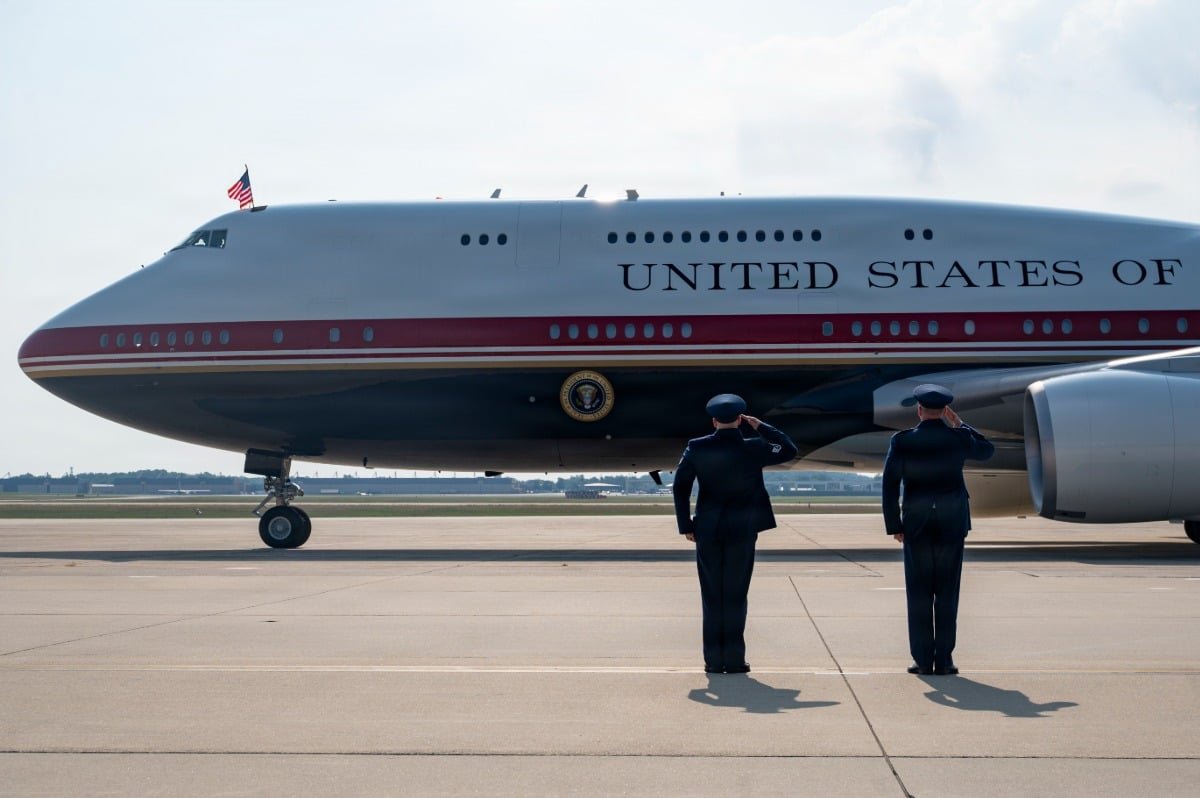
The U.S. Air Force has awarded Boeing a $75 million modification to buy initial spare parts for two VC-25B aircraft, the in-development replacement for the current Air Force One fleet. The modification brings the cumulative value of the underlying contract to $4.49 billion, up from $4.42 billion.
The modification, listed as P00187 to contract FA8625-16-C-6599, is separate from the contract’s firm-fixed-price engineering and manufacturing development work. Work will be performed in San Antonio, Texas. The U.S. Air Force obligated $30 million in fiscal 2026 research, development, test and evaluation funds at the time of award. The Air Force Life Cycle Management Center at Wright-Patterson Air Force Base, Ohio, is the contracting activity.
Boeing signed the VC-25B deal in 2018, during President Trump’s first term, as a $3.9 billion fixed-price contract to convert two Boeing 747-8 airframes into replacements for the current VC-25A jets, customized Boeing 747-200B aircraft that entered service in 1990 under President George H.W. Bush. The two 747-8 airframes were originally built for Russia’s Transaero airline, which went bankrupt before taking delivery, allowing the U.S. Air Force to acquire them at a reduced cost.
– ADVERTISEMENT – CONTINUE READING BELOW –
First delivery was originally set for the end of 2024. The Air Force now projects the first aircraft in mid-2028 and the second in mid-2029, according to a Breaking Defense report citing an Air Force spokesperson, a delay of roughly four years. Boeing has attributed the setbacks to COVID-19 disruptions, workforce shortages, wiring defects, subcontractor bankruptcies and security-clearance delays for personnel working on the aircraft. Boeing lost its original cabin interior supplier, GDC Technics, after terminating that contract in 2021. The company has continued to record cost overruns on the fixed-price deal, including a $280 million charge disclosed this month.
The current fleet’s age has drawn attention this year. In January, one of the VC-25A aircraft carrying Trump toward the World Economic Forum in Davos, Switzerland, turned back to Joint Base Andrews, Maryland, after the crew reported a minor electrical issue shortly after takeoff. Trump continued the trip aboard a smaller U.S. Air Force C-32, a modified Boeing 757 normally used for domestic travel to smaller airports.
In May, the Pentagon accepted a Boeing 747 donated by Qatar for use as a presidential aircraft while the VC-25B remains undelivered, an arrangement that drew scrutiny over ethics and security concerns.
In July, following a NATO summit in Ankara, Turkey, Trump’s departure involved a similar aircraft switch. Trump boarded the older VC-25A in view of the traveling press. He then left the plane through a catering truck and transferred to a smaller C-32A aircraft, CNN and CBS News reported, citing U.S. officials. The VC-25A, the Qatari-donated 747 and the C-32A then flew separately to the United Kingdom, where Trump boarded the Qatari-donated aircraft to fly home.
White House officials said the security measures were tied to a threat linked to Iran but did not answer questions about whether journalists and staff who remained aboard the VC-25A, unaware Trump was no longer on board, had been placed at risk.
