


Nabil Al Ajl is a Saudi specialist in strategic communications, defence and security affairs, and defence media. He is also a contributor to Defence-Arab, with experience supporting major defence exhibitions across the Middle East.
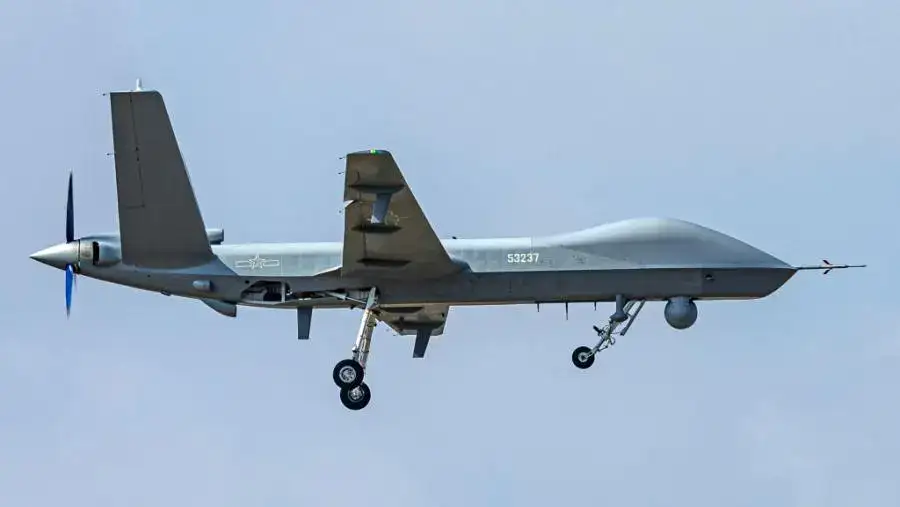
A previous article published by Al-Araby on China’s Wing Loong II UAV began with a straightforward question: what have the battlefields revealed about the aircraft’s capabilities and limitations? Yet the same record lends itself to a slightly different interpretation. The issue is not whether the aircraft is simply ‘good’ or ‘poor’ in absolute terms, but why it has achieved clear export success despite its losses, when its ease of acquisition becomes an advantage, and when it turns into an operational and political risk for the buyer.
This perspective is arguably more important than the traditional comparison of range, payload and endurance. A UAV does not enter a war as a stand-alone asset; it operates as part of a network encompassing reconnaissance, communications, target acquisition, electronic warfare, air defence and the maintenance chain. Wing Loong II’s commercial success may therefore be genuine without necessarily demonstrating superiority in contested airspace.
How Effective Is the Wing Loong II in Combat?
Perhaps the most important thing China has offered through the Wing Loong II is not necessarily the best aircraft in its class, but a comprehensive package that removes much of the political friction associated with purchasing Western platforms. For countries requiring a rapid surveillance and strike capability, platform availability, flexible export conditions, and relatively lower costs may matter more than possessing the best sensor or the largest payload.
Its international proliferation should therefore not be interpreted as a purely technical vote of confidence. Buyers are not choosing between aircraft on a neutral specification sheet; they are choosing between different political, financial and operational packages. The Wing Loong II may be “good enough for the mission” in counterinsurgency, border surveillance, and strikes against targets not protected by advanced air defences. It is this adequacy, rather than parity with the MQ-9, that lies at the heart of its strength in the market.

What Are the Main Weaknesses of the Wing Loong II?
But that equation changes when the operating environment changes. A relatively large, slow and non-stealthy platform becomes a target that can be detected and tracked when operating within the coverage of an effective air-defence system. At that point, the aircraft’s lower purchase price is no longer the most important consideration. What matters instead is the cost of losing it, the disruption to the mission, the possibility of its data or payload being compromised, and the requirement to provide electronic warfare support or suppression of enemy air defences to protect it.
What Do Wing Loong II Losses in Libya Tell Us?
The UN Security Council Panel of Experts report on Libya, S/2019/914, remains among the strongest publicly available evidence of the use of the Wing Loong II and its munitions in the Libyan conflict. Its importance lies in shifting the discussion away from competing narratives towards imagery, technical analysis and supply routes connected to a conflict subject to an arms embargo.
Nevertheless, the loss of aircraft in Libya does not in itself prove the existence of a specific design flaw. What it demonstrates first and foremost is that the conventional MALE – medium-altitude, long-endurance – class is vulnerable when pushed into contested airspace without adequate protection. Nor does open source material provide a complete picture of crew training standards, route planning, intelligence quality, the condition of data links, or the actual configuration of defensive equipment available to the operator.
This is not an attempt to excuse the platform’s record, but to place it in the proper context. A loss rate is meaningful only if the number of sorties, flying hours, mission types, threat density and rate of successful target engagement are known. Most of this data is unavailable. Libya therefore provides a serious warning regarding survivability, but cannot on its own provide a definitive judgement on reliability or overall effectiveness.
What Are the Operational and Political Risks?
The Wing Loong II experience also reveals an aspect that goes beyond aerial performance: the platform’s appeal in conflicts where the operator or external sponsor remains undeclared. The aircraft gives states the ability to exert influence remotely while retaining a degree of political deniability. Open-source evidence, however, is gradually eroding that space. Wreckage, part numbers, munition remnants, satellite imagery and flight-tracking data can be used to reconstruct parts of the chain of employment.
In Sudan, Amnesty International said in an investigation published in 2025 that it had identified Chinese-made GB50A guided bombs in the context of the war, noting that these munitions can be launched from Chinese platforms including the Wing Loong II and FeiHong-95. The significance of this finding does not lie in attributing every strike to a particular aircraft, something the evidence does not always allow, but in demonstrating how the proliferation of a weapon and platform within an opaque conflict can create legal and reputational risks extending beyond the immediate operator to the supplier and the supporting state.
Reuters investigations into flights suspected of being connected to Wing Loong II operations over the South China Sea add another dimension. The news agency analysed flights that broadcast misleading identification data through their transponders, which analysts assessed could support reconnaissance or deception during ‘grey-zone’ operations. If that assessment is correct, it demonstrates that the aircraft’s value may not lie solely in surviving dense air defences. Its value may also come from its ability to remain airborne for long periods, collect data, test an adversary’s responses and potentially complicate its air picture before the outbreak of open conflict.
This highlights an important contradiction: the characteristics that make the platform useful for surveillance and low-intensity coercion do not necessarily make it more survivable when competition escalates into direct confrontation. Its success in the grey zone should not be taken as evidence of its capability in high-intensity warfare, just as its loss in high-intensity warfare does not negate its usefulness in lower-threat missions.

What Should Gulf Countries Consider Before Buying the Wing Loong II?
The real risk is not simply that the Wing Loong II might be shot down; every platform can be lost. The risk lies in buying an aircraft for a mission to which it is unsuited, or building an operational plan on the assumption that long range and precision-guided munitions can compensate for the absence of an integrated protection network.
An acquisition decision should therefore be preceded by practical testing of data links under jamming, lost-link procedures, software security, data ownership, the speed at which spare parts can be supplied, and the ability to integrate nationally produced sensors and munitions.
A distinction must also be made between the purchase price and the overall cost of the capability. A platform may appear cheaper at the point of acquisition, only for its operating costs to rise if it requires a separate communications infrastructure, continuous support from the supplier, or extensive modifications to integrate with existing command-and-control networks. Dependence on an external party for updates, software keys and maintenance may also restrict freedom of use at a politically sensitive moment.
In the Gulf, meanwhile, where missile, UAV and electronic-warfare threats intersect, the priority is not simply to acquire another strike platform. It is to ensure that the platform can operate within a common air picture, exchange data with air defence and reconnaissance assets, and carry out its missions without becoming a burden requiring more protection than the value it provides.
The Bottom Line: Is the Wing Loong II Reliable?
The Wing Loong II deserves to be described as a commercial success because it has met a genuine demand: a long-range armed capability available to states for which Western alternatives have not been easily accessible.
It should not, however, automatically be treated as an equivalent substitute for more mature platforms, nor as a stand-alone solution for high threat environments.
Conversely, simply counting wreckage is not enough to declare it a failure. To a considerable extent, the Libyan record measures the limitations of an entire class of non-stealthy UAVs, as well as the quality of their operation, integration and support. Sudan and the South China Sea, meanwhile, reveal that the broader risks may be political, legal and informational: who operated the aircraft, under whose authority, and what happens when the chain of employment is exposed?
The more precise question for a buyer is therefore not: Is the Wing Loong II a good aircraft?
It is: What mission do we want it to perform? What level of threat do we expect it to face? What network will protect it and exploit the data it provides? And how much national control will we retain after delivery?
The answers to those questions, rather than the specification sheet or sales record alone, are what determine its true combat value.
