


For some years, UK CBRN defence has been a low priority for the military, although an additional investment of £1.7 billion directed towards the most important Counter-CBRN requirements, including personal protective equipment and science and technology exploitation and decontamination. was in this year’s Defence Investment Plan (DIP).
In the last decade, chemical weapons have been used by the Russian, Syrian and North Korean states. In response, CBRN-UK acts as a trade association for the UK industrial sector, linked with UK government departments and overseas governments. It aims to mitigate the effects of hazards arising from deliberate damage to CBRN-related facilities and the use or threatened use of CBRN weapons or devices by state or non-state actors. The UK National Risk Register identifies a pandemic and a large-scale CBRN attack as the two most severe risks the UK currently faces, with potential impacts that could cost thousands of lives and cost over £10 billion.
Civil and nuclear sites form part of critical national infrastructure security, which is a high priority, given the risks from nuclear accidents or deliberate actions to disrupt their operations. International concern over the security of Ukraine’s nuclear infrastructure is an example of the risks involved in this sector.
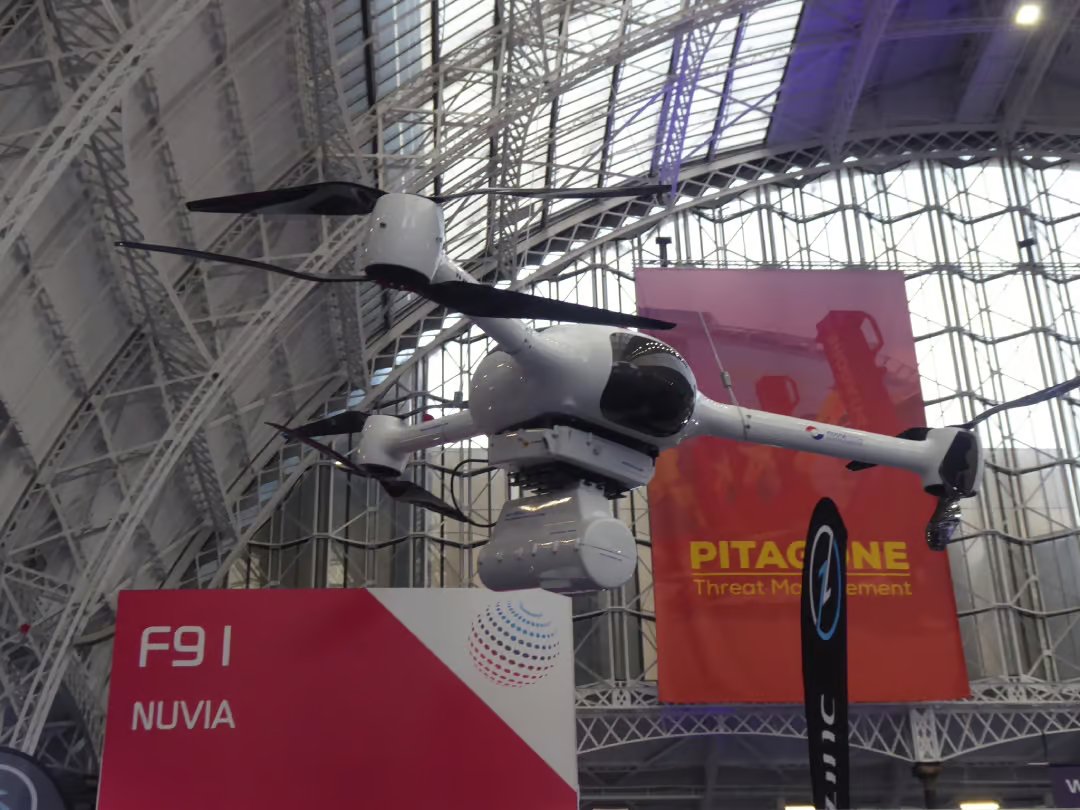
One of CBRN-UK’s members is Nuvia UK, which is a manufacturer of over 100 nuclear measurement devices. It is currently contracted to provide radiation advice to UK Border Force, including provision of a 24/7 radiation call-out service to 60 critical UK locations. It has developed two airborne radiation detection systems, AIRIS and Drone-G.
AIRIS is designed for airborne radiation measurement based on gamma spectroscopy that can be installed on fixed-wing and helicopter platforms to transfer real-time data to ground level. The system provides internal data synchronisation and real-time calculation procedures with precise positioning. Drone-G provides real-time emergency monitoring using UAVs to quickly and safely monitor large areas for potential contamination, carrying NUVIATech instruments, which is less costly than helicopter monitoring.

by David Oliver
