

In recent years, speculation among analysts, experts, and scholars that America’s two key allies in the Indo-Pacific could finally pursue nuclear weapons has intensified. The eminent diplomat Henry Kissinger predicted in 2023 that Japan would go nuclear within the decade. The international relations scholar John Mearsheimer has made the point that nuclearization by Seoul and Tokyo would be the “logical outcome” if the United States were to continue being distracted by conflicts in the Middle East. The Washington Post columnist Max Boot has argued that the increasingly uncertain credibility of the U.S. nuclear umbrella should prompt South Korea to seek its own nuclear deterrent.
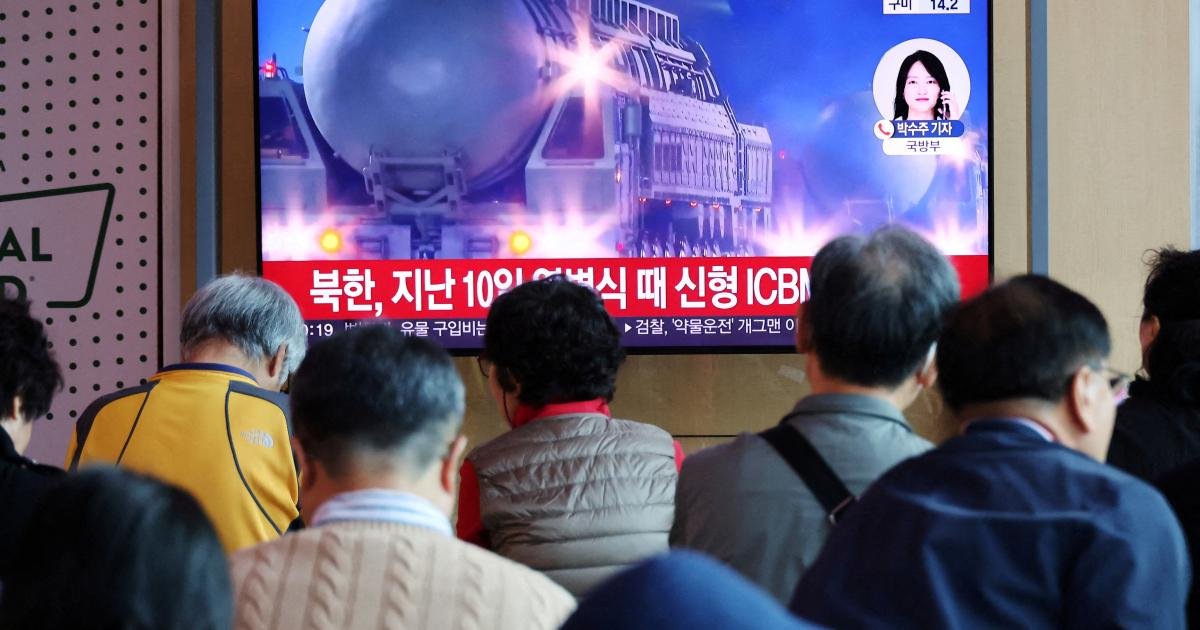
Their conjecture is neither surprising nor unprecedented. In the 1970s, for example, South Korea tried unsuccessfully to develop a covert nuclear program in response to concerns about U.S. abandonment. And the security environment has rarely been so uncertain for Seoul and Tokyo as it is today. Both countries face growing nuclear threats. China is in the middle of a major nuclear buildup, having more than doubled its arsenal in the last five years, with some estimates suggesting that Beijing could amass over 1,000 nuclear weapons by 2030. In 2023, Russia deployed tactical nuclear weapons outside its borders for the first time since the collapse of the Soviet Union, and Russian President Vladimir Putin amended the country’s nuclear doctrine in 2024, lowering Moscow’s threshold for nuclear use. North Korea is thought to have 50 nuclear weapons and enough fissile material for 50 more, and technical support from Russia is accelerating its development of a broad suite of mobile-launched, nuclear-tipped cruise and ballistic missiles, as well as nuclear submarines. Meanwhile, U.S. President Donald Trump has demanded that South Korea and Japan do more for their own security and has redeployed Patriot missiles and THAAD systems from South Korea and U.S. Marines from Japan to the Middle East because of the war with Iran.
A growing chorus of influential voices in Seoul and Tokyo seems to lend credence to the worry that this confluence of threats will prompt South Korea and Japan to cross the nuclear Rubicon. In 2023, South Korean President Yoon Suk-yeol mused that his country “could rapidly develop its own nuclear weapons” if the threat from North Korea continued to grow. Foreign Minister Cho Tae-yul stated in February 2025 that nuclear armament was “not off the table.” Later that year, a comment by an unnamed senior government official advising Japanese Prime Minister Sanae Takaichi expressing the personal opinion that the country should acquire the bomb sparked widespread public criticism—but some politicians, including former defense minister Taro Kono, argued that Japan should not shy away from a broader debate about the pros and cons of nuclearization. These statements are not inconsistent with public opinion. Polling in South Korea shows support for nuclear armament as high as 75 to 80 percent. In Japan, support for the country’s three nonnuclear principles—to not possess or produce nuclear weapons or allow them to enter Japanese territory—remains strong, but over 56 percent of Japanese people support an open debate about these once taboo issues.
But despite the fever pitch of the debate, the worry that South Korea and Japan are on the brink of nuclearization is exaggerated. The majority of “strategic elites”—current and former officials, business leaders, scholars, and experts—in both countries are not in favor of going nuclear, at least for now. That ambivalence, however, is conditional: on the gravity of the threat, but also on the actions of each ally. If either Seoul or Tokyo chooses to take the nuclear leap, the other could soon follow. Even as it deals with pressing challenges elsewhere in the world, Washington would do well to recommit to extended deterrence in Asia to keep its allies from taking that decision.
PROLIFERATION PANIC
Public opinion polls and news-making soundbites dominate the public-facing nuclear discourse in South Korea and Japan. But as the political scientist Elizabeth Saunders has argued, the views of strategic elites ultimately have more influence on national security decisions than the general public. To better understand these figures’ views, in mid-2025 we distributed a survey to 860 South Korean and 515 Japanese strategic elites who, as recognized foreign policy experts in their countries, regularly participate in think tank and university conferences and other Track II dialogues on national security issues. Our research revealed that their views are far more sober when it comes to nuclear weapons than the pro-nuclear opinions often highlighted in the media.
Despite the deteriorating security environment and the uncertainty of Trump’s “America first” foreign policy, the majority of elites in both countries are not in favor of going nuclear. When asked whether their countries should acquire nuclear weapons, 75 percent of strategic elites in South Korea and 79 percent in Japan responded that they did not agree or were unsure. Of the antinuclear respondents, 67 percent in South Korea and 65 percent in Japan did not believe nuclear acquisition would make their country safer. When pressed to choose a nuclear option, the majority of this nuclear-skeptical group—62 percent in South Korea and 54 percent in Japan—responded that they would prefer to pursue nuclear sharing within each country’s alliance with the United States rather than go it alone.
This gap between elite and general public opinion may in part be attributable to elites’ more nuanced understanding of the reputational and material costs of going nuclear. Thirty-five percent of South Korean respondents who did not support nuclearization cited sanctions and the loss of international prestige as best explaining their choice, while only six percent of the group strongly agreed that nuclear weapons would increase security. In Japan, a plurality of elites against nuclearization—25 percent—were worried about initiating a nuclear arms race in northeast Asia and a further 18 percent expressed concerns about sanctions and prestige. Just five percent strongly believed that getting nuclear weapons would make Japan safer.
Domestic and international media outlets have nonetheless overemphasized the voices of a minority of advocates for nuclearization, creating a skewed perception of the core national security consensus in both countries that has influenced Washington’s thinking on East Asian policy. For example, the Biden administration’s alliance-strengthening measures in South Korea, including nuclear submarine port calls, were intended more to scratch what the administration perceived to be Seoul’s nuclear itch than to amp up deterrence against North Korea.
GRADUALLY, THEN ALL AT ONCE
Despite the dominance of nuclear skepticism among policymakers in both countries, elite attitudes are not immovable. Faltering confidence in the United States could cause decision-makers in Seoul and Tokyo to reconsider. When presented with a possible scenario in which the United States reduced its military presence on the Korean Peninsula, 55 percent of South Korean elites who opposed nuclearization and 23 percent of their Japanese counterparts responded that their support for their country’s acquisition of nuclear weapons would increase. A hypothetical U.S. drawdown had the strongest effect on ambivalent elites: 84 percent of South Korean respondents who were initially unsure about the prospect of acquiring nuclear weapons and 62 percent of Japanese respondents who felt similarly increased their support for nuclearization in response to the scenario.
Surprisingly, China’s nuclear buildup and Russia’s belligerence had little effect on the attitudes of antinuclear elites; only 14 percent of South Korean and Japanese respondents cited increased security threats from both countries as their top concern. That neither development moved elites in either country may reflect the fact that they have already internalized the threats from Beijing and Moscow. U.S. unpredictability under Trump, on the other hand, is a new and unsettling development.
But a U.S. drawdown from Asia was not the only scenario that prompted elites to increase their support for nuclearization. When presented with a hypothetical Japanese acquisition of nuclear weapons, 79 percent of South Korean antinuclear elites said that they would increase their support for South Korean nuclearization. Sixty-three percent of Japanese antinuclear elites responded to a similar scenario about South Korean nuclearization by increasing their support for Japanese nuclearization. As with the drawdown scenario, ambivalent respondents were most swayed. Ninety percent of South Korean elites and 77 percent of Japanese elites who were initially unsure about nuclearization indicated that their support for getting the bomb would increase if the other country did so first.
In fact, this cascade effect is even more compelling than the fear of U.S. abandonment. The number of all Japanese elites who indicated that they would increase their support for nuclearization if South Korea acquired the bomb was 42 percentage points higher than the number of those who would increase their support for nuclearization in the event of a decrease in U.S. military presence. The survey revealed a similar dynamic among South Korean elites. Respondents who cited a change in Japanese policy in favor of nuclearization as a potential trigger for a more pro-nuclear stance outnumbered those who cited a U.S. drawdown by 13 percentage points.
In other words, the initial barrier to nuclearization is quite high, thanks to skepticism among both countries’ elites. Barring a major development—a withdrawal of the U.S. nuclear umbrella or even just a substantially weakened U.S. defense commitment—opinion is unlikely to shift enough to compel a major policy change in Seoul or Tokyo. But if the United States were to draw down from Asia, opinion could shift quickly, and a cascade to the bomb could follow.
THE ANXIETY OF INFLUENCE
Washington should be heartened by the fact that South Korean and Japanese nuclear skepticism serves as a constraint on proliferation. But there are still signs that elites in both countries are genuinely troubled by the trajectory of U.S. policy. After all, 58 percent of Japanese elites who favored nuclearization cited the lack of a long-term U.S. security commitment to Japan as the main factor motivating their answer. In South Korea, although the top motivation for nuclearization was the threat of North Korea, 24 percent of pro-nuclear respondents expressed similar concerns about the United States.
The United States, for its part, has a great deal of agency in shaping these perceptions, and by extension, in keeping proliferation off the table. The Trump administration has called on U.S. allies in Asia and Europe to increase their defense spending, but Washington can still find ways to reassure its allies in Tokyo and Seoul about its alliance commitments even as it seeks to compel them to take on more security responsibilities. The United States should continue extended nuclear deterrence dialogues with each and “trilateralize” the discussion among the three. Expanding missile-defense integration of information between Japan’s sea-based assets and South Korea’s ground-based assets, exercises to prepare for multiple and simultaneous missile attacks, and joint production of interceptors would demonstrate U.S. commitment and help assuage concerns about abandonment. Closer consultation between Tokyo and Seoul on security issues, including a bilateral security declaration to supplement the August 2023 Camp David security declaration between Japan, South Korea, and the United States, would formally recognize the common threat they face and would increase transparency between these two historically distrustful common allies of Washington. These steps would build on the efforts that Japan and South Korea have made in recent years to significantly strengthen their relations with each other, as well as with the United States.
For now, Washington can rest assured that nuclear dominoes are not about to fall. But it should not completely cast the issue aside and neglect its security commitments in pursuit of other endeavors in the Western Hemisphere, the Middle East, and Ukraine. The cost of doing so could be a nuclear Asia.
Loading…
