

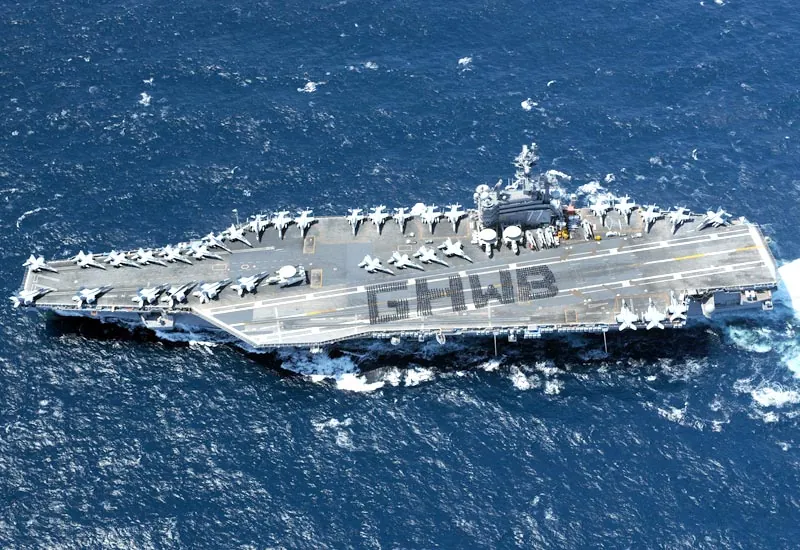
Stand on the flight deck of the USS George H.W. Bush, and you don’t just see steel and aircraft, you feel momentum. Nearly 1,100 feet of it. The deck hums beneath your boots. Jet engines howl. Somewhere below, two nuclear reactors quietly split atoms, pushing 100,000 tons of American naval power through open ocean like it’s nothing.
This isn’t just another U.S. Navy aircraft carrier. USS George H.W. Bush (CVN-77) is the last of the legendary Nimitz-class carriers, the final chapter of a design lineage that defined U.S. sea power for nearly half a century. Think of it as the closing track on a platinum album. Same DNA. Sharper edges. Lessons learned baked into steel.
Commissioned in 2009 and named after the 41st President, himself a World War II naval aviator, the ship blends history and high-tech in a way that feels almost poetic. It carries around 5,000 sailors and aircrew, more than 60 aircraft, and enough capability to influence events thousands of miles from home without setting foot on foreign soil.
The USS George H.W. Bush aircraft carrier represents transition, the bridge between Cold War carrier doctrine and 21st-century naval strategy. It was designed with lessons from decades of deployments, combat operations, and evolving threats. Subtle upgrades in radar cross-section reduction. Improved aviation fuel systems. Modernized command spaces.
In short? It’s the Nimitz class, refined.
And as we explore its history, deployments, specifications, and strategic role, you’ll start to see why CVN-77 isn’t just a ship, it’s a floating city, a political signal, and a moving runway all at once.
History & Background of the USS George H.W. Bush
Before the USS George H.W. Bush (CVN-77) ever cut through open water, it began as sheets of steel and a long-term strategic decision.
Construction started in 2003 at Northrop Grumman’s Newport News Shipbuilding yard in Virginia, the only shipyard in the United States capable of building nuclear-powered aircraft carriers. That fact alone says something about scale. This isn’t mass production. It’s generational craftsmanship.
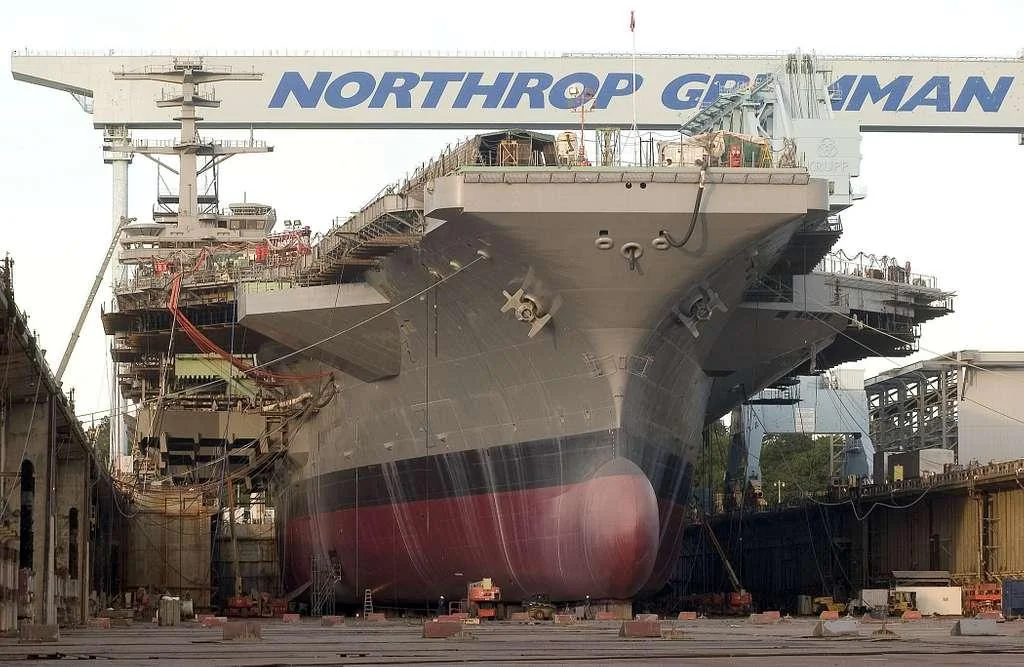
The ship was christened in 2006, with former President George H.W. Bush himself present. Few naval vessels are named after living individuals, and fewer still after someone who had once flown combat missions from a carrier deck.
Bush was just 20 years old when he was shot down over the Pacific in 1944. Naming CVN-77 after him wasn’t ceremonial, it was deeply symbolic. A naval aviator honored by the very institution that once launched him into war.
From the start, CVN-77 was more than “just another Nimitz-class aircraft carrier.” It was the transition point. Engineers incorporated design improvements intended for the future Ford-class carriers, updated radar cross-section shaping, modernized electronics, and maintenance-friendly systems.
And then, of course, came the deployments. Within just two years of commissioning, the USS George H.W. Bush was operating in the Mediterranean and Persian Gulf, supporting combat air operations and coalition missions.
History, in this case, isn’t dusty. It’s ongoing. CVN-77 carries past and present in the same hull.
Technical Specifications of the USS George H.W. Bush
If you’ve ever wondered what raw naval power looks like when translated into engineering, the USS George H.W. Bush (CVN-77) is your answer. She isn’t just big, she’s methodically, deliberately massive.
Let’s start with propulsion. CVN-77 is powered by two A4W nuclear reactors, which means she can operate for over 20 years without refueling. No gas station stops. No tanker dependency. Just sustained global reach.
Officially, her top speed is listed as “30+ knots,” but that plus sign does a lot of heavy lifting. Translation? Faster than publicly advertised.
Here’s a deeper breakdown:
| Category | Specification |
| Displacement | ~100,000 tons (full load) |
| Length | 1,092 ft (333 m) |
| Beam (Flight Deck Width) | 252 ft |
| Draft | ~37 ft |
| Propulsion | 2 A4W nuclear reactors, 4 shafts |
| Speed | 30+ knots |
| Aircraft Capacity | 60–75 aircraft |
| Crew | ~3,200 ship crew + ~2,000 air wing |
Now, about that air wing. The USS George H.W. Bush aircraft carrier typically deploys with a mix of F/A-18 Super Hornets, EA-18G Growlers (electronic warfare), E-2D Hawkeyes (airborne command and control), MH-60 helicopters, and more. It’s essentially a floating airport, with catapults capable of launching aircraft from 0 to 150+ mph in under three seconds.
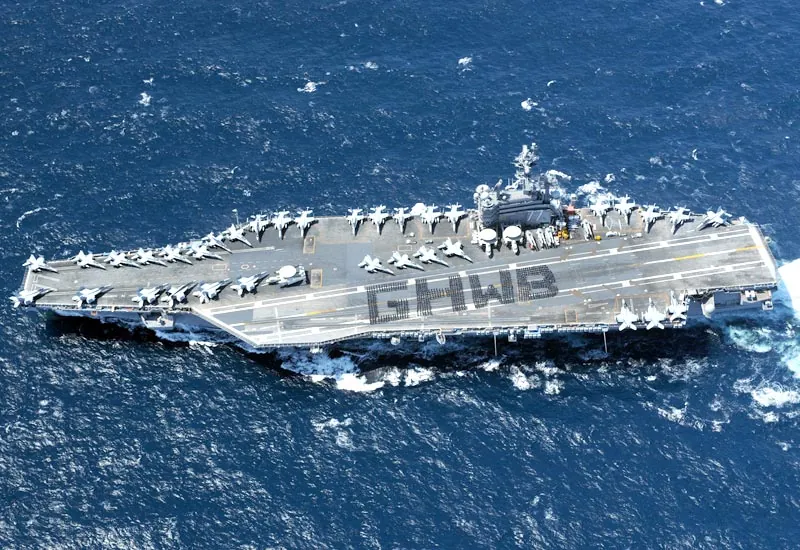
But here’s something rarely discussed: CVN-77 introduced subtle stealth features. The island structure was redesigned with a slightly curved shape to reduce radar cross-section. It’s not a stealth ship, exactly, but it’s smarter about how it shows up on radar.
And then there’s the human factor. Nearly 5,000 people live and work onboard during deployment. That’s more than the population of some small towns. Power generation onboard could supply a city of 140,000 people.
It’s a warship, yes. But it’s also a nuclear-powered, self-contained metropolis that just happens to move across oceans.
Operational History & Deployments
A warship proves itself underway, not dockside. And the USS George H.W. Bush (CVN-77) didn’t take long to earn its sea legs.
Its maiden deployment began in 2011, just two years after commissioning. That first cruise took the carrier across the Atlantic and into the Mediterranean, a sort of global introduction. But things escalated quickly.
By 2014, the USS George H.W. Bush aircraft carrier was operating in the Persian Gulf, launching airstrikes against ISIS targets in Iraq and Syria as part of Operation Inherent Resolve.
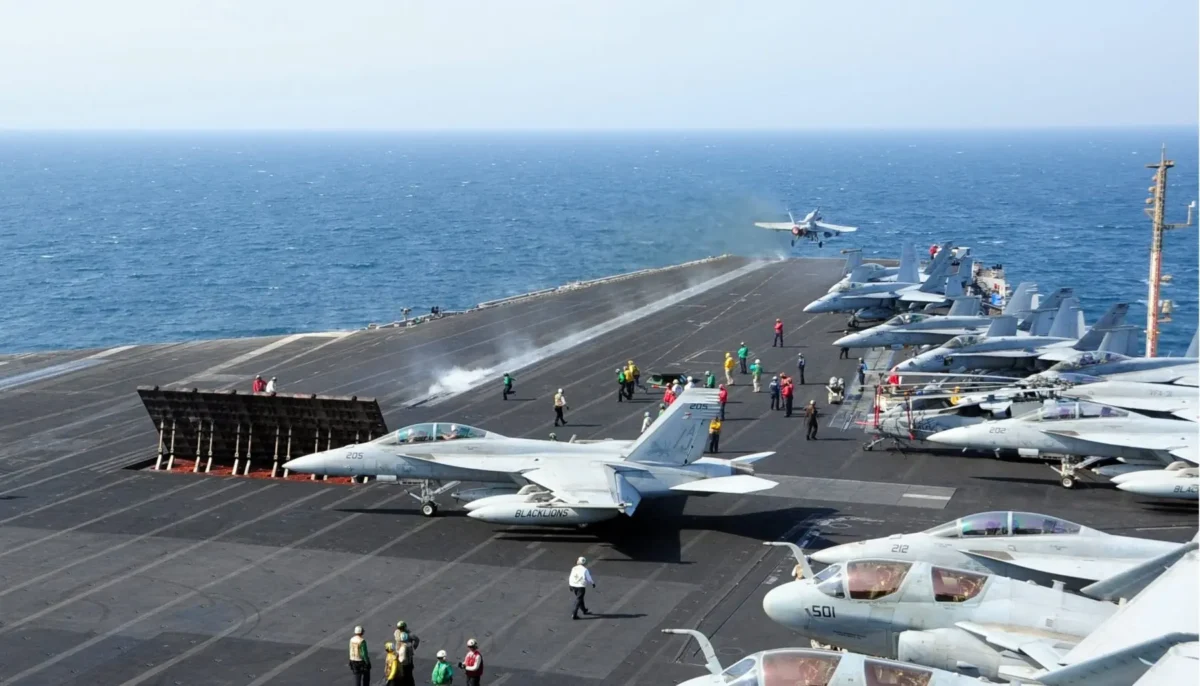
From the flight deck, F/A-18 Super Hornets launched day and night, sometimes in punishing heat, maintaining a relentless operational tempo.
Here’s a simplified deployment snapshot:
| Deployment | Region | Notable Activity |
| 2011 | Mediterranean Sea | First operational deployment |
| 2014–2015 | Persian Gulf | Airstrikes against ISIS |
| 2017 | Mediterranean | NATO operations, maritime security |
| 2022–2023 | Mediterranean | NATO exercises amid Ukraine tensions |
The 2022–2023 deployment was particularly significant. With Russia’s invasion of Ukraine reshaping European security, the USS George H.W. Bush operated alongside NATO allies in the Adriatic and Ionian Seas.
Carrier Strike Group 10 conducted joint exercises, air patrols, and deterrence missions, less about combat, more about presence. And presence matters.
Something people rarely think about: a carrier’s arrival changes diplomatic equations overnight. Ports adjust. Allies feel reassured. Adversaries recalibrate.
Operational life isn’t glamorous, though. It’s cycles of deployment, maintenance, training, repeat. Months at sea. Steel decks hot enough to fry an egg. Jet engines screaming at 2 a.m.
Yet through it all, CVN-77 has maintained high readiness ratings and earned awards for battle effectiveness. Not flashy headlines, just consistent performance.
Which, in military terms, is exactly the point.
Maintenance, Upgrades & Modernization
Here’s the part most people skip, the dry dock years. No dramatic flight ops. No viral deck videos. Just scaffolding, welders’ sparks, and engineers crawling through compartments the size of walk-in closets. But honestly? This is where the USS George H.W. Bush (CVN-77) earns its longevity.
Aircraft carriers aren’t built for short careers. They’re designed for 50-year lifespans. That kind of durability demands serious maintenance cycles.
In 2018, CVN-77 entered a Planned Incremental Availability (PIA) period at Norfolk Naval Shipyard. It wasn’t cosmetic. Major systems were inspected, upgraded, or rebuilt, combat electronics, radar components, propulsion plant checks, aircraft launch systems, even crew living spaces.
An 11-month maintenance period concluded in 2024 with successful sea trials. That milestone might sound procedural, but sea trials are essentially final exams at full speed. Systems are stress-tested. Catapults fire. Arresting gear slams jets to a halt repeatedly. Engineers watch everything.
Here’s a simplified view of modernization focus areas:
| Upgrade Area | Purpose |
| Combat Systems | Enhanced radar & threat detection |
| Communication Suites | Improved secure global connectivity |
| Flight Deck Coatings | Reduced wear, improved aircraft handling |
| Habitability Improvements | Updated berthing, lighting, ventilation |
| Reactor Plant Maintenance | Long-term propulsion reliability |
One subtle reality: modernization isn’t just about hardware. It’s about adaptability. The USS George H.W. Bush aircraft carrier must integrate new aircraft types, cybersecurity protocols, and evolving electronic warfare systems, none of which existed when the Nimitz class was first conceptualized in the 1960s.
Think of it like restoring a classic muscle car, but quietly replacing the engine with something futuristic under the hood.
Maintenance may lack spectacle, but without it, global power projection simply stalls. And CVN-77? She came out sharper, quieter (well… relatively), and ready for the next chapter.
Crew & Life Onboard the USS George H.W. Bush
Now imagine this: nearly 5,000 people living inside a floating steel city for months at a time. No stepping outside for fresh air unless you’re topside. No quick grocery run. Just ocean in every direction. That’s daily life aboard the USS George H.W. Bush (CVN-77).
The crew is divided into two major groups: ship’s company (about 3,200 sailors who run the carrier itself) and the embarked air wing (roughly 2,000 aviation personnel). Together, they form a tightly choreographed machine.
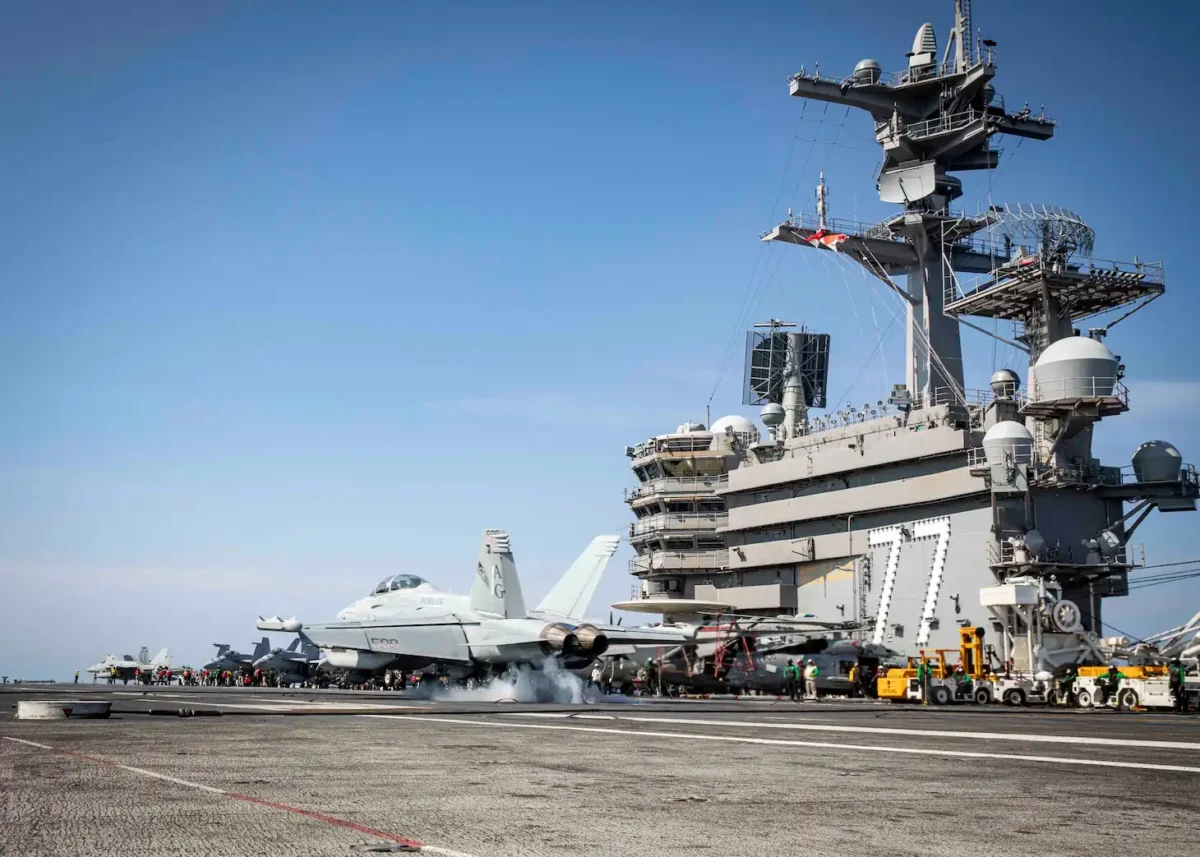
On the flight deck alone, you’ll see color-coded jerseys, yellow for aircraft directors, purple for fuel handlers, green for catapult crews, red for ordnance. It looks chaotic to outsiders. It isn’t. It’s controlled intensity.
Daily life runs on watches and rotations. The ship never sleeps. Someone is always monitoring reactors, tracking radar contacts, prepping aircraft, cooking meals. Yes, meals. The galley serves roughly 15,000 meals per day during deployment. That’s short-order cooking at industrial scale.
Here’s a glimpse of life metrics onboard:
| Category | Detail |
| Total Personnel | ~5,000 |
| Meals Served Daily | ~15,000 |
| Mail Delivery | Via carrier onboard delivery aircraft |
| Medical Facilities | Full hospital with operating room |
| Gym Facilities | Multiple fitness areas onboard |
There’s Wi-Fi in limited areas now, something older sailors wouldn’t recognize, but bandwidth is precious. Emails get through. Video calls, sometimes. Morale events happen on the hangar bay floor: steel beach picnics, movie nights projected against bulkheads.
The motto often associated with the ship is “Freedom at Work.” It sounds formal, maybe a bit slogan-ish. But when you’re 6,000 miles from home, launching jets into uncertain airspace, it feels less like branding and more like shared purpose.
Life aboard the USS George H.W. Bush aircraft carrier isn’t glamorous. It’s repetitive, loud, exhausting. And strangely tight-knit. By deployment’s end, the ship doesn’t just carry sailors.
It carries stories.
Strategic Importance of the USS George H.W. Bush
If you strip away the steel, the jets, the reactors, what you’re left with is influence. The USS George H.W. Bush (CVN-77) is less about combat for combat’s sake and more about strategic gravity. When this Nimitz-class aircraft carrier enters a region, the math changes. Diplomats notice. Adversaries notice. Insurance markets probably notice.
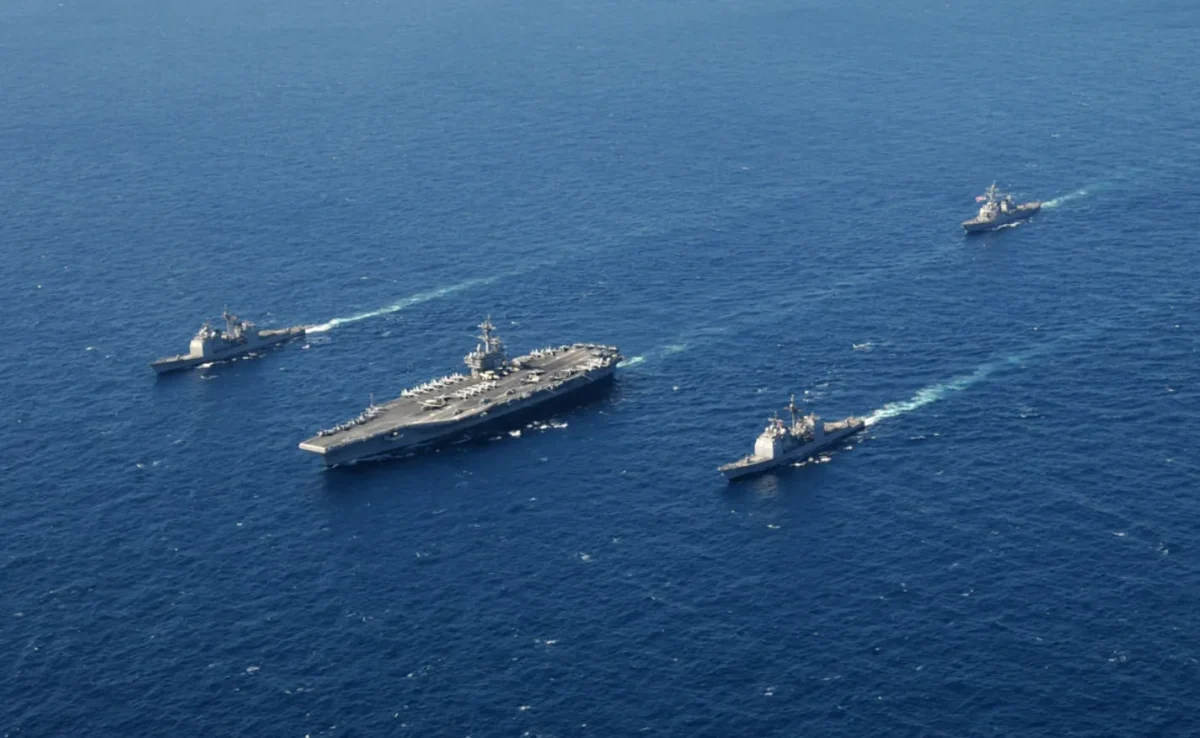
A single carrier strike group, centered on the USS George H.W. Bush aircraft carrier, represents layered capability:
- Air superiority fighters
- Electronic warfare aircraft
- Airborne early warning and command platforms
- Guided-missile cruisers and destroyers
- Attack submarines operating quietly nearby
That’s not just force, it’s flexibility. The carrier can conduct precision strikes, enforce no-fly zones, support humanitarian missions, or simply remain visible on the horizon as a deterrent. Presence without escalation. Power without immediate use.
Consider this: a carrier air wing can generate 120+ sorties per day during sustained operations. That’s the equivalent striking power of a small air force, but mobile, untethered to foreign bases or overflight permissions. Nuclear propulsion gives CVN-77 virtually unlimited range, constrained more by food supply than fuel.
During heightened tensions in Europe in 2022–2023, the USS George H.W. Bush operated in the Mediterranean alongside NATO allies. The mission wasn’t headline-grabbing combat. It was reassurance. Joint drills. Interoperability training. Quiet signaling.
Strategically, CVN-77 also represents continuity. As the final Nimitz-class carrier, it bridges generations, carrying Cold War doctrine forward while adapting to cyber warfare, drone integration, and near-peer naval competition.
You could argue that aircraft carriers are relics in the missile age. Some analysts do. Yet they remain central to U.S. maritime doctrine because they compress distance. They buy time. They project options.
And in global security, options are everything.
