

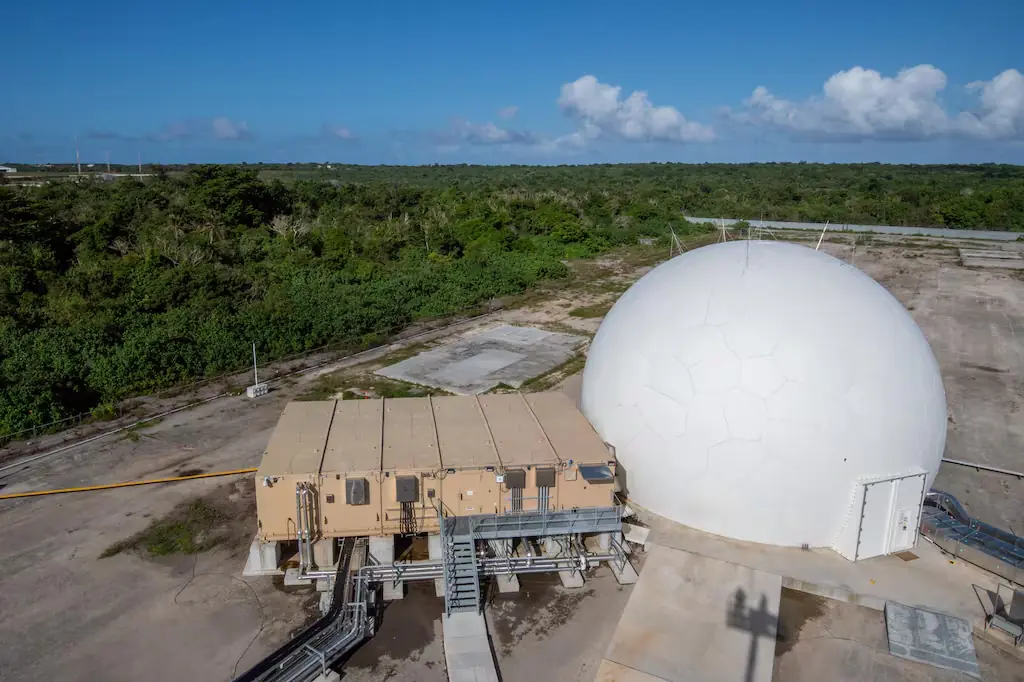
Defense Feeds, Washington — The United States is strengthening its Indo-Pacific missile defense posture as the US Guam Aegis defense upgrade boosts Pacific missile shield through a new $407 million contract awarded to Lockheed Martin. The agreement focuses on advancing the Aegis missile defense system in Guam, a strategically critical US territory increasingly viewed as central to regional security operations.
Guam has become one of the most important military hubs in the Pacific due to its location and role in supporting US naval and air operations. As tensions in the Indo-Pacific continue to rise, the island faces growing concern from emerging missile threats including ballistic and hypersonic systems. Expanding missile defense infrastructure is therefore becoming a major strategic priority for Washington.
The contract underscores the Pentagon’s broader effort to strengthen layered air and missile defense capabilities across the region. Modern threats are becoming faster, more maneuverable and harder to intercept, requiring continuous upgrades to radar, tracking and engagement systems. The Guam initiative reflects how missile defense is evolving to meet these challenges.
Guam Becomes Central to Indo-Pacific Missile Defense
Guam plays a critical role in US military strategy because it serves as a forward operating base for naval forces, strategic bombers and logistics operations. Its location allows rapid access across the Pacific while remaining outside some immediate conflict zones. However, advances in long-range missile technology have increased its vulnerability.
Potential adversaries are investing heavily in ballistic and hypersonic weapons designed to threaten key military infrastructure. This has elevated Guam’s importance within broader US defense planning. Protecting the island is now considered essential for maintaining operational flexibility in the Indo-Pacific.
The Aegis missile defense system is expected to form a major component of this protection. Originally developed for naval warships, the Aegis architecture has evolved into a broader integrated air and missile defense network capable of engaging multiple threats simultaneously.
Enhanced radar and tracking systems will improve detection and response times against incoming threats. Faster data processing and targeting capabilities are becoming increasingly necessary as missile technology continues to advance.

Lockheed Martin Contract Supports Advanced Defense Systems
The $407 million contract awarded to Lockheed Martin focuses on advancing critical components of Guam’s missile defense network. Lockheed has long been involved in the development of Aegis combat systems and interceptor technologies used by both naval and land-based platforms.
The modernization effort is expected to improve system integration between sensors, command networks and interceptors. Effective missile defense increasingly depends on rapid coordination between multiple systems operating across different domains. Seamless integration is essential for responding to modern threats.
The contract may also support future adaptability within Guam’s defense infrastructure. Missile defense systems must continuously evolve as adversaries introduce new technologies and tactics. Maintaining upgrade flexibility is therefore a key requirement.
In addition, the project reinforces the growing emphasis on layered defense concepts. Modern missile defense strategies rely on multiple interception opportunities at different ranges and altitudes rather than a single defensive layer. Guam’s evolving system is expected to reflect this approach.
Missile Defense Expands Across the Indo-Pacific
The investment in Guam reflects a broader shift in US defense strategy toward strengthening regional deterrence and survivability. Missile defense has become increasingly important as military competition intensifies across the Indo-Pacific. Protecting critical infrastructure and operational hubs is now viewed as essential for maintaining strategic stability.
The growing threat from hypersonic missiles has added urgency to these efforts. Unlike traditional ballistic missiles, hypersonic weapons are capable of maneuvering at extremely high speeds, making interception more difficult. Defense systems must therefore become more advanced and responsive.
Guam’s upgraded missile defense network is expected to work alongside naval destroyers, allied systems and regional sensors to create a more comprehensive defensive architecture. This integrated approach improves resilience against large-scale or coordinated attacks.
The modernization effort also sends a strategic signal regarding US commitment to regional defense. Strengthening Guam’s defenses demonstrates continued investment in maintaining military presence and operational capability across the Pacific theater.
As missile technology continues to evolve globally, demand for more advanced defensive systems is expected to grow. The US investment in Guam highlights how critical missile defense has become within modern military planning. In an increasingly contested Indo-Pacific environment, protecting forward positions like Guam is likely to remain a top strategic priority.
