

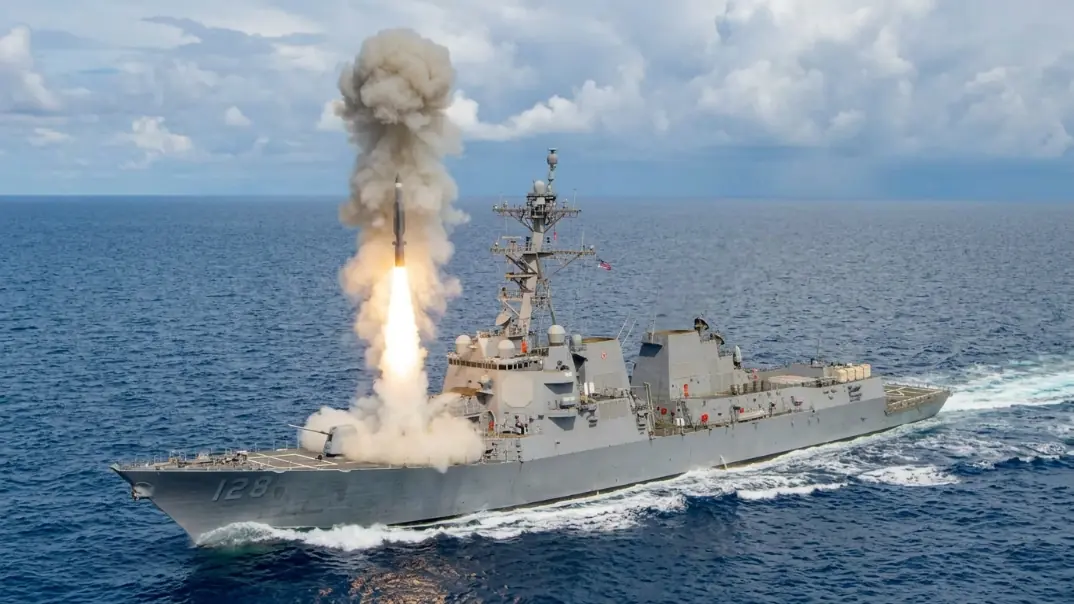
Defense Feeds, Washington — The US Navy is continuing to modernize its surface fleet as the US Navy USS Ted Stevens destroyer strengthens missile defense through the addition of a new Flight III Arleigh Burke-class warship. The vessel represents the latest evolution of the Navy’s long-running destroyer program, integrating upgraded radar and combat systems designed to counter increasingly advanced threats.
The USS Ted Stevens is part of the Flight III variant of the Arleigh Burke-class destroyers, a version specifically developed to improve air and missile defense capabilities. As missile threats become faster and more complex, the Navy has prioritized enhancing sensor performance and targeting systems across its fleet. The Flight III program is central to that modernization effort.
Named after former US Senator Ted Stevens of Alaska, the destroyer reflects both technological advancement and continued investment in multi-role naval platforms. Once operational, the ship is expected to contribute to missile defense, fleet protection and broader maritime security operations in strategic regions.
Flight III Destroyers Bring Advanced Radar Capability
A major feature of the Flight III Arleigh Burke-class destroyers is the integration of the AN/SPY-6 radar system. This next-generation radar significantly improves the ship’s ability to detect and track ballistic missiles, aircraft and other aerial threats. Enhanced sensitivity and range provide a major improvement over earlier radar systems.
The upgraded radar works alongside the Aegis combat system, allowing the destroyer to engage multiple threats simultaneously. Modern naval warfare increasingly requires ships to defend against saturation attacks involving drones, cruise missiles and ballistic missiles. The Flight III design is intended to address these evolving operational challenges.
The USS Ted Stevens will also retain the multi-role flexibility associated with the Arleigh Burke class. In addition to missile defense, the destroyer can conduct anti-submarine warfare, surface warfare and strike missions. This versatility remains one of the class’s key strengths.
Improved power generation and cooling systems are another important aspect of the Flight III design. Advanced sensors and combat systems require greater electrical capacity, and the upgraded infrastructure supports future technological integration. This ensures the ships remain adaptable for decades.

Strengthening US Naval Missile Defense Network
The addition of the USS Ted Stevens comes as the Navy continues to expand its ballistic missile defense capabilities. Destroyers equipped with the Aegis system play a central role in protecting carrier strike groups, allied forces and strategic regions from missile threats. Flight III ships further enhance this defensive network.
Missile defense has become increasingly important as potential adversaries develop more advanced weapons, including hypersonic systems and long-range ballistic missiles. Improving detection and interception capability is therefore a major strategic priority for the Navy.
The USS Ted Stevens is expected to operate across multiple theaters, including the Indo-Pacific and European regions where missile defense demands continue to grow. Its advanced radar and combat systems will support both independent operations and integrated fleet defense missions.
In addition, the destroyer contributes to broader joint defense architecture. Naval missile defense systems often operate alongside land-based and allied systems, creating layered protection against aerial threats. This integrated approach is central to modern defense planning.
Arleigh Burke Program Remains Core of Surface Fleet
The Arleigh Burke-class destroyer program remains one of the most important components of the US Navy’s surface force. First introduced in the 1990s, the class has undergone continuous modernization to adapt to changing threats and technologies. The Flight III variant represents the most advanced version to date.
Despite the emergence of newer naval concepts, the Navy continues to rely heavily on destroyers because of their versatility and proven operational record. They serve as key assets for escort missions, missile defense, strike operations and maritime security patrols.
The USS Ted Stevens also reflects broader efforts to maintain naval readiness through incremental modernization rather than entirely new ship classes. Upgrading an established platform allows the Navy to integrate advanced systems while benefiting from existing operational experience and infrastructure.
Looking ahead, Flight III destroyers are expected to remain a central element of US naval strategy for decades. Their ability to support advanced radar systems, missile defense operations and multi-domain warfare ensures continued relevance in future maritime competition.
The upcoming delivery of the USS Ted Stevens highlights the Navy’s ongoing focus on strengthening fleet capability in response to evolving global threats. As maritime competition intensifies, advanced destroyers equipped with modern sensors and defensive systems will remain critical to maintaining operational advantage.
