

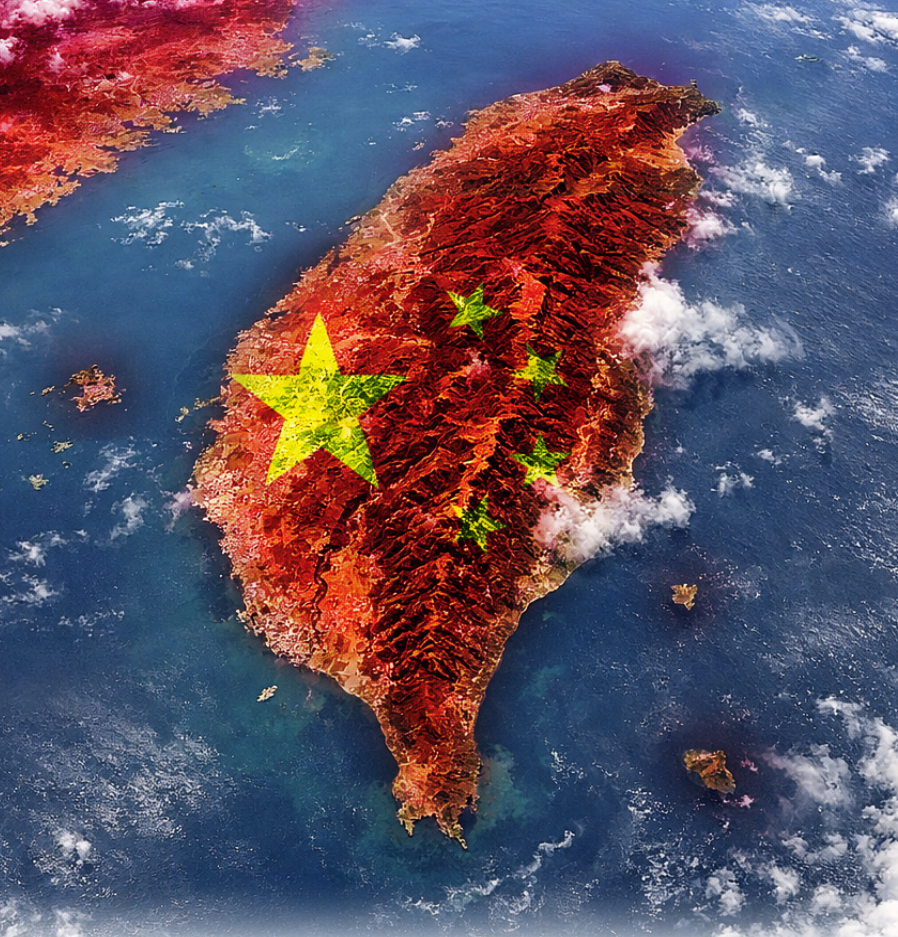
The Lowy Institute’s After Annexation: How China Plans to Run Taiwan, authored by Richard McGregor and Jude Blanchette, delivers the clearest documented account yet of Beijing’s post-seizure governance intentions, drawn from PRC academic and policy literature published between 2019 and 2025. The authors trace a decisive shift in Chinese strategic thinking, in which Beijing no longer pursues peaceful accommodation and now frames Taiwan’s integration as a project of absorptive control requiring phased subjugation.
The emphasis on “complete” unification signals that acceptable outcomes must fully eliminate Taiwan’s separate political identity rather than merely managing it. … Identity divergence is thus no longer a secondary problem to be addressed after unification, but a central obstacle that must be confronted directly through force, re-education, and long-term social transformation.
Xi Jinping has hardened unification terms to demand full political integration, and PRC scholars now openly discuss an immediate security crackdown on political opponents, institutional restructuring well beyond anything attempted in Hong Kong, and a decades-long psychological re-engineering campaign to convert Taiwanese into CCP loyalists. McGregor and Blanchette also document that millions of Taiwanese would be excluded from public life, and that bureaucrats, lawyers, journalists, and civil society leaders would all be required to demonstrate Party loyalty or face imprisonment.
Taiwan is increasingly described as possessing a consolidated counter-regime political identity that is defined not just by difference from the mainland but by affirmative attachment to democracy and political autonomy. … The balance has tilted towards control, even at the cost of international backlash or short-term instability.
McGregor and Blanchette note that Beijing already demonstrated its appetite for this scale of repression in Xinjiang, and “Taiwan’s political cleansing likely would be of a much greater magnitude, given the entrenchment of attitudes, values, and norms.” The hardest problem for Beijing is not taking Taiwan but governing it, as the regime remains ideologically constrained from resolving its core contradictions: autonomy without credible guarantees generates distrust, coercion achieves stability but not legitimacy, and economic integration cannot substitute for consent.
The Irregular Warfare Center’s study, China’s Way of Occupation: Implications for Taiwan, reinforces those findings through a structured historical comparison of PRC occupation in Tibet, Xinjiang, and Hong Kong. Gleiman, Garcia, and Thurman identify seven consistent patterns in Beijing’s occupation strategy:
– Occupation begins before invasion
Occupation does not begin with the entry of troops or the raising of a flag. Instead, the PRC initiates its occupation campaign long before conventional conflict, using a comprehensive set of pre-occupation shaping operations to prepare the political, institutional, and psychological conditions for later control.
– Coercion is wrapped in legal formalism
CCP has deployed legal formalism as a core method of legitimizing repression, criminalizing dissent, and rendering occupation as orderly and “administrative.” This fusion of coercion with legality is a hallmark of CCP statecraft. Rather than relying solely on brute force or extrajudicial authority, the PRC enacts new laws, policies, and administrative decrees that recast resistance as illegality.
– Identity becomes the central battlefield
At the heart of PRC occupation strategy lies a sustained effort to reshape the identities of contested populations. Control is not merely exercised through laws or force-it is embedded in the cultural, linguistic, demographic, and psychological structures that shape how people see themselves and their place in the polity.
– Surveillance becomes permanent governance infrastructure
Surveillance in PRC-occupied territories is not a tactical accessory, but it is a central pillar of governance. In Tibet, Xinjiang, and Hong Kong, surveillance systems have evolved beyond conventional intelligence gathering to become the backbone of state control, enabling real-time monitoring, behavioral prediction, and preemptive suppression.
– Political space is managed through conditional tolerance
One of the clearest lessons from the PRC’s history of occupation is that success depends on the deliberate use and manipulation of political opportunity space. This concept, drawn from political sociology, refers to the openness of a regime’s institutions, the permissibility of dissent, expression of grievances, and nonviolent action. Under PRC occupation, this space is deliberately and systematically opened and constricted; sometimes abruptly, sometimes gradually, but always with strategic intent.
– Resistance is fragmented through selective inclusion and exclusion
The CCP has long recognized that unified resistance is difficult to defeat, but fragmented resistance is easy to manage. In all PRC-occupied territories, fragmentation is an intentional outcome of governance strategies designed to divide, isolate, and pacify potential opposition. These efforts include co-optation of elites, targeted repression, social stratification, and disinformation. The goal is to prevent resistance from coalescing into a coherent movement capable of challenging the state.
– Time is treated as a strategic asset
The CCP takes a long-term approach to occupation in part because they do not see these efforts as occupation, they view this as (Re)unification. Across Tibet, Xinjiang, and Hong Kong, the PRC has demonstrated a consistent capacity to absorb short-term costs and international criticism in service of long-term strategic goals. The CCP plays a deliberate game of erosion, attrition, and normalization, confident that both its domestic and foreign adversaries will lose patience long before it does.
The study ultimately surfaces a critical operational variable absent from most invasion-focused wargames, concluding that “the decisive variable could be the method of seizure” and that a contested military assault produces enduring resistance. Such as move would require a counterinsurgency response rather than administrative assimilation. Professor Gleiman’s companion essay, “It’s Time: Recognizing the Taiwanese Nation State” (SWJ, January 2026), extends the argument by contending that the international community’s diplomatic silence actively enforces Beijing’s preferred narrative, and that Beijing has already secured “victory over whether Taiwan’s existence can be acknowledged in polite company.”
If the PRC’s coercion operates by isolating Taiwan through centralized pressure on national governments, the counterstrategy must distribute recognition across a decentralized network of actors too numerous and too dispersed for Beijing to effectively coerce.
All three publications converge on a single operational conclusion, which is that decisive contest will shift immediately from invasion to occupation, legitimacy, and resistance. Political recognition of Taiwan therefore directly shapes outcomes across all three domains. For practitioners, the implication requires no translation: resistance frameworks, legal authorities for shadow governance, and resilience networks require investment now, well before any crisis arrives.
