


Defense Feeds, Washington. The Precision Strike Missile production contract has entered a new phase after the U.S. Army awarded Lockheed Martin an $8.4 billion agreement that will sustain manufacturing of the Precision Strike Missile (PrSM) through 2032.
The long-term contract ensures continued production of one of the Army’s most important long-range strike weapons as it accelerates modernization of its artillery forces and expands inventories for future operational requirements.
The agreement highlights the Army’s commitment to replacing the aging MGM-140 ATACMS with the next-generation PrSM, a missile designed to provide greater range, improved precision and enhanced flexibility for launch from both M142 HIMARS and M270 Multiple Launch Rocket System platforms.
Precision Strike Missile Production Contract Supports Long-Term Manufacturing
The new Precision Strike Missile production contract provides Lockheed Martin with a stable production framework that extends well beyond annual procurement cycles. By securing manufacturing through 2032, the Army gains greater certainty over missile availability while allowing industry to expand production capacity and strengthen supply chains.
The PrSM has become a cornerstone of the Army’s Long-Range Precision Fires modernization initiative. Developed as the successor to the ATACMS tactical missile, the system delivers longer engagement distances while allowing twice as many missiles to be carried in a standard launcher pod compared with its predecessor.
The contract also reflects growing demand for precision-guided munitions as global security conditions continue to evolve. Recent conflicts have demonstrated the importance of maintaining sufficient stockpiles of long-range strike weapons capable of engaging command centers, logistics hubs and other high-value targets far behind the front line.
By committing to multi-year production, the Army is positioning itself to meet future operational requirements while reducing potential disruptions caused by short-term procurement planning.
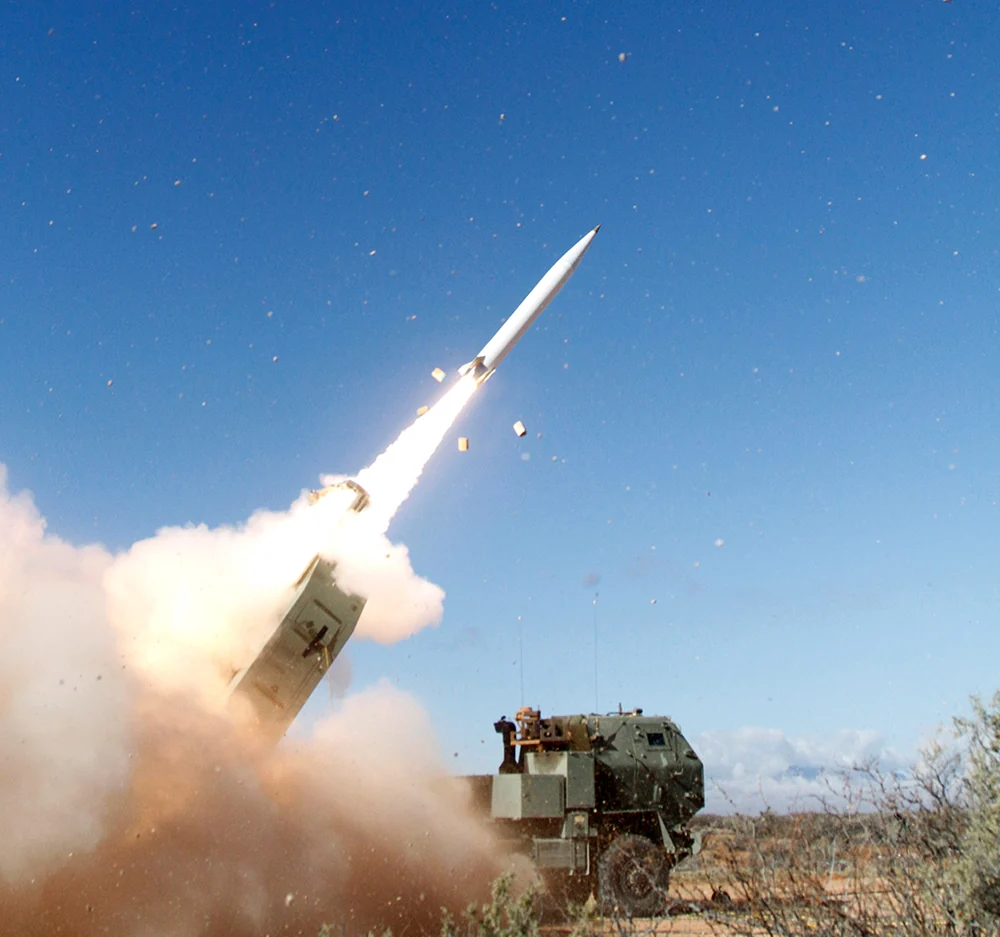
PrSM Expands Long-Range Strike Capabilities
The Precision Strike Missile is designed to provide substantially greater operational flexibility than the ATACMS it replaces. Fired from existing HIMARS and M270 launchers, the missile enables ground forces to engage targets at significantly longer distances while maintaining high accuracy.
One of the system’s key advantages is its compact design. Two PrSM missiles can be carried in a launcher pod that previously accommodated only one ATACMS missile, effectively doubling available firepower without requiring modifications to launch vehicles.
The missile is also being developed through multiple capability increments. Future versions are expected to incorporate enhanced seekers for engaging moving maritime targets, increased range and additional payload options, expanding its role across both land and maritime operations.
As production increases, the Army will continue integrating the missile into operational units while replacing legacy inventories. The common launch architecture simplifies fielding because existing HIMARS and M270 operators can adopt the new weapon without introducing an entirely new launcher system.
Strategic Importance for U.S. Army Modernization
The Precision Strike Missile production contract represents more than a procurement decision. It underscores the growing importance of long-range precision fires within U.S. military strategy.
Modern military operations increasingly emphasize striking critical targets from extended distances while minimizing exposure to enemy defenses. Systems such as the PrSM provide commanders with the ability to disrupt logistics, command networks and air defense sites before maneuver forces enter contested areas.
The contract also supports the broader U.S. defense industrial base by providing predictable demand over several years. Long-term production agreements help manufacturers invest in workforce development, expand manufacturing capacity and improve supply chain resilience, all of which are becoming increasingly important as demand for advanced munitions rises.
Beyond domestic requirements, sustained PrSM production could also support future allied acquisitions as partner nations modernize their long-range fires capabilities. The missile has already attracted international interest because of its compatibility with HIMARS launchers, which are now operated by a growing number of allied militaries.
With production secured through 2032, the PrSM is set to become a central element of the U.S. Army’s future strike capability. The agreement ensures that one of America’s most advanced tactical missile programs will continue expanding as the service prepares for increasingly complex operational environments.
