

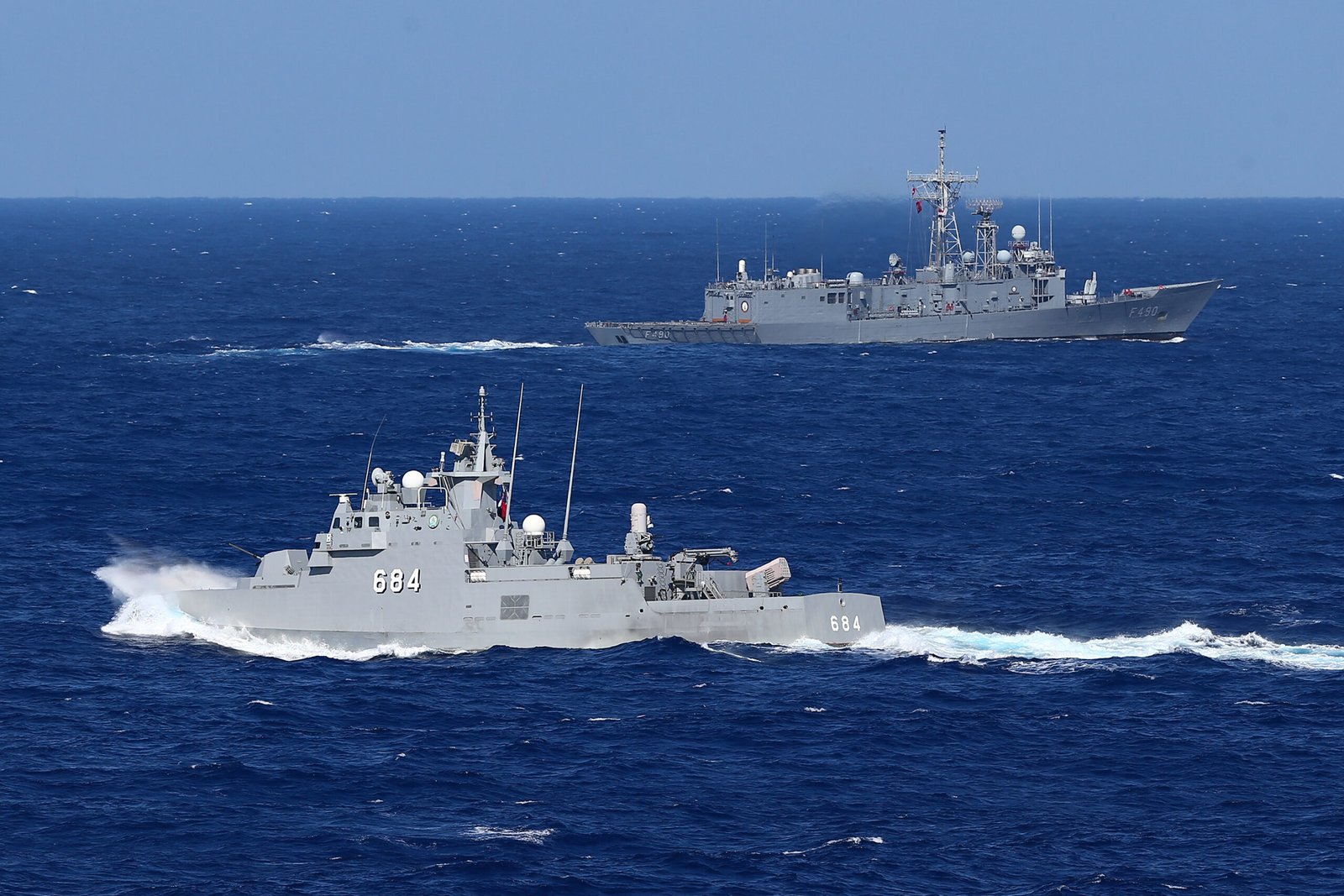
ISTANBUL — Turkey and Egypt are taking steps to strengthen their cooperation in the maritime domain, with joint shipbuilding opportunities on the table.
Adm. Ercüment Tatlıoğlu, the commander of Turkey’s navy, made an announcement to that effect during the Sea of Friendship 2026 naval exercise in Alexandria, Egypt.
The exercise was conducted under the command of Egypt’s Northern Fleet from Nov. 4 to Nov. 9. The previous iteration took place in 2025, following a 13-year hiatus.
The largest warship in the Turkish Navy’s inventory, the amphibious assault ship TCG Anadolu, was among the Turkish units participating in the exercise. The drill covered surface warfare, anti-submarine warfare, air defense operations and underwater assault training.
Tatlıoğlu held talks with his Egyptian counterpart, Vice Adm. Mahmoud Adel Fawzy, on the sidelines of the event at Alexandria Naval Base on Nov. 7.
Tatlıoğlu described the Sea of Friendship exercise as a substantial demonstration of growing cooperation between Turkey and Egypt in the Eastern Mediterranean. He said the two navies were taking concrete steps to expand cooperation in unmanned aerial and naval systems, highlighting the participation of the Bayraktar TB3 unmanned aerial vehicle and the MKE Pirana one-way unmanned surface vehicle.
“We aim to take our defense industry cooperation in the maritime domain to a more advanced level by undertaking joint shipbuilding activities with Egypt, similar to the cooperation we have established with Pakistan under the MILGEM Project,” Tatlıoğlu said.
The MILGEM Project was initiated by the Turkish Navy to design and build indigenously developed naval platforms. The project has resulted in the development of Ada-class corvettes and Istanbul-class frigates, which are in service with the Turkish Navy, as well as Ada-class variants for the Pakistani, Ukrainian and Malaysian navies and a Hisar-class offshore patrol vessel for the Romanian Navy.
Meanwhile, Fawzy described this month’s exercise as well planned and executed despite sea conditions that were not particularly favorable.
“This activity demonstrates that we are on the right track,” he said. “We can train together, plan together and conduct ship-boarding activities together. We can work together. In the near future, the Egyptian and Turkish navies may be able to operate side by side, shoulder to shoulder, on joint missions.”
The naval exercise took place just 15 days after the House of Representatives in eastern Libya, based in Benghazi, unanimously ratified a Turkey–Libya maritime jurisdiction agreement on Oct 20.
The original 2019 Turkey-Libya maritime delimitation agreement is strategically important as it establishes a boundary between the two countries’ claimed continental shelves and exclusive economic zones (EEZs) in the Eastern Mediterranean.
For Turkey, this agreement is to protect its maritime jurisdiction claims and prevent Greek islands from effectively limiting Turkey’s access to maritime areas. For Libya, it provides a basis for asserting its own maritime rights.
Greece opposes the agreement, arguing that it disregards the maritime entitlements of Greek islands and undermines its claims in the Eastern Mediterranean.
In 2019, the agreement was signed only by Libya’s Government of National Accord in Tripoli. Now it has been ratified by the House of Representatives in Benghazi, thus bringing the two major parties in Libya to accept the agreement.
Even so, Egyptian Foreign Minister Badr Abdelatty described the pact as “completely null and void” during an Oct. 23 visit to Istanbul, where he met his Turkish counterpart, Hakan Fidan.
Serhat Güvenç, a professor of international relations at Kadir Has University in Istanbul, stated that Egypt was still unwilling to sign an agreement on exclusive economic zones (EEZs) with Turkey but was, at the same time, cooperating with Turkey in a major naval exercise in which TCG Anadolu was also participating.
“Egypt’s position regarding the Memorandum of Understanding signed with Libya and its willingness to develop military and maritime relations with Türkiye are not mutually exclusive,” he said. “In fact, in this picture, Egypt may perhaps be in a better position than the other actors in terms of respect for international law and acting with due care in this regard, because Turkey and Greece are pursuing maximalist positions.”
