

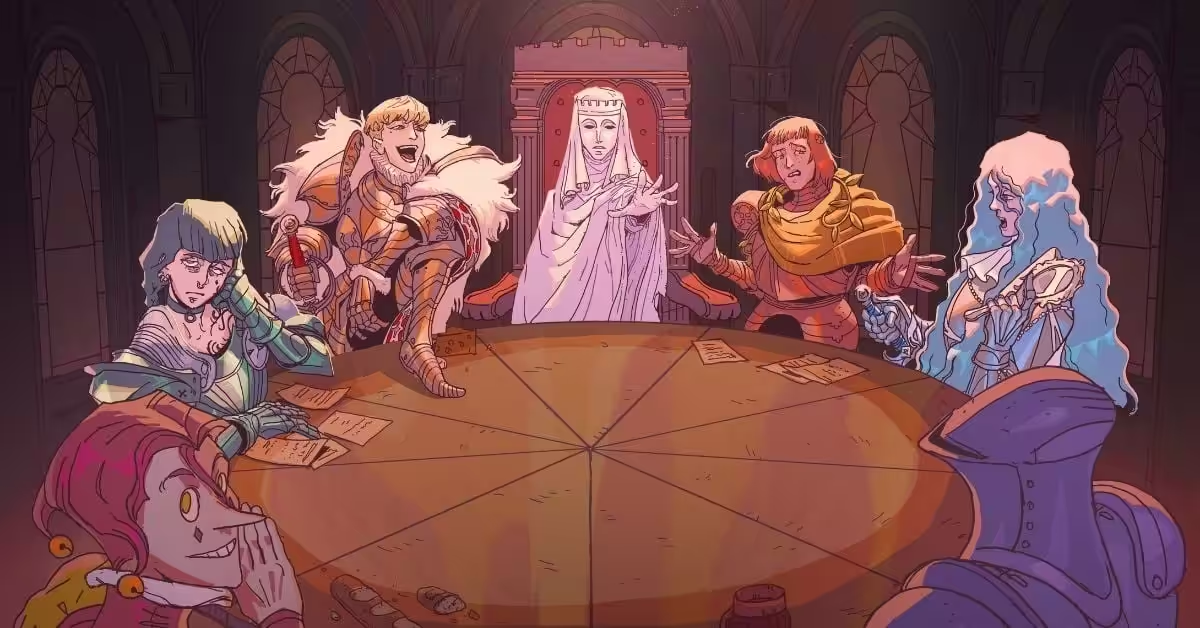
I had already spent some time with the demo of Sovereign Tower, and I came away from it genuinely impressed. Now, after moving on to the full version, that first impression has only grown stronger.
Developed by WILD WITS GAMES and published by Curve Games, Sovereign Tower arrived on PC on August 6, 2026. Describing exactly what kind of RPG it is isn’t quite as straightforward as it may seem, though. There is management, strategy, plenty of narrative decision-making, character development, and quests, but almost none of these elements work in the conventional way.
And there is one important thing to establish immediately: you don’t fight the battles yourself.
If what you mainly want from an RPG is tactical combat, positioning characters around a battlefield, choosing attacks, and personally determining how every encounter plays out, Sovereign Tower probably isn’t going to satisfy that particular itch.
The real battlefield here is your throne room, your Round Table, and the decisions you make every day. Curiously, that’s also why I ended up enjoying it much more than I expected.
Welcome to the Tower
Sovereign Tower puts us in the shoes of an initially unknown figure who arrives at a mysterious magical tower that stands at the center of the surrounding kingdom.
The Tower answers to its Sovereign, and once we take that position, restoring it to its former glory becomes one of the threads running through the entire game. New sections gradually open up, new people arrive at court, and rooms that initially seem inaccessible eventually become part of the regular routine. That routine is organized into cycles.
During each cycle, there are people to meet, problems to solve, Knights to manage, information to gather, and contracts to evaluate before deciding how to use the limited resources at our disposal. It sounds simple on paper. It isn’t.
Being Sovereign Mostly Means Dealing With Other People’s Problems
A typical cycle begins with audiences at court, where a surprisingly varied collection of people can appear before the throne.
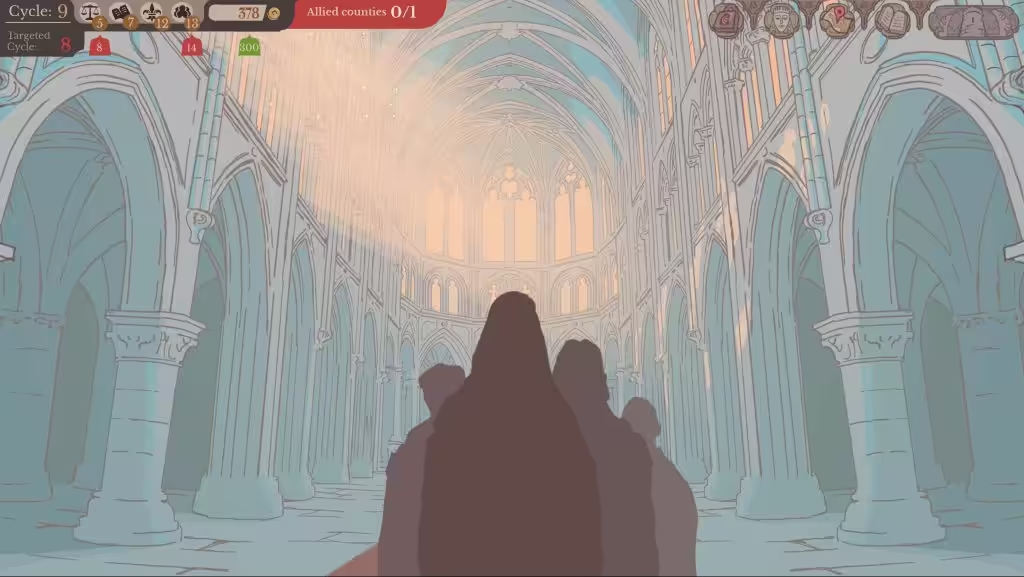
Commoners may have a problem. A member of the nobility might ask for something. Someone could present an opportunity, a dispute, or a situation capable of opening an entirely new mission. You listen and decide what to do.
Those decisions don’t exist in isolation. Saying yes to somebody may please one group and anger another, while refusing a request could close one road and open another somewhere else. Four main groups need to be considered: the People, Nobles, Scholars, and Merchants.
Keeping everyone happy isn’t realistic, so Sovereign Tower frequently forces you to decide whose interests matter most at that particular moment. At the same time, your behavior gradually shapes your Sovereign through values such as Audacity, Wisdom, Tyranny, and Kindness.
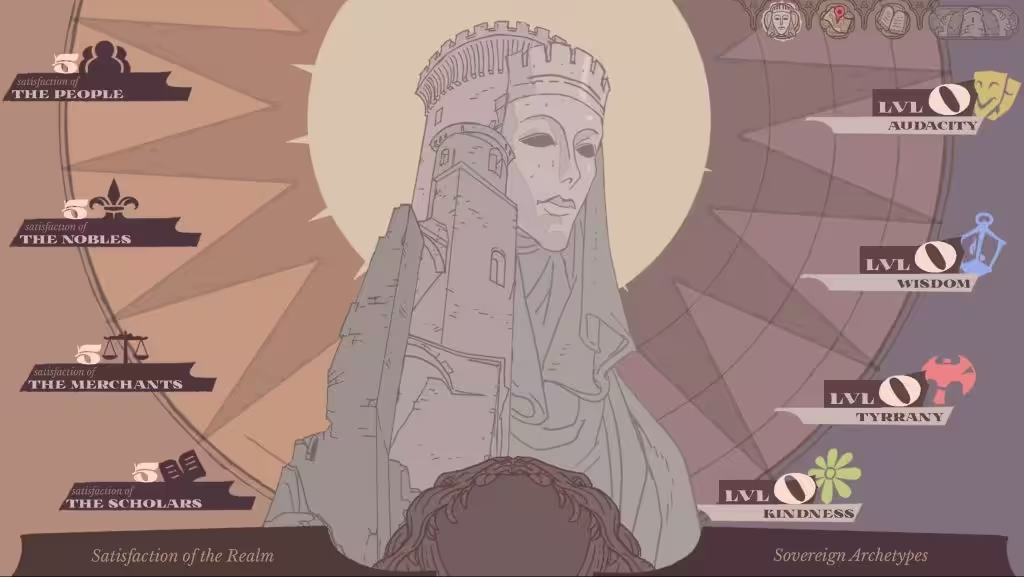
I like this because the choices aren’t presented purely as different pieces of dialogue before the game moves on. They become part of the management layer.
A decision made while sitting on the throne may eventually change which missions are available, affect your standing with a faction, alter future events, or simply come back to cause problems later. And there are quite a few problems.
The Tower Slowly Comes Back to Life
After dealing with audiences, you’re free to move through the Tower and take care of whatever requires attention.
One of the most interesting locations is the gallery, where a talking stone statue gradually introduces us to the true potential of the Tower. As its power grows, more of the building can be restored, opening new rooms and functions.
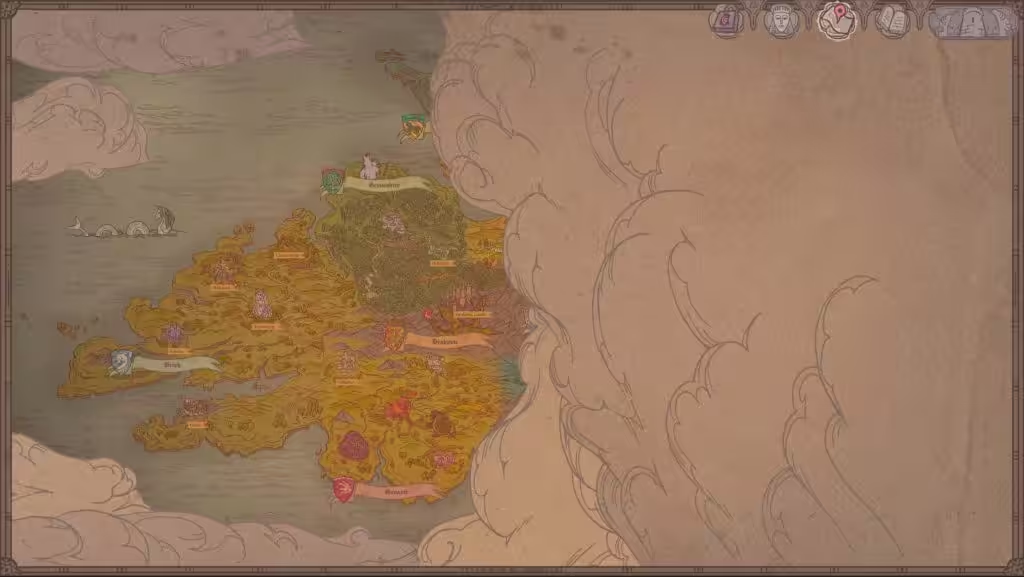
The Map Room becomes another regular stop. From there, you can examine the kingdom, interact with your advisor, and eventually call different figures to court. Elsewhere, another part of the Tower is dedicated to gathering information on your Knights. This becomes much more important than I initially expected.
You don’t simply recruit a Knight, look at a few numbers, and send them somewhere. Investigations reveal more information about their personalities and traits, both positive and negative. Since those details can heavily influence the outcome of contracts, learning who these people actually are is almost as valuable as improving their raw statistics.
Investigations also take time. Start one during the current cycle, and you won’t receive the information until the next. Then there’s the forge, where equipment can be managed and repaired, along with additional sections that become accessible as the Tower grows. Later, I also unlocked the stables, allowing me to purchase horses that can further influence a Knight’s capabilities.
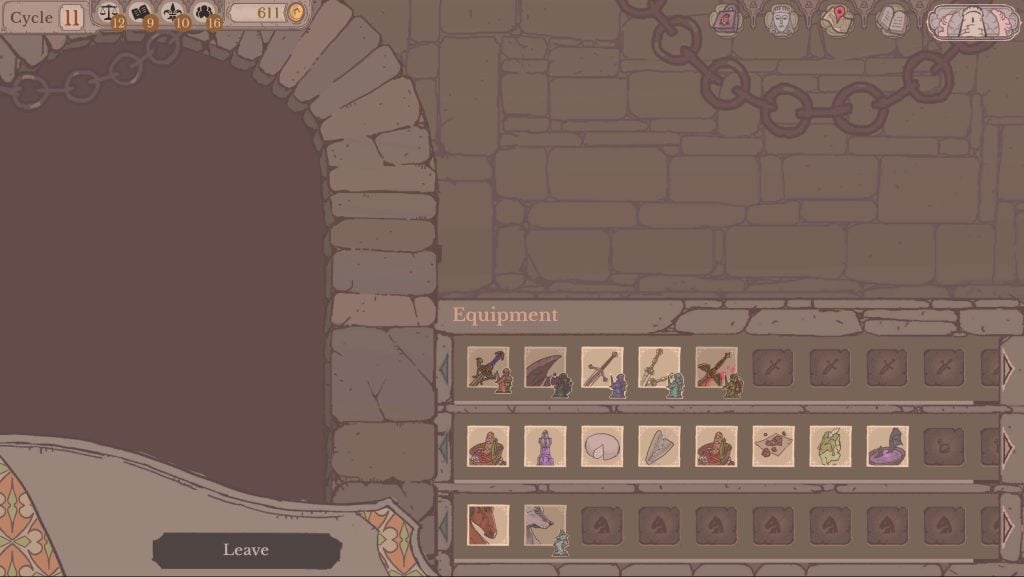
Weapons, shields, consumables, mounts, and other equipment all feed back into the same central question: Who should I send on this mission? That’s where Sovereign Tower really grabbed me.
The Round Table Is Where I Spend Most of My Time
Once everything else has been handled, it’s time to sit around the Round Table and decide which Knights should take on the available contracts. This is probably my favorite part of the game so far.
Every mission carries different requirements. Some may last a single cycle, while others keep a Knight occupied for two or more. There’s also a damage risk, so even success can potentially come at a cost.

Then come the attributes. Contracts look for different capabilities across 6 statistics: Agility, Charisma, Luck, Magic, Wits, and Strength, immediately giving you a rough idea of who is suitable for the job.
But looking only at those numbers is a mistake. The description of the mission itself matters just as much. Suppose a contract involves hunting an animal. One Knight might have the best raw stats, but another could possess a background or trait specifically connected to hunting. A mission involving a creature might become more appropriate for somebody with an affinity for animals. Other assignments have their own little clues.
This turns the Round Table into a process of reading, comparing, and second-guessing yourself. I often find myself moving between Knights, checking their characteristics, reconsidering the mission description, looking at the potential rewards, and changing my mind several times before finally committing.

Some contracts require only one Knight. Others need two, three, or even four, which makes the decision much harder when several interesting missions are available at once. Send your best people on one important assignment, and suddenly you’re left trying to cover everything else with whoever remains at court.
Money is one possible reward, but contracts can also improve your influence with particular groups or grant useful items. So even choosing which missions are worth pursuing becomes part of the strategy.
You Give the Orders, Then Live With the Consequences
When the assignments are finally settled, the cycle can end. Only then do you discover what happened.
The game reports how each mission played out and explains which elements contributed to its success or failure. Knights return to the Tower, experience is gained, and those who level up can improve their attributes.

I appreciate this separation between decision and result because there is always a little tension when ending a cycle. You’ve done everything you can. You’ve studied the contract, picked the person you think is best suited to it, equipped them properly, and taken their traits into consideration.
Now you have to find out whether you were right. There is no tactical battle waiting for you afterward. No opportunity to rescue a questionable decision through clever positioning or a perfectly timed ability. Your preparation was the battle. And once I understood that, the whole game clicked.
But What If You Could Change the Past?
There is another layer sitting behind all of this: time manipulation. Without going too deeply into story territory, the Sovereign gains access to a mysterious power capable of turning back time. That means knowledge itself can become a resource.
You can discover the consequences of a decision, rewind events, and approach the situation again knowing something your character couldn’t possibly have known the first time. It is a fascinating mechanic because the temptation is obvious. If something goes horribly wrong, why accept it when you might be able to change it?

At the point I’ve reached, however, the game also gives the impression that relying on this power may have consequences of its own. I’m still discovering exactly where that road leads, and I don’t want to spoil anything by digging too deeply into it here. What I can say is that the mechanic isn’t limited to correcting a bad dialogue choice.
Story developments can become considerably more serious. Without giving away specifics, situations involving threats inside the court can force you to reconsider previous actions and wonder whether changing the timeline might prevent something terrible from happening. That’s when the concept becomes much more interesting than a simple undo button.
The Knights Are More Than Numbers
Another aspect I didn’t expect to care about this much is the relationship with the Knights themselves. Between missions, some of them may ask to speak with you. They have their own concerns, histories, and problems, and giving them your attention can strengthen their loyalty.

It creates a useful contrast with the Round Table. One moment I’m looking at somebody almost mathematically: high Agility, useful trait, perfect for this contract. Then a little later that same Knight wants a private conversation, reminding me that this isn’t supposed to be a collection of statistics sitting around a table.
The better I understand them, the better I become at assigning missions too, so the narrative and management elements continuously feed into each other.
There Is More Going on Than the Daily Routine Suggests
I’ve described the basic structure of Sovereign Tower, but that doesn’t mean every cycle simply repeats the same checklist. The story continues developing behind everything you’re doing.

Unexpected events appear at court. Certain situations have deadlines. Some objectives may require reaching a particular level of influence with one faction before a specific cycle, while others can demand enough money or another resource before you’re allowed to proceed.
That makes long-term planning increasingly important. Spending money isn’t simply a question of whether you can afford something right now. Supporting one faction isn’t only about the immediate reward. Sometimes you’re preparing several cycles in advance for something you know is coming.
This is where Sovereign Tower becomes much more strategic than its relaxed presentation initially suggests.
I Shouldn’t Like Sovereign Tower This Much
Here is probably the most important part of my experience with the game. This isn’t normally my kind of RPG.
I like combat. I like having direct control over encounters. Give me positioning, abilities, tactical choices, and a system I can pull apart to understand exactly how it works. Sovereign Tower doesn’t really give me that. The combat system I would normally look for simply isn’t here.

And yet I’m currently around my eleventh cycle, and whenever the moment comes to turn off the computer, I keep thinking about completing just one more. Then another.
I want to see the outcome of the contracts I assigned. I want to know who will appear at court next. I want to investigate another Knight, unlock another section of the Tower, see where a choice leads, and find out whether the decision I made several cycles ago is about to come back and haunt me.
That, more than anything else I could say about its individual mechanics, probably explains how much I’m enjoying Sovereign Tower. A game built around systems I wouldn’t normally prioritize has managed to keep me glued to the screen.
Verdict
Sovereign Tower is difficult to reduce to a single label. It is part management RPG, part interactive narrative, part kingdom simulator, with a strategic layer built around understanding people and making decisions with incomplete information.
There are no battles to micromanage, but that doesn’t mean there aren’t difficult choices. Most of mine happen before a mission even begins: deciding who should go, what resources I’m willing to commit, which contracts deserve priority, which faction I can afford to upset, and whether changing the past is worth whatever consequences may eventually follow.
That won’t work for everybody. If direct combat is the main reason you play RPGs, you need to know what you’re getting into. I thought that might be a problem for me too. It wasn’t.
Sovereign Tower has turned out to be one of those games where “one more cycle” becomes surprisingly dangerous. I enjoyed the demo a lot, but the full release has convinced me even more.
And considering how far this kind of RPG sits from what I usually look for, that’s probably the strongest compliment I can give it. Here you can find the Steam page of the game.
