

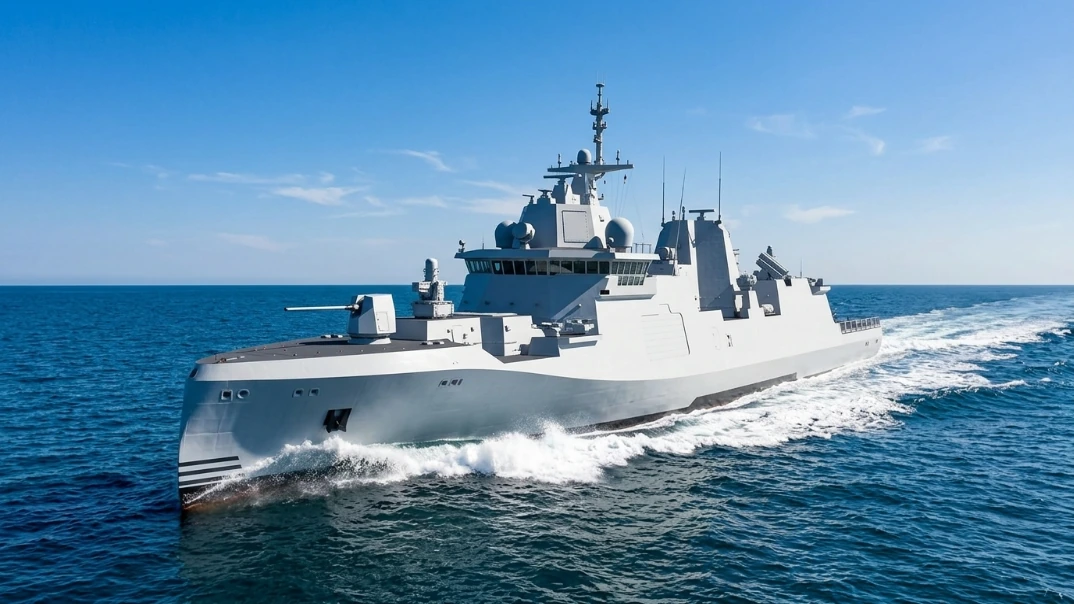
Defense Feeds, Düsseldorf – Rheinmetall unveils GMF-140 multi-role frigate concept, presenting a new vision for future surface combatants built around modularity, digital integration and operational flexibility. Rather than developing a platform optimized for a single mission, the concept emphasizes adaptability, allowing navies to tailor capabilities as maritime threats and operational requirements continue to evolve.
The unveiling reflects a broader trend across the global naval sector, where shipbuilders are increasingly designing warships capable of accommodating new technologies throughout decades of service rather than relying on fixed configurations established at launch.
Rheinmetall Unveils GMF-140 Multi-Role Frigate Concept
The announcement that Rheinmetall unveils GMF-140 multi-role frigate concept introduces a warship design intended to support a wide range of naval missions through a highly adaptable architecture. The concept combines modern combat systems, flexible mission spaces and scalable weapons integration to provide operators with greater freedom to configure the vessel according to operational requirements.
Instead of emphasizing a single warfare specialty, the GMF-140 is envisioned as a balanced multi-role platform capable of supporting air defense, anti-surface warfare, anti-submarine warfare and maritime security operations. This approach reflects growing demand for warships that can perform multiple tasks without requiring separate specialized vessels.
The concept also places significant emphasis on digital connectivity, enabling the frigate to operate as part of wider networked naval formations where information is shared rapidly across multiple platforms.

Modularity Is Reshaping Future Warship Design
Modern naval programs increasingly prioritize modularity as a means of extending operational relevance while reducing long-term lifecycle costs. Rather than undertaking expensive structural modifications every time new technologies emerge, navies are seeking platforms that can integrate upgraded sensors, weapons and mission systems through standardized interfaces.
The GMF-140 concept reflects this philosophy by adopting an architecture that can evolve as operational requirements change. Such flexibility allows future operators to modernize individual subsystems without redesigning the entire vessel, improving both affordability and adaptability over decades of service.
This design approach is becoming particularly attractive as technological innovation accelerates and the pace of naval modernization continues to increase.
Network-Centric Operations Drive Naval Modernization
Future frigates are expected to function as highly connected nodes within broader maritime combat networks rather than operating independently. Digital integration allows ships to exchange targeting data, sensor information and operational updates with aircraft, submarines, unmanned systems and allied naval units in near real time.
The GMF-140 concept appears to embrace this operational model by emphasizing advanced combat management systems and open digital architecture. Such capabilities improve situational awareness while enabling commanders to coordinate distributed maritime operations more effectively across multiple domains.
As autonomous systems become increasingly common, adaptable frigates may also serve as command platforms capable of integrating unmanned surface, underwater and aerial vehicles into future naval task groups.
A Concept Focused on Long-Term Capability Growth
Although the GMF-140 remains a concept rather than an active procurement program, it illustrates how defense companies are anticipating the operational requirements of future navies. Instead of designing ships solely for today’s missions, manufacturers are placing greater emphasis on scalability, software-defined capabilities and incremental modernization throughout a vessel’s service life.
For Rheinmetall, presenting the GMF-140 also signals a broader ambition to expand its role within the international naval market by offering integrated solutions that combine combat systems, digital technologies and modular platform concepts. This reflects growing industry demand for flexible designs capable of adapting to changing geopolitical and technological conditions.
The fact that Rheinmetall unveils GMF-140 multi-role frigate concept demonstrates how naval architecture is evolving toward adaptable, digitally connected warships designed to remain operationally relevant for decades.
As maritime security challenges become increasingly diverse, modular frigate concepts such as the GMF-140 are likely to influence future discussions surrounding next-generation fleet modernization and naval capability development.
