

Key Points
- Ukraine’s military intelligence agency says a North Korean missile unit of about 90 personnel is deploying to Russia’s Voronezh region under the 112th Missile Brigade.
- Russia expects the unit to eventually field 120 North Korean ballistic missiles and six launchers, with final numbers set at talks next month, Reuters reported.
A North Korean missile unit has begun moving into western Russia and could eventually field 120 ballistic missiles and six launchers aimed at Ukraine, Reuters reported, citing an official at Ukraine’s Main Directorate of Intelligence, the country’s military spy agency also known as GUR.
Andrii Cherniak, a spokesman for the agency, told Reuters that Russia plans to base roughly 90 North Korean personnel in Voronezh, a region in western Russia that sits about 95 miles (150 km) from the Ukrainian border, folding the unit into Russia’s 112th Missile Brigade. Voronezh has emerged as a logistics hub for Moscow’s war effort over the past year, offering rail and road connections south to Belgorod, a front-line Russian city, and further into Rostov, a staging ground for Russian operations in southern and southeastern Ukraine. The region also links to Kursk, where North Korean troops fought Ukrainian forces between November 2024 and March 2025 after Kyiv launched its largest cross-border incursion of the war.
Cherniak said the exact size and configuration of the missile deployment remains unsettled and will be worked out at high-level talks between Moscow and Pyongyang next month. What is already confirmed, he said, is that North Korea has shipped a fresh batch of 40 KN-23 and KN-24 missiles, along with the personnel to operate them, into Russia. Russia expects that shipment to eventually grow into a force of 120 missiles and six launchers, according to Cherniak, though he said it remains unclear precisely what role North Korean crews would play once the missiles are in Russian hands, whether launching them directly or supporting Russian units that do.
– ADVERTISEMENT – CONTINUE READING BELOW –
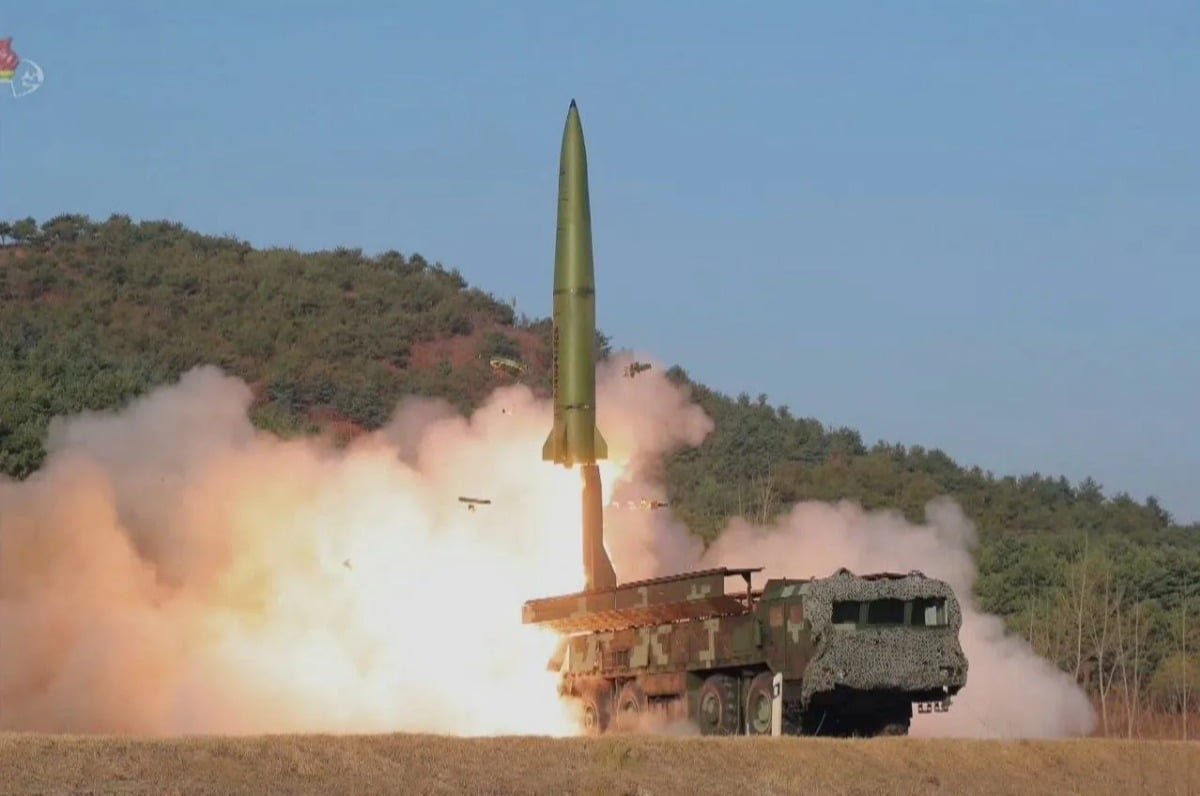
The KN-23 is a road-mobile, nuclear-capable short-range ballistic missile that North Korea has developed and repeatedly test-fired in recent years. Military analysts have long noted its close design resemblance to Russia’s own Iskander-M system, so close that Ukrainian officials have described the two as functionally interchangeable. The Defence Blog has tracked North Korea’s KN-23 exports to Russia since Moscow first began firing them at Ukrainian targets in late 2023, when the missile’s accuracy was poor enough that Ukrainian troops initially dismissed the threat. That has changed. Ukrainian officials have said the missile’s precision has improved sharply since then, a shift that Ukrainian and Western officials attribute in part to real-world combat data feeding back into North Korea’s weapons programs.
The stakes of that improved accuracy became starkly clear in late July, when a KN-23 strike killed six people, including three children, in the village of Radushne near Kryvyi Rih. Ukrainian presidential sanctions commissioner Vladyslav Vlasiuk later confirmed that investigators found a second KN-23 impact crater roughly 3.5 kilometers (2.2 miles) from that strike, in an open field with no apparent military target nearby, a detail he said undercut any claim that the missile had gone astray. Vlasiuk also said the KN-23 shares components with the Iskander-M, including parts of Western manufacture, a claim consistent with earlier findings that traced foreign-made electronics inside North Korean missiles to sanctions-evasion networks stretching across multiple countries.
The deployment Cherniak described follows Russia firing its first North Korean missiles at Ukraine since last August, a pause that had left analysts uncertain whether Pyongyang’s missile shipments to Moscow had slowed. Russia’s own missile production has struggled to keep pace with the war’s demands, a shortfall that has repeatedly pushed Moscow back to North Korea for both ballistic missiles and artillery shells. Pyongyang has supplied Russia with more than 100 KN-23 and KN-24 missiles since the war began, alongside millions of artillery shells and, by Western and Ukrainian intelligence estimates, more than 10,000 troops sent to fight in Russia’s Kursk region.
Ukrainian President Volodymyr Zelenskyy said last month that the Kremlin is pressing North Korea to send another 30,000 troops on top of that, with Russian preparations already underway in the Voronezh region to receive them. That figure, if it materializes, would more than double North Korea’s confirmed troop contribution to Russia’s war. It would also place a large North Korean footprint in the same region now expected to house the missile unit Cherniak described, suggesting Voronezh is becoming a central node for Pyongyang’s expanding military presence in Russia rather than a temporary staging post.
Ukraine is confronting the prospect of a larger North Korean missile presence at a moment when its own air defenses are stretched thin, particularly against the kind of high-speed ballistic threats that KN-23s and Iskander-Ms pose.
Ballistic missiles travel too fast for most short-range air defense systems to intercept, leaving Ukraine reliant on a limited stock of advanced interceptors, chiefly the U.S.-made Patriot system, to shoot them down. Russia has increasingly leaned on ballistic missiles for that reason, betting that Ukraine’s interceptor shortage will let more of them get through.
