


US President Trump’s “Big, beautiful armada” faces two major issues: firstly, when Operation Epic Fury was launched, it failed to secure the Strait of Hormuz; and secondly, it has no mine countermeasures ships onboard.
However, Italy’s frigate Martinengo has been deployed as part of the broader European presence near Cyprus, alongside the Spanish frigate Cristobal Colon. Meanwhile, the Netherlands has prepared the frigate HNLMS Evertsen for regional operations. The German frigate FGS Nordrhein-Westfalen has operated in the Cyprus area, and Greece has deployed its new frigate Kimon, equipped with a long-range air defence system. Additionally, the Hydra-class frigate Psara will also be sent.
France’s President Macron has announced, “I have ordered the Charles de Gaulle aircraft carrier, its air assets, and its escort of frigates to set course for the Mediterranean.”
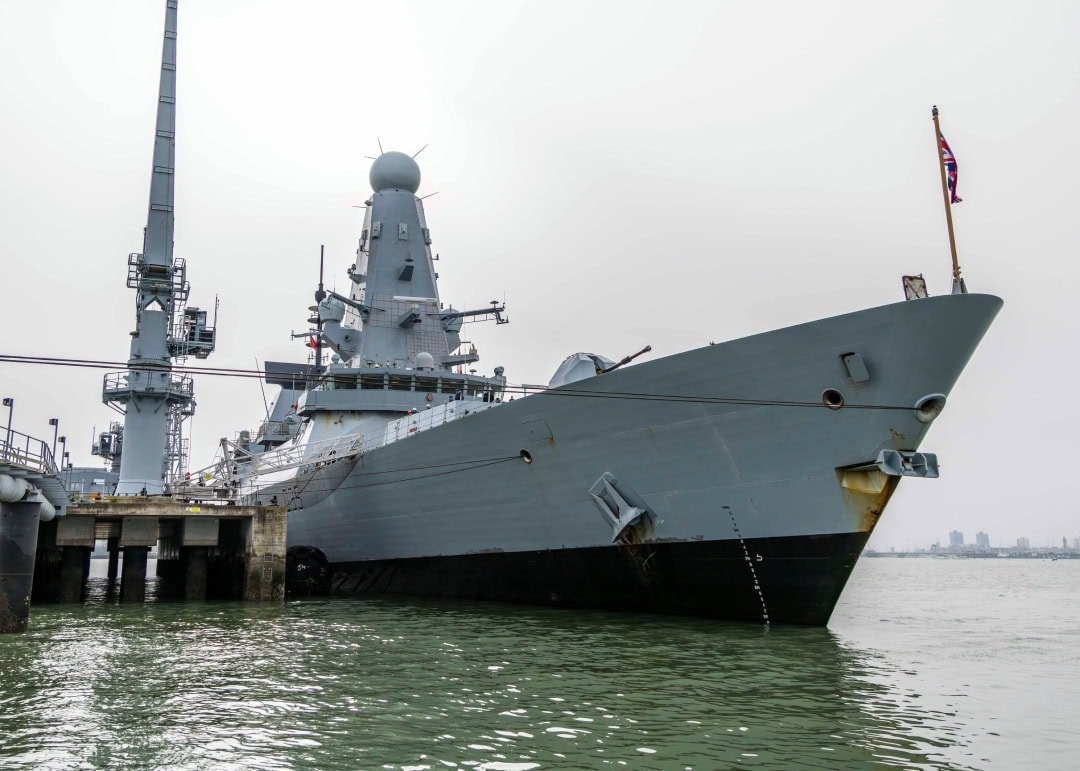
The Royal Navy’s Type 45, HMS Dragon, heading to Cyprus, is equipped with the Sea Viper missile system, capable of launching eight missiles in less than ten seconds and guiding up to 16 missiles at the same time.
The Royal Navy’s Mine and Threat Exploration Group (MTXG) has tested equipment in the Middle East’s warmer waters, including autonomous systems such as the Maritime Mine Countermeasures (MMCM) system and SeaCat Uncrewed Underwater Vehicles. It is not clear whether these have been offered to the United States for defensive operations.

On 10, it emerged that Iran likely started mining the Strait of Hormuz, one of the world’s key maritime routes, through which about one-fifth of global oil exports pass. The Safesea Vishnu, a US-owned vessel en route to India, was struck by an “unmanned speed boat carrying explosives” which “rammed into it, resulting in a major fire onboard”, according to Indian authorities.

The US military claimed to have destroyed 16 Iranian minelaying vessels near the Strait of Hormuz on March 10 but has no mine countermeasures ships in the Gulf. Although the exact number of naval mines in Iran’s arsenal is not known, it is estimated that Iran possesses between 2,000 and 6,000 mines of Iranian, Chinese, and Russian origin. Iran also has hundreds of small, fast attack boats armed with anti-ship weapons.
However, European allies have resisted Trump’s call for them to join a military mission in the Strait of Hormuz, which has not gone well for the US administration. Two sailors were injured in a fire on the USS Gerald R. Ford in the Red Sea on March 12, the US CENTCOM claimed in a statement, and added that there is no damage to the ship’s propulsion plant, and the aircraft carrier remains fully operational.
Meanwhile, the American military is dispatching additional forces to the Gulf, including an amphibious ready group (ARG) with the amphibious assault ship USS Tripoli and up to 5,000 Marines and sailors.

The other challenge the United States faces is how to replenish and rearm Trump’s “Big, Beautiful Armada”. This would involve storing and supplying fuel, spare parts, ordnance, and missiles being flown from the US, transported to ports that US Navy logistics and support ships can operate from safely, and replenishing the ships at sea. A certain amount of these supplies can be flown onto the carriers by C-2A Greyhound carrier onboard delivery (COD) aircraft, but not enough to keep the fleet fully active.
by David Oliver
