


There’s a fox clearing at the end of a road. The Cats want it because it connects a sawmill to somewhere they can build. The birds want it because they promised themselves a roost in a fox clearing this turn. The Vagabond wants to know if anyone there has a spare pair of boots. Everybody agrees on where the clearing is. Good luck getting them to agree on what it’s worth.
That’s why I keep coming back to Root as a design example. Plenty of games give three factions different units and still leave everyone asking the same question (how much force do I need to take this spot?). In Root the answer depends on what you’re trying to get done, and sometimes the most useful thing you can know is what the other player has to do next.
The Cats see a road
The Marquise de Cat builds with wood from sawmills. The catch is that wood can only pay for a building somewhere else if the Cats can connect the two through clearings they rule. They also have to rule the destination and have an open slot for the building. So the Cats are tracking a layer of the map nobody else cares about in quite the same way: where can I actually spend the wood I already have?
Knock the fox clearing out of that chain and the sawmill stays right where it was. The wood is still on the board. The Cats might even still rule the spot they planned to build in. But if that was their only connection, the project is on hold. One fight changes what their whole economy can do without touching a single resource token.
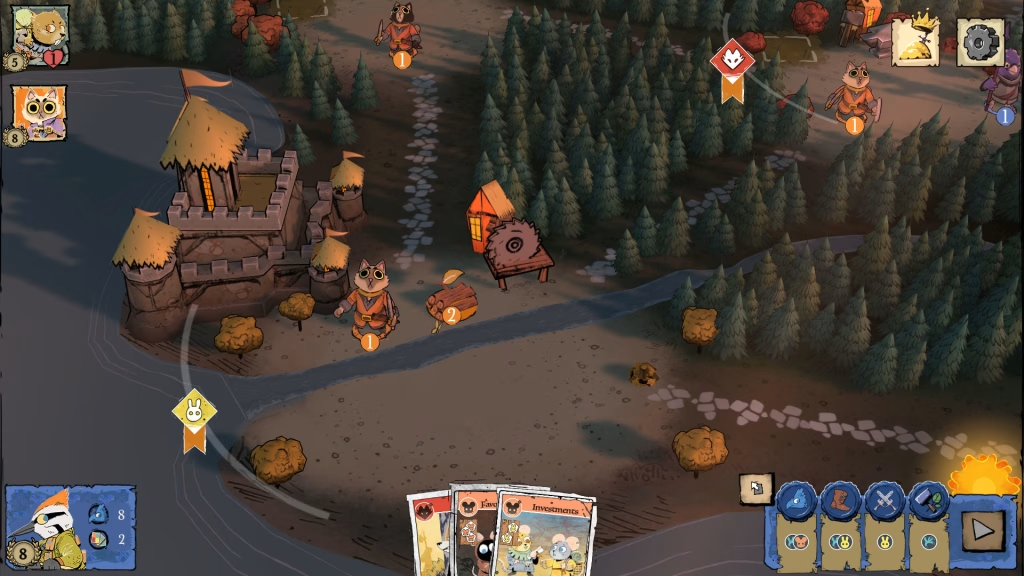
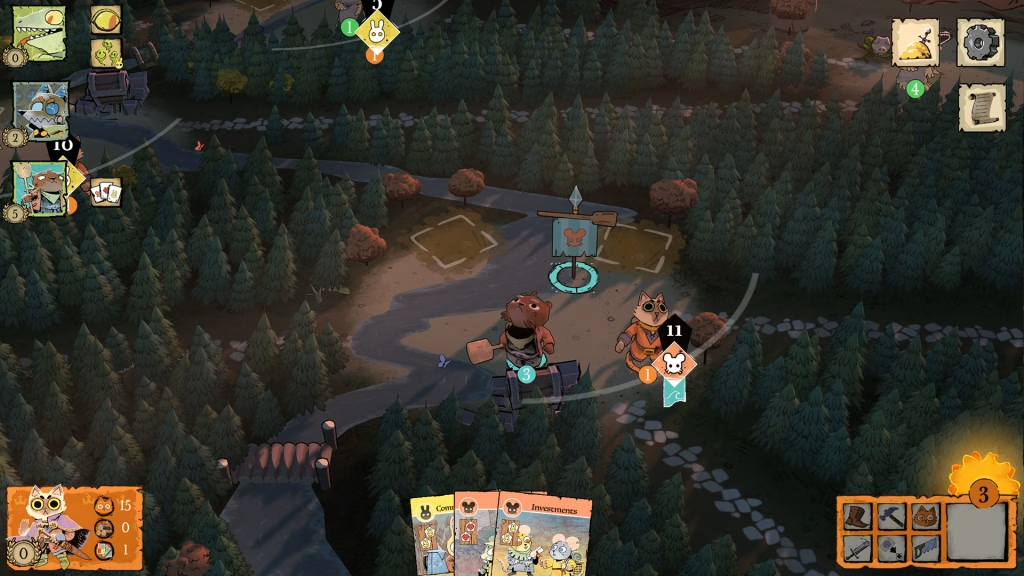
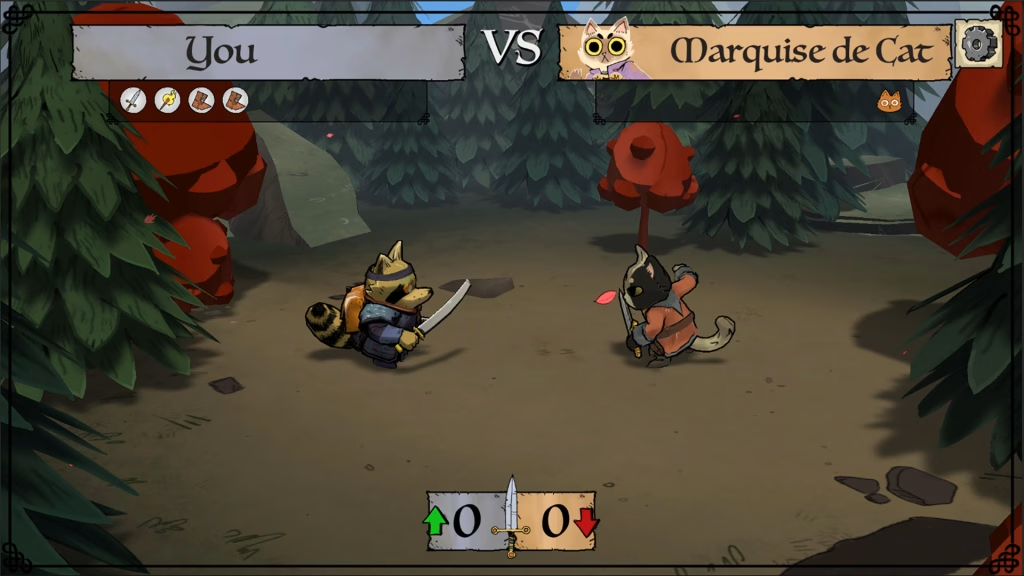
Flip it around and it’s just as interesting. Playing the Cats, the clearing with a building in it looks like the obvious thing to defend. The empty stretch connecting two halves of your territory might deserve those warriors more. You’re judging the ground by what it lets you do somewhere else.
The birds see an appointment they can’t miss
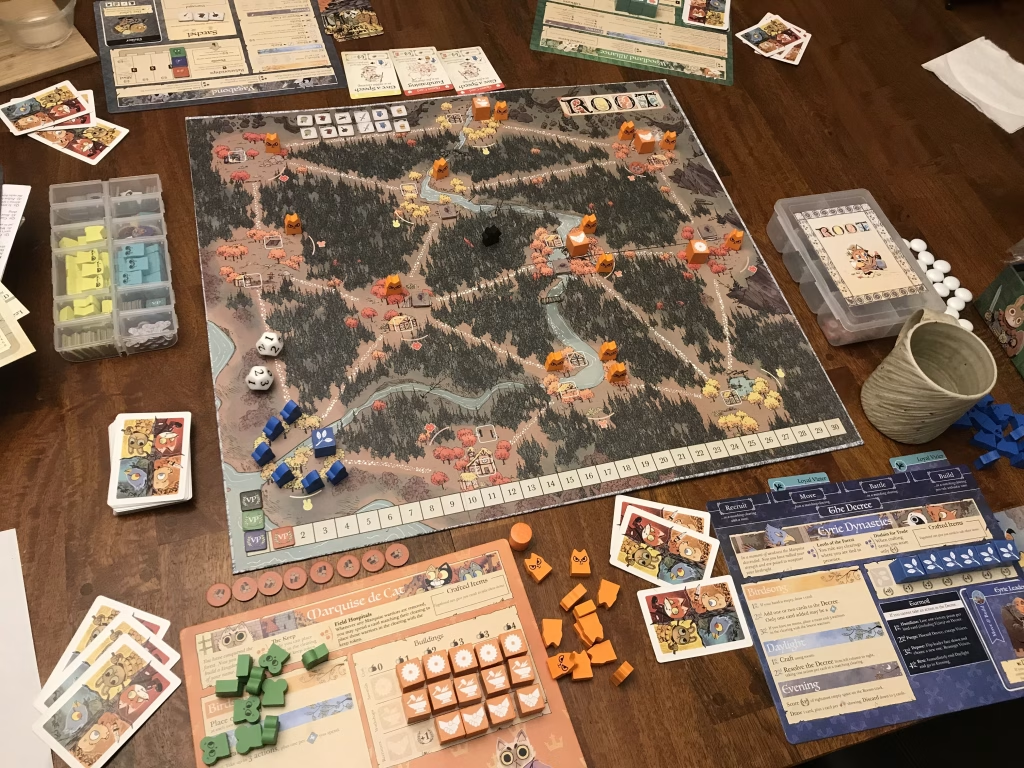
The Eyrie Dynasties add cards to their Decree, a running list of actions they have to carry out every turn. An extra card makes the next turn stronger. It also makes every turn after that harder to get through. Put a fox card in Build and, when you resolve it, you need a fox clearing you rule where a roost can legally go. If you can’t carry out a required action, the Eyrie fall into turmoil.
Say our fox clearing is the only place they can legally build by the time they reach that action. The Cats could take it before the birds’ turn, if they’re willing to commit the warriors. Even then it might not be enough: the Eyrie move and battle before they build, so they can take it back or open up another legal site. Before you commit, read across the whole Decree. Can they fix the problem before they get to the part you’re trying to break?
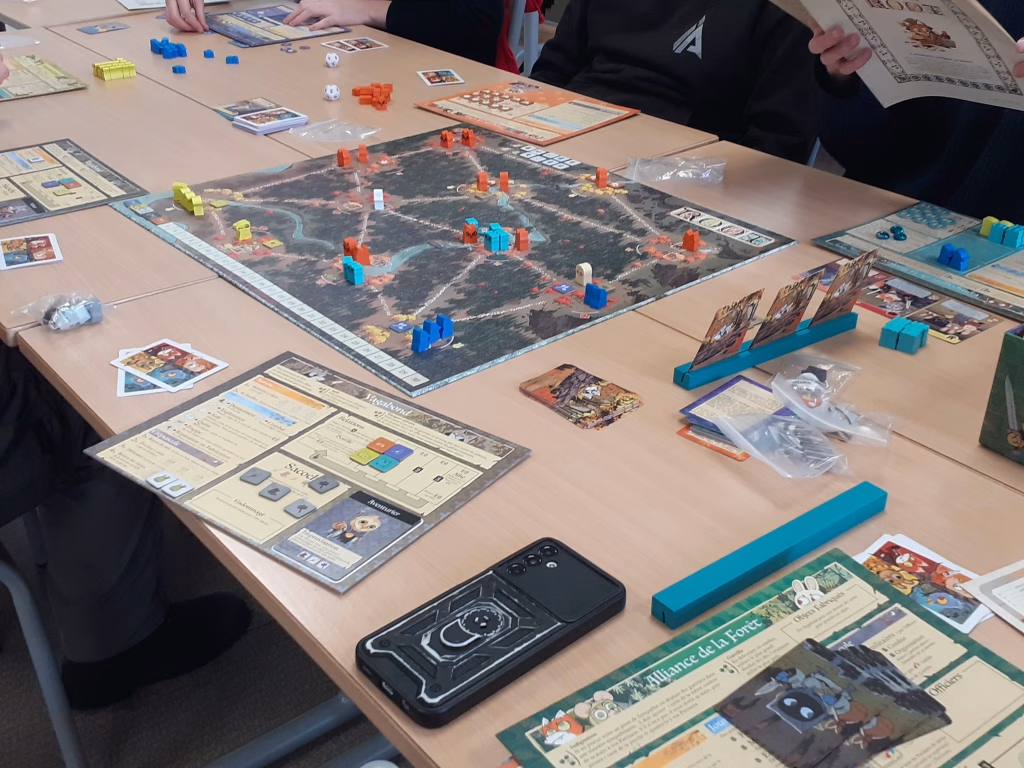
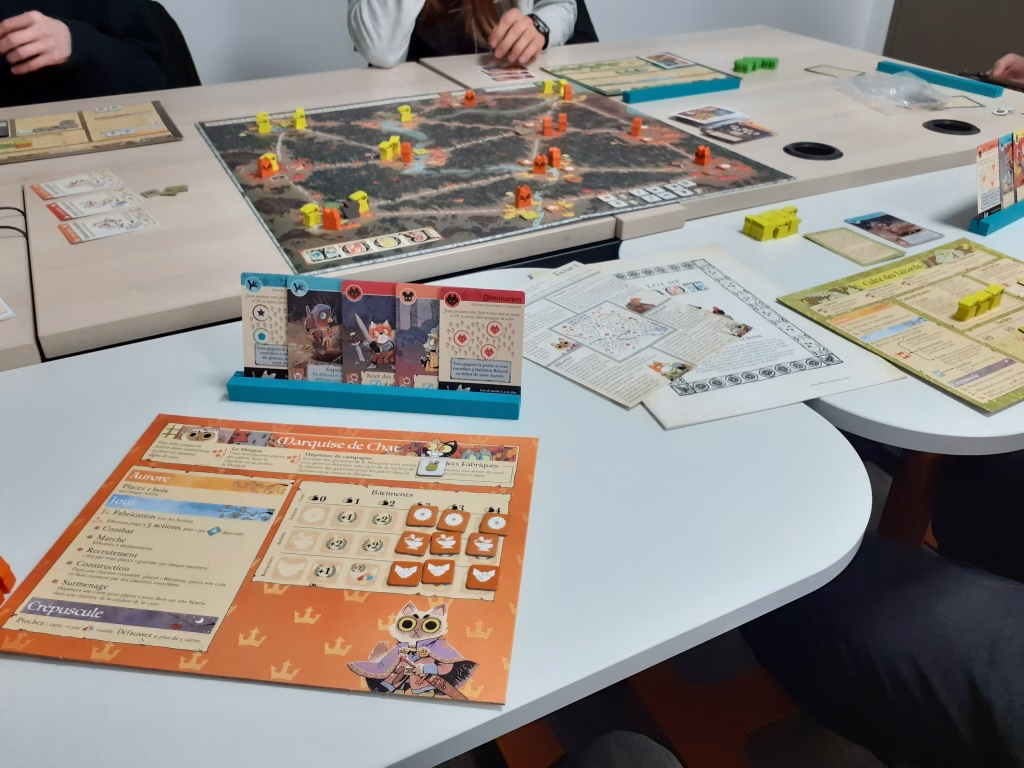
That’s a much better fight than a flat bonus against birds. The Eyrie get to make a big, public commitment, and the rest of the table gets to look at it and decide whether to interfere. Same units, same clearings, and I might leave the birds alone one turn and throw everything at that road the next. What changed was a card on somebody else’s board.
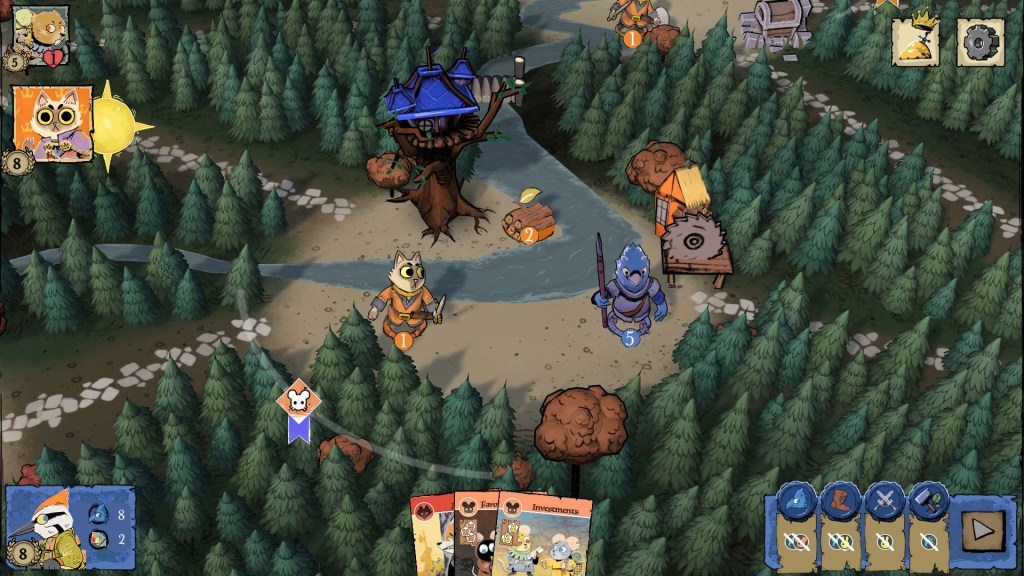
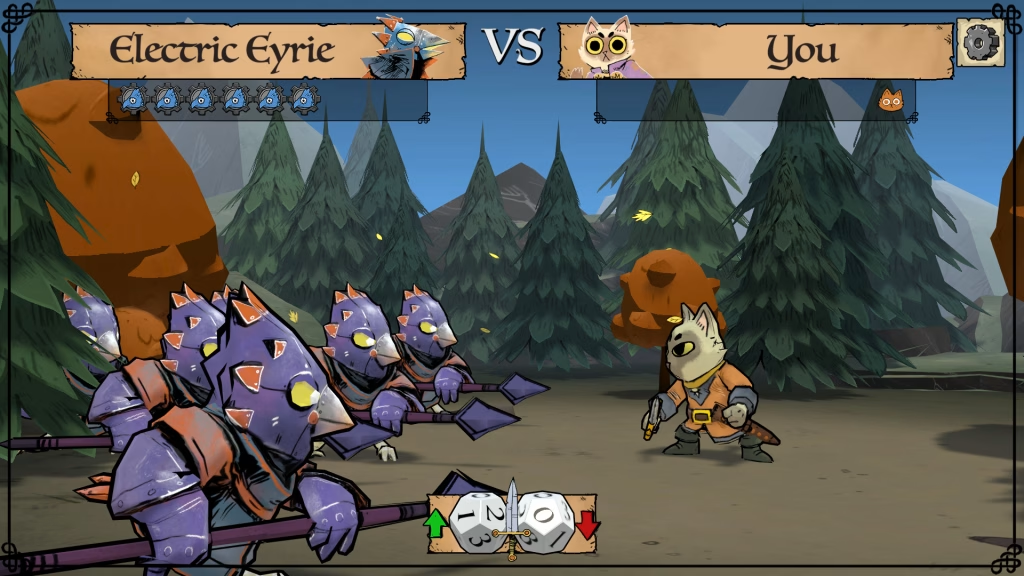
Turmoil has its own design question (one I’ll save for another piece). It can stop a growing engine cold. When the player looks down at what’s left, do they see the start of a new plan, or several turns of cleaning up the old one? That matters, but the point here is that everyone else can see the setback coming and do something about it.
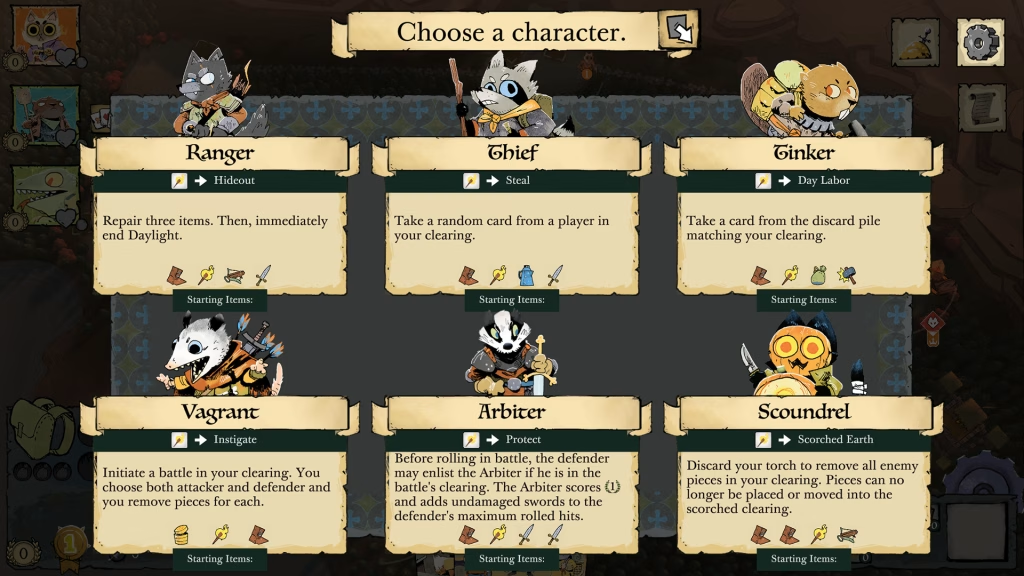
The Vagabond sees someone to trade with
Now look at the same clearing as the Vagabond. You might want to be there precisely because somebody else has pieces there. Aid lets you hand that player a card matching the clearing, and you take an item from their crafted items box if there’s one to take. A boot helps the Vagabond move. For the faction that crafted it, the card you hand over might be the part that matters.
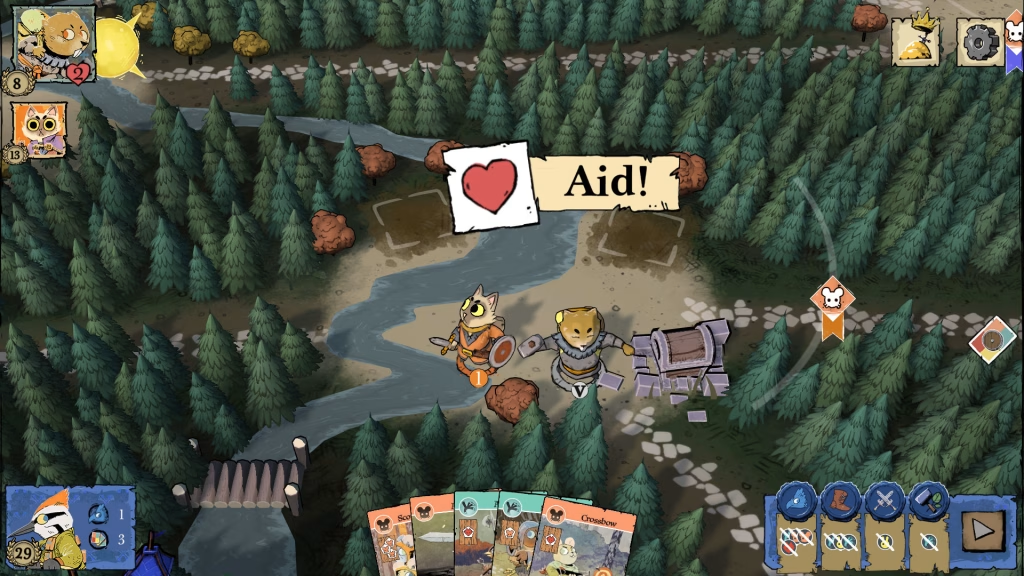
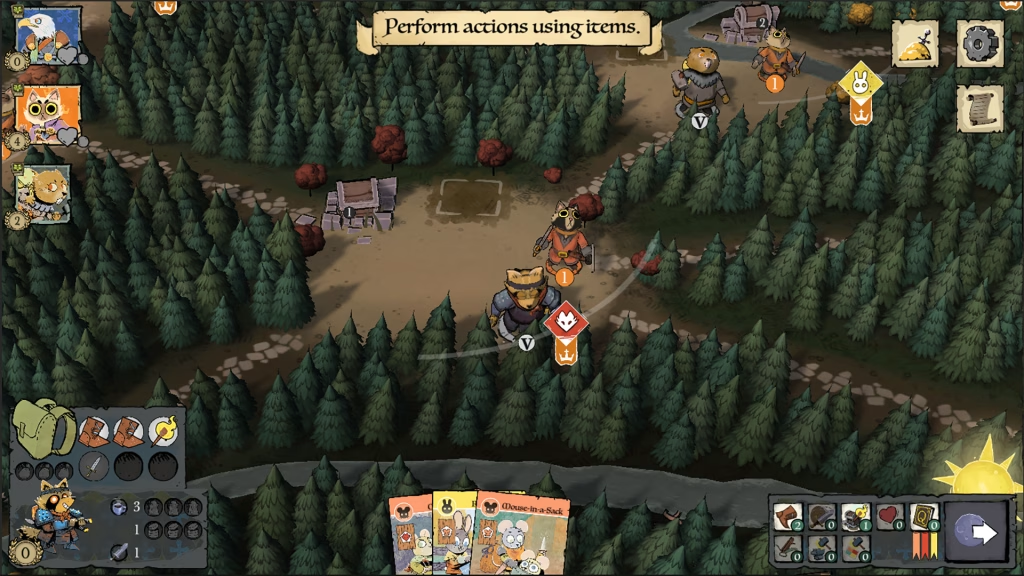
So the same move can help somebody you weren’t even thinking about. The Cats can break up a build and still leave the Vagabond with someone to aid. Or they can wipe out the exact faction the Vagabond was heading for and change where it makes sense to go next. No special event has to announce that these systems interact. One rule that makes another player’s presence useful to you, under the right conditions, does all the work.
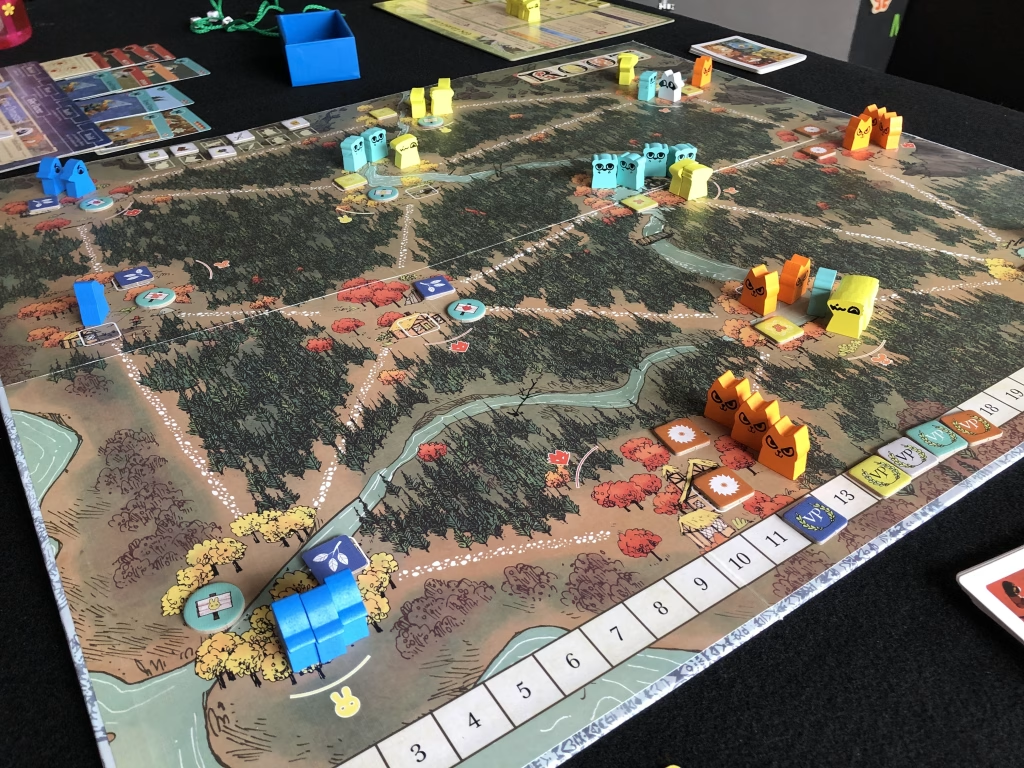
It also means the player ahead on points isn’t automatically the one whose next move deserves all your attention. Before you make a deal or pick a fight, ask what you’re making possible. A card, an open route and a legal building site look like small things… right up until one of them is the only thing a rival needs.
What I’d steal for a strategy game
Start with one piece of geography worth fighting over. In a 4X prototype, make it a frontier port. One faction needs the port to ship materials to its inland cities. Another uses it as the last stop on a patrol route it already committed to. A third does its best business when rivals keep using the harbor. You get a surprising amount out of that without building three separate tech trees.
Then play the same turn twice. In the first version, give each faction a different bonus for holding the port. In the second, let the port change what each faction can do on the following turn. Listen to what players ask before they move. “Who gets more out of taking it?” is a fine question. “What happens to your plan if I take it, and who benefits if I leave it alone?” is the one I’d hope to hear in the second version.
There’s a cost, of course. In a tabletop game, players have to learn enough about their opponents to spot an opening. In a digital game the interface can carry some of that, showing which convoy gets cut or what an opponent has publicly committed to. I’d start by making one consequence readable and see whether players actually use it. Adding another faction rule is pointless if the people playing against it can’t tell when it matters.
That’s the test I’d take from Root. Can you point to one spot on the map and explain why three players want three different things to happen there? Better yet, can one of them make a strong move just by understanding what that spot means to somebody else?
Sources: The Law of Root, Leder Games, October 2025, especially rules 6.5.4, 7.5–7.7, and 9.5.4; Noe Chicas’s analysis of Root, which prompted this piece. The fox clearing and frontier port are hypothetical.

Semi-retired game designer and developer trying to use my experience to enhance the strategy and strategy adjacent gaming sector. Strategy game player for over 35 years. Game development experience in AAA, Indie, and Board.
