

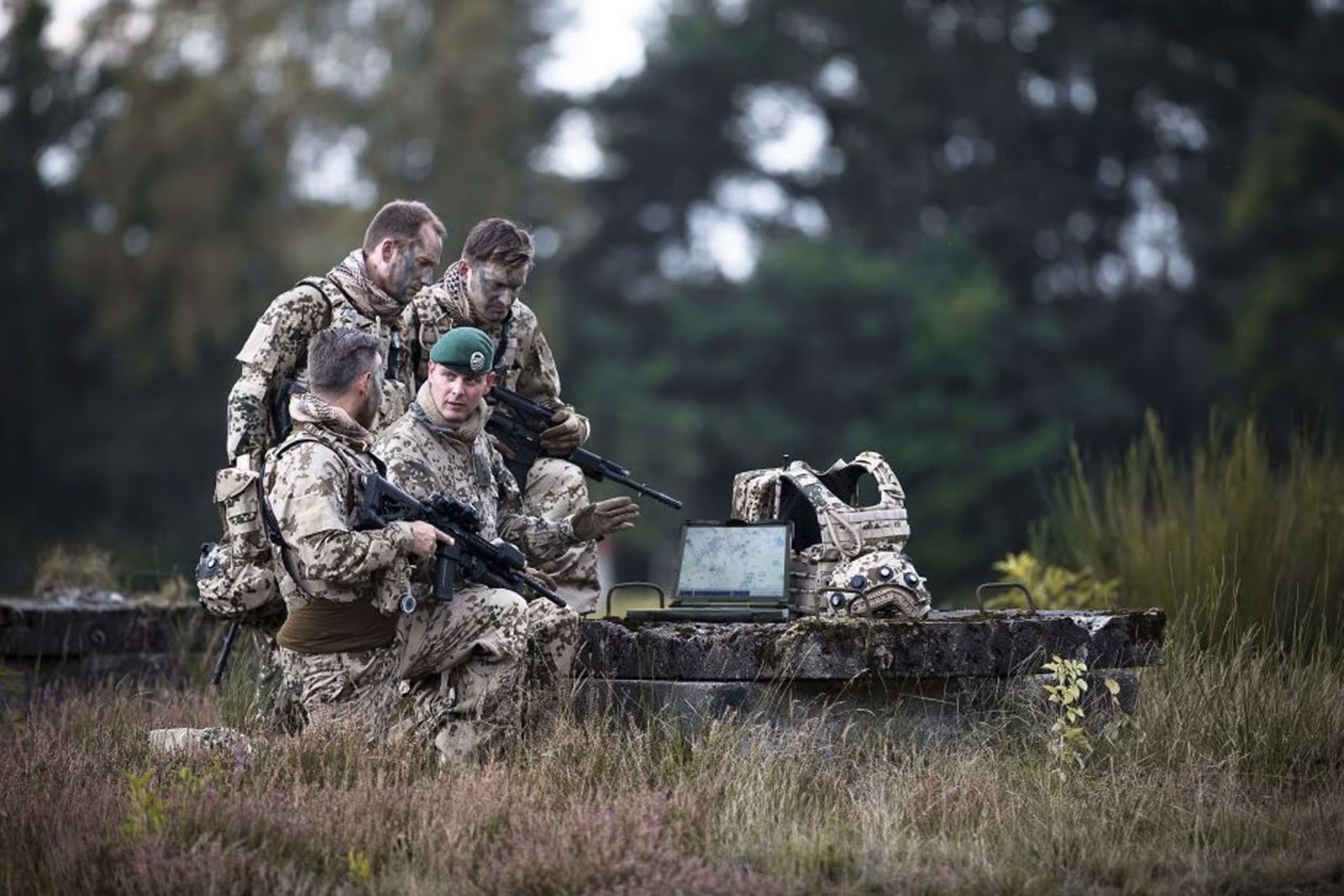

Rheinmetall Electronics UK will deliver a major share of the British Army’s future collective-training system under the £2 billion Army Collective Training Service (ACTS) contract awarded in July 2026 to the Raytheon UK-led Omnia consortium consisting of Capita, Cervus, Rheinmetall UK and Skyral. The 15-year programme will give commanders and combat units a connected training environment that can replicate complex, high-threat operations without the cost and safety limits of large conventional exercises.
Rheinmetall’s share of the contract is worth just under €1 billion to support training for up to 60,000 soldiers each year, from company-level forces to headquarters. By linking live field exercises, crew simulators, computer-generated formations and performance data, ACTS is designed to improve command readiness and prepare British forces for division- and corps-scale warfare. An Early Works and Risk Reduction (EWRR) Contract is intended to bridge the transition from the current Collective Training system to ACTS and mitigate transition and delivery risks. The EWRR contract is required to support STEADFAST DEFENDER 27 through direct support to a NATO Exercise, named ARRCADE STORM 26, which will develop UK Sovereign capability and demonstrate UK commitment to the Strategic Reserve Corps.
The Canadian Calian Group has announced that its UK subsidiary, Calian UK, has also secured a 15-year agreement with Raytheon UK, the consortium lead for Raytheon UK-led Omnia Training, to support the ACTS programme. The agreement, set to start in October 2026, is worth approximately £159 million over 15 years, extending one of Calian’s largest defence training programmes.
Calian UK’s role in ACTS builds on its legacy support to the UK MoD and British Army under Project NUMIDIAN, where the company delivered specialised collective training services designed to expose the British Army to challenging, contemporary threats and enhance operational readiness.
In 2024, Calian Group purchased UK-based training company Mabway, which managed large-scale defence role-playing environments that simulate real-world operational environments and provides technical engineering education for naval and maritime communities.

by David Oliver
