

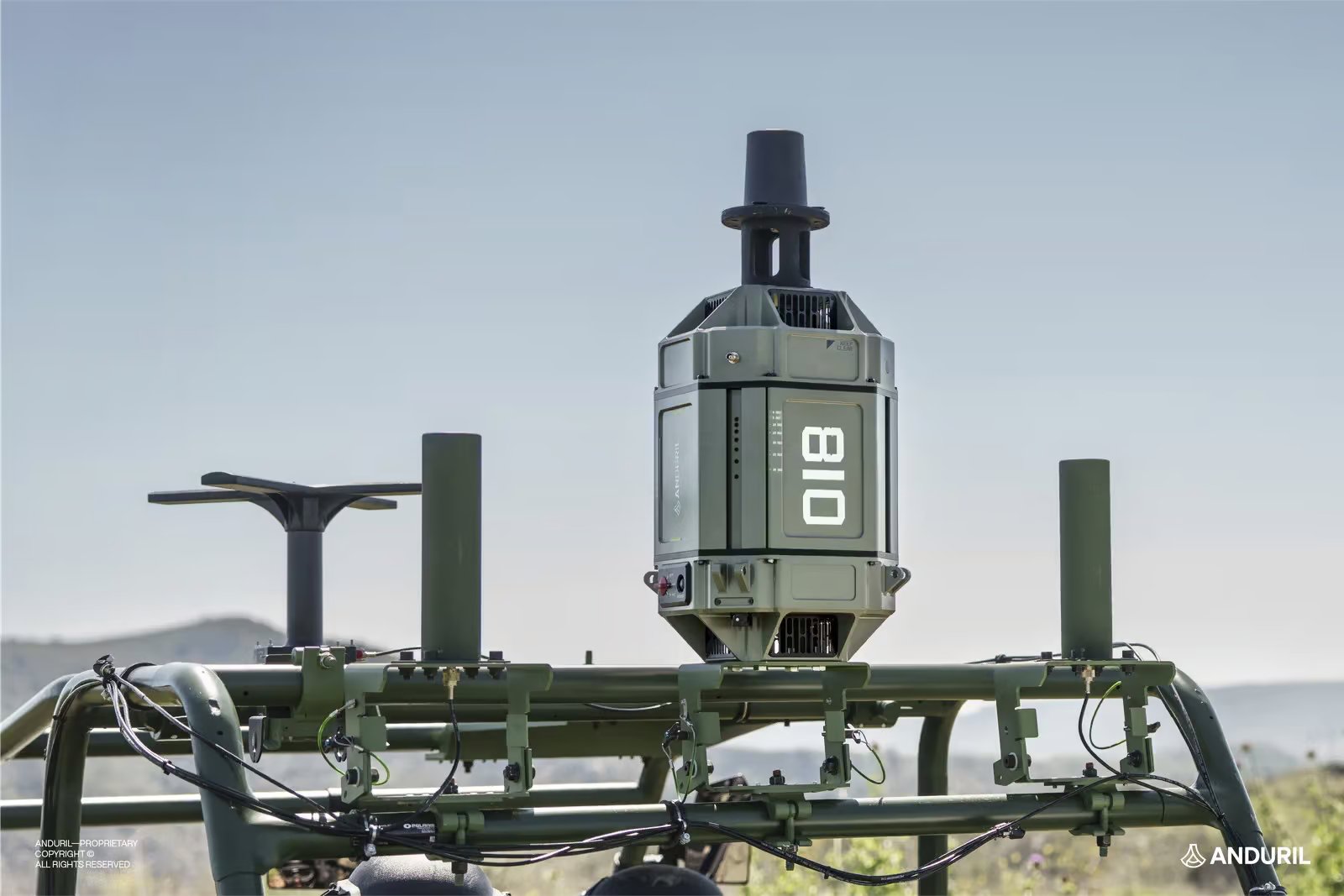

The US Marines have announced their intention to acquire the Anduril Pulsar Lite MKI-RX/TX 4CH system for integration into its Amphibious Combat Vehicle (ACV) to provide drone detection and non-kinetic defeat capability. The 8 x 8 ACV is the Marines’ primary infantry carrier for ship-to-shore assault and subsequent land combat operations. Incorporating the Pulsar provides its vehicle crews the ability to detect drones electronically and to disrupt their control and operation using non-kinetic means.
The Pulsar is a family of electronic warfare systems that detect, identify, track, and defeat targets in a compact, lightweight, self-contained system. It is designed to operate autonomously. According to Anduril, “The system is an agile software-defined EW system that can swiftly adapt to changing threats and mission needs in all domains.” The ACV configuration will include 360-degree electronic surveillance that passively detects drone signatures and provides an alert to the operator/vehicle crew, along with a graphic representation of the threat, including its numbers, direction, and posture. The Pulsar then uses AI-enabled electronic signals that target the threat’s controls, position/navigation, and timing, turning off the drone and neutralising it. The electronic defeat mechanism will counter a single or drone swarm. The system is software-defined and designed to accept upgrades addressing future threats. This radio frequency machine learning (RFML) enables rapid identification and adaptation to emerging threats at the edge.

According to the publicly released justification Notice of Intent to Sole Source and Sources Sought on August 3, 2026, the PM for the Advanced Amphibious Assault will negotiate directly with Anduril Industries as the Pulsar was identified by the Marines as the sole system available to meet their requirements. The Pulsar effort will include configuring the system for ACV fitting, including a control station interface, an omnidirectional antenna array, electronic warfare software, and warranty and life support.
The Pulsar is also offered in a man-portable/expeditionary version (Pulsar-L), weighing under 11.4 kg (25 lbs), as well as vehicle (Pulsar-V), fixed site, airborne (Pulsar-A), and UAS-borne versions. Pulsar is an off-the-shelf system designed for deployment across a wide array of mission environments. Its modular design allows upgrades as technology evolves. Pulsar-L can be operated independently or integrated with Lattice and is compatible with other C2 and Common Operating Picture solutions, including TAK.
by Stephen W. Miller
