

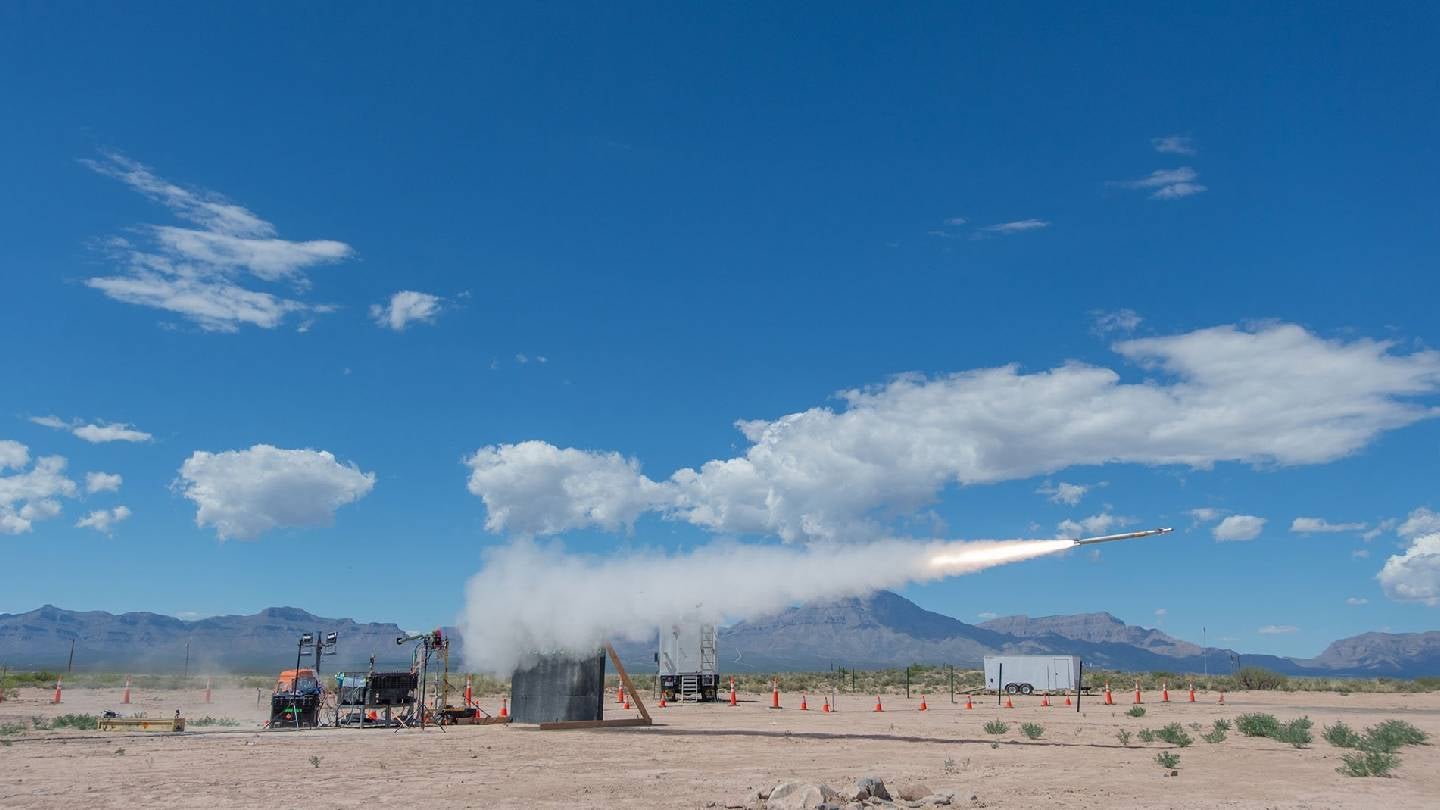
Lockheed Martin has successfully completed the Seeker Characterization Flight Test (SCFT) for its QuadStar missile, a key phase in the US Army’s Next-Generation Short-Range Interceptor (NGSRI) programme.
This test represents a critical “risk reduction milestone” for the programme, the company said in a statement on 11 May, adding that it enables the US Army to proceed to the next stage in selecting a replacement for the legacy Stinger missile.

Discover B2B Marketing That Performs
Combine business intelligence and editorial excellence to reach engaged professionals across 36 leading media platforms.
Find out more
During the recent SCFT, Lockheed Martin launched a QuadStar missile from a Command Launch Assembly. The missile flew along a tactical trajectory and demonstrated seeker performance at a range beyond the capabilities of the current system.
The primary objective for the test team was to verify the seeker’s ability to acquire target imagery, process signals internally, and maintain continuous target tracking throughout the flight.
Lockheed Martin confirmed that the test validated the performance of the Command Launch Assembly and the QuadStar interceptor, confirming core system functions and seeker technology.
The results showed that the new seeker design, which uses AI for signal processing and open-systems architecture, can reliably engage a range of threats, including unmanned, rotary, and fixed-wing platforms.
The latest test was completed after a three-month development period from the initial flight to SCFT, aligning with the US Army’s timeline for fielding a replacement for the Stinger missile.
Lockheed Martin NGSRI business development lead Chris Murphy said: “Completing the seeker characterisation in under six months highlights the speed, flexibility and drive the Lockheed Martin team brings to this customer.
“We remain committed to delivering highly capable, readily manufacturable and affordable solutions that meet the Army’s immediate and future needs.”
In February, RTX’s Raytheon carried out a ballistic test of the US Army’s NGSRI missile, confirming the interceptor could track drone targets and be launched from a man-portable system.

