

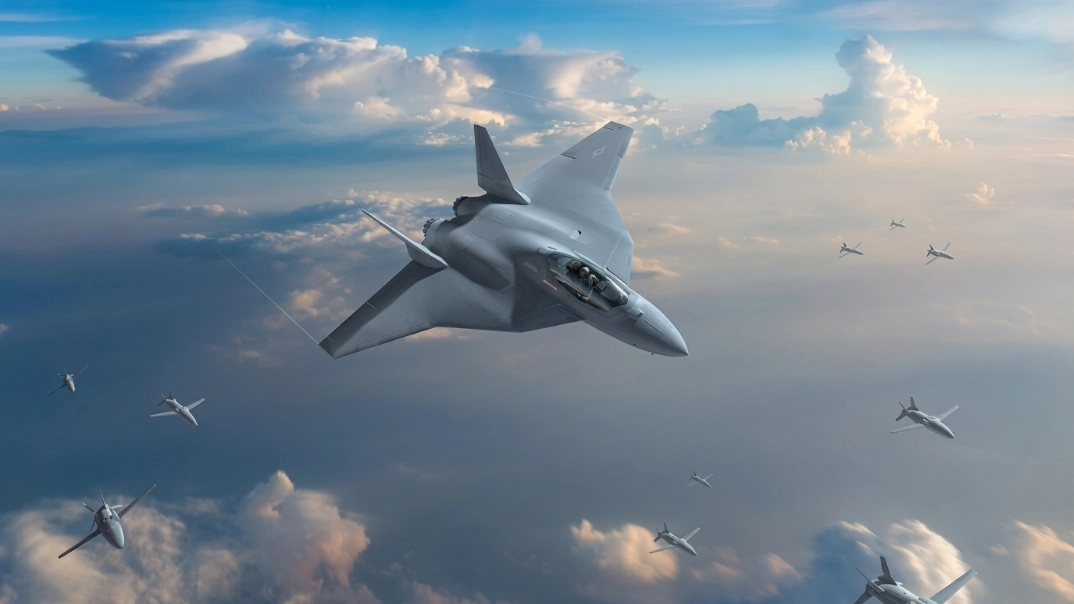
Defense Feeds, New Delhi – India pursues French FCAS sixth-generation fighter program, opening a new chapter in the country’s long-term effort to secure next-generation air combat capabilities. India’s Ministry of Defence has confirmed that it has initiated efforts to join the French-led Future Combat Air System (FCAS), following the breakdown of the previous Franco-German fighter partnership in June 2026.
The move comes while India is simultaneously developing the indigenous Advanced Medium Combat Aircraft (AMCA), expanding its Rafale fleet and dealing with a significant fighter squadron shortfall. That makes the FCAS initiative less about replacing AMCA and more about ensuring India does not fall behind in technologies expected to define air warfare after 2040.
India Pursues French FCAS Sixth-Generation Fighter Program
The decision that India pursues French FCAS sixth-generation fighter program follows the collapse of the original Franco-German arrangement after France and Germany ended their joint fighter development effort on June 8, 2026. Disagreements between Dassault Aviation and Airbus over industrial leadership, workshare and intellectual property had made the original structure increasingly difficult to sustain.
For India, however, the breakup has created an unusual opening. Rather than entering the original three-nation framework alongside France, Germany and Spain, New Delhi could potentially negotiate directly with France over participation in a restructured program.
The precise form of Indian involvement remains unclear. Important questions include how much design responsibility India would receive, what technologies could be transferred and whether Indian companies would participate in core development rather than simply manufacture selected components.
Those details could ultimately determine whether joining FCAS provides India with meaningful technological gains or primarily gives it access to another foreign-developed combat aircraft.

FCAS Is More Than a Sixth-Generation Fighter
The most important aspect of FCAS is that it is not simply a conventional fighter aircraft program. The original Future Combat Air System concept was structured as a broader system of systems centered around a New Generation Fighter, unmanned Remote Carriers and a Combat Cloud.
The architecture is intended to connect crewed aircraft, autonomous platforms, sensors, command nodes and weapons through a common digital network. This would allow information collected by one platform to be distributed across the wider force, potentially allowing aircraft to coordinate missions without each platform operating independently.
For India, this part of the program may be more valuable than the fighter airframe itself. Technologies such as secure high-capacity data links, autonomous systems, sensor fusion and collaborative unmanned aircraft represent areas where the country’s future air force could gain capabilities that go beyond the traditional fifth-generation fighter model.
India Faces a Fighter Fleet Gap
The FCAS initiative also has to be viewed against India’s immediate airpower problem. The Indian Air Force currently has 29 active fighter squadrons against an authorized strength of 42, leaving a shortfall of 13 squadrons. At the same time, around 110 to 120 Jaguar aircraft are expected to retire between 2028 and the mid-2030s.
This creates a difficult procurement equation. India needs additional aircraft in the near and medium term while simultaneously investing in technologies that may not enter service for many years.
New Delhi is therefore pursuing several tracks at once. The country is expanding its Rafale fleet, increasing Tejas production and continuing development of AMCA while exploring participation in a sixth-generation program. The Indian government has also been considering a larger Rafale acquisition as part of its effort to prevent further contraction of fighter strength.
The strategy is expensive, but waiting until the 2040s to begin developing sixth-generation technologies would potentially leave India attempting to catch up after the technological architecture has already been established by other major powers.
AMCA Remains India’s Indigenous Priority
India’s interest in FCAS does not mean that the AMCA program is being abandoned. The indigenous fighter remains central to India’s effort to develop sovereign fifth-generation combat aircraft capabilities.
The AMCA and FCAS programs overlap in several technological areas, including stealth shaping, composite structures, radar-absorbent materials, AESA radar, electronic warfare and sensor fusion. That overlap creates an important question for Indian planners: what additional capabilities would FCAS provide that are not already being developed through AMCA?
The answer could determine whether international cooperation delivers sufficient value to justify the financial and industrial commitments involved.
The most strategically valuable areas could be technologies associated with collaborative combat aircraft, combat-cloud architecture, autonomous mission management, advanced propulsion and high-capacity secure communications. These capabilities could potentially be incorporated into India’s wider air combat ecosystem rather than being limited to a single fighter platform.
