

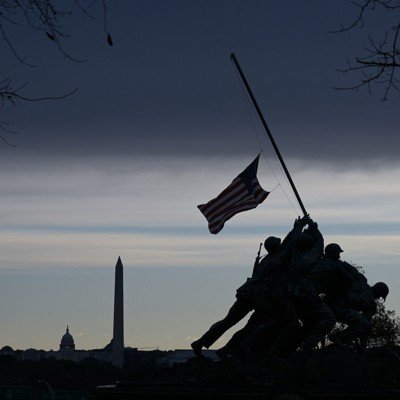
Every Veterans Day, America’s leaders honor the men and women who served our country. They praise their courage, acknowledge their sacrifices, and reaffirm our nation’s promise to care for veterans and provide the benefits they have earned—as they should. But the true measure of that promise is not what our leaders say on November 11. It is what they do the other 364 days of the year.
For America’s 17.6 million veterans, that promise is more than a patriotic sentiment. Millions depend on the Department of Veterans Affairs for medical care and earned benefits. Fulfilling our obligation requires adequate funding, modern facilities, and reliable technology. But none of these can examine a patient, evaluate a disability claim, or comfort a veteran in crisis. Those responsibilities fall to VA’s physicians, nurses, psychologists, social workers, claims examiners, and other public servants. Our promises to veterans are only as strong as our commitment to the employees entrusted with keeping them.
During his January 2025 Senate confirmation hearing, VA Secretary Doug Collins promised to be employees’ “biggest cheerleader” and unleash the power of VA’s “wonderful workforce.” Senate confirmation hearings are, after all, job interviews, where reassuring answers come easily and promises cost nothing. Once confirmed, however, another Doug Collins emerged. Instead of championing VA employees, he advanced plans to eliminate tens of thousands of VA positions, imposed sweeping return-to-office mandates, and implemented the administration’s elimination of collective bargaining protections for most VA employees.
Consider Collins’s approach to staffing. In March 2025, the department announced plans to eliminate approximately 83,000 positions—15% of its workforce—without first explaining how VA could fulfill its expanding responsibilities with so many fewer employees. The apparent lack of a coherent strategy alarmed lawmakers, including Republican Senator Jerry Moran, who cautioned him: “We need to be strategic, not simply hit a number.” At a May Senate hearing, Collins sought to reassure lawmakers and veterans, insisting that “no one has discussed firing doctors or firing nurses.” Nine days later, Representative Mark Takano confronted him with an internal VA spreadsheet calculating savings from eliminating nearly 4,000 nurses and 400 psychologists. Collins dismissed it as “pre-decisional.” Congress deserved a clearer explanation of how such reductions could be contemplated while the secretary assured lawmakers that frontline medical positions were not under discussion.
Collins eventually abandoned mass layoffs, but approximately 30,000 VA employees departed by the end of 2025. The administration’s attitude toward federal workers hardly encouraged them to stay. Trump’s budget director, Russell Vought, had openly expressed a desire for federal bureaucrats to be “traumatically affected.” Add return-to-office mandates and uncertainty about job security, and the consequences for morale are hardly surprising.
For veterans, the consequences can be far more serious than low morale. At the Washington, D.C., VA Medical Center, four of five full-time diagnostic radiologists resigned during the second half of 2025, with return-to-office requirements contributing to their departures. The resulting staffing shortage disrupted services, created a CT scan backlog, and increased VA’s reliance on outside providers, according to its inspector general. Veterans need timely diagnoses, not an ideological debate about where a radiologist sits while interpreting their scans.
Replacing departing professionals is another challenge. Federal News Network reported a 45% decline in VA job applications, while VA’s inspector general identified severe occupational shortages at all 139 health care facilities surveyed. An October CNN investigation found nearly 40% of positions vacant at VA’s new Fredericksburg health care center, where one Marine veteran had cycled through four primary care physicians in roughly 18 months. The consequences are already visible in veterans’ care. A July CNN investigation found that waits for initial mental health appointments exceeded VA’s 20-day target at 541 facilities, with some veterans waiting months. Collins touts improvements in access to care, but veterans measure progress differently: Can they get an appointment, see a doctor, and receive treatment when they need it?
VA’s electronic health record modernization raises additional questions about leadership and accountability. In August, VA increased its Oracle contract ceiling from $10 billion to approximately $27 billion, even as the project continued to face delays, technical problems, and patient-safety concerns. The increase prompted bipartisan congressional scrutiny, including a unanimous House committee vote to subpoena Oracle executives. Lawmakers have demanded that Collins explain who authorized the increase, how VA justified it, and why Congress was not adequately informed. Veterans deserve a modern, safe electronic health record system, and taxpayers deserve transparency about its costs and accountability for how their money is spent.
Collins also celebrates VA’s record processing of 3.11 million disability claims in fiscal year 2026, an important accomplishment. But speed and accuracy are not interchangeable. At the Board of Veterans’ Appeals, a survey of 311 attorneys conducted by AFGE Local 17 found that 97% believed increased production quotas heightened the risk of factual or legal errors, while 93% reported insufficient time for the independent review required by law. The survey does not establish actual error rates, but its findings raise troubling questions. For a veteran waiting years for a decision, a faster answer is no victory if it is the wrong answer.
These problems share a common thread: leadership that places too little value on the judgment and experience of its employees. From my perspective as a longtime VA employee, Collins’s most consequential management failure is his disregard for workplace culture and employees’ concerns. A healthy workplace encourages employees to identify problems, challenge ineffective policies, and propose solutions without fear of retaliation. It also helps retain the professionals VA needs. Representative Maxine Dexter of Oregon, a physician, recognized this connection during a February congressional hearing on Collins’s proposed reorganization of VA health care, urging him to focus on the workplace culture and employees necessary for reform to succeed.
After nearly 30 years at VA, including 15 years advocating for employees through AFGE Local 17, I have never witnessed morale sink so low at VA Central Office in Washington, D.C. Employees describe fear, frustration, and resignation. Some speak almost as though they are grieving for an institution they once took pride in serving. I repeatedly wrote to Collins warning that employees were afraid to raise concerns and talented professionals were disengaging or leaving. Did he listen? No. Instead, VA imposed a two-day suspension on me, citing, among other things, my use of government email to communicate those concerns. The irony should not be lost on anyone.
Congress recognized the importance of giving federal employees an independent voice through the Civil Service Reform Act of 1978, declaring that “labor organizations and collective bargaining in the civil service are in the public interest.” Yet Collins implemented President Trump’s executive order stripping most VA employees of those protections, invoking national security as justification. What national security threat is posed by allowing nurses, social workers, and claims examiners to challenge management decisions? The greater danger to VA’s mission is a workforce afraid to tell its leaders when something is wrong. Silencing employees does not improve management decisions. It makes them harder to challenge—and leaves veterans with one less safeguard against mistakes.
VA’s problems did not begin with Doug Collins. Administrations of both parties have struggled with staffing shortages, delays, and inefficiencies. But Collins must be held accountable for his decisions and their consequences. Employees are expected to meet performance standards, and their leaders should be held to equally demanding standards. That includes listening when employees identify problems and correcting course before veterans suffer the consequences.
This Veterans Day, our leaders will again thank America’s veterans for their service and sacrifice. But gratitude is not a substitute for competent leadership. Honoring veterans means ensuring that those entrusted with their care and benefits have the resources, professional judgment, and freedom to speak up necessary to do their jobs well. When we undermine those employees, we undermine the very promises we claim to honor.
The people who serve our veterans are not obstacles to VA’s mission. They are the people who make that mission possible.
Douglas E. Massey, Esq., is president of the American Federation of Government Employees Local 17, representing employees at VA Central Office.
