

The submarine arms competition on the Korean Peninsula is set to intensify, with both North and South Korea recently announcing developments in underwater weapons and submarine programmes.
On 10 November 2026, Pyongyang announced it had test-fired a new high-speed torpedo that could enter service as early as 2027. North Korean state media said the test was conducted in the East Sea, also known as the Sea of Japan, by the Academy of Defence Sciences, the Missile Administration and the Torpedo Weapon Research Bureau.
No photographs or technical details of the test were released.
The announcement follows North Korea’s initial disclosure in October of a high-speed torpedo designated the Zam-2.0, which state media said incorporates artificial intelligence technology for guidance and target acquisition.
Meanwhile, in South Korea the Defense Acquisition Program Administration (DAPA) has approved the basic implementation strategy for the Jang Bogo N programme, which aims to develop a domestically built nuclear-powered submarine for the Republic of Korea Navy (ROKN).
On 6 November 2026, DAPA authorised the programme to enter development in 2027, with completion of the design targeted for the end of 2030. Significantly, the project has been exempted from the conventional preliminary feasibility study, which would normally take one to two years and potentially delay the programme.
The Korea Herald reported the exemption was granted under a provision allowing highly classified defence projects to bypass the standard feasibility review. However, the programme will still undergo a separate in-depth assessment.
South Korean President Lee Jae Myung called in September for the nuclear-powered submarine programme to be accelerated as part of efforts to strengthen the country’s self-reliant defence capabilities.
Seoul is also engaging with international nuclear oversight bodies as it works through the safeguards and non-proliferation implications of the programme. Jeong Yeon-doo, Vice Foreign Minister for Strategy and Intelligence, travelled to Vienna to meet the International Atomic Energy Agency (IAEA) and discuss potential cooperation on nuclear safeguards.
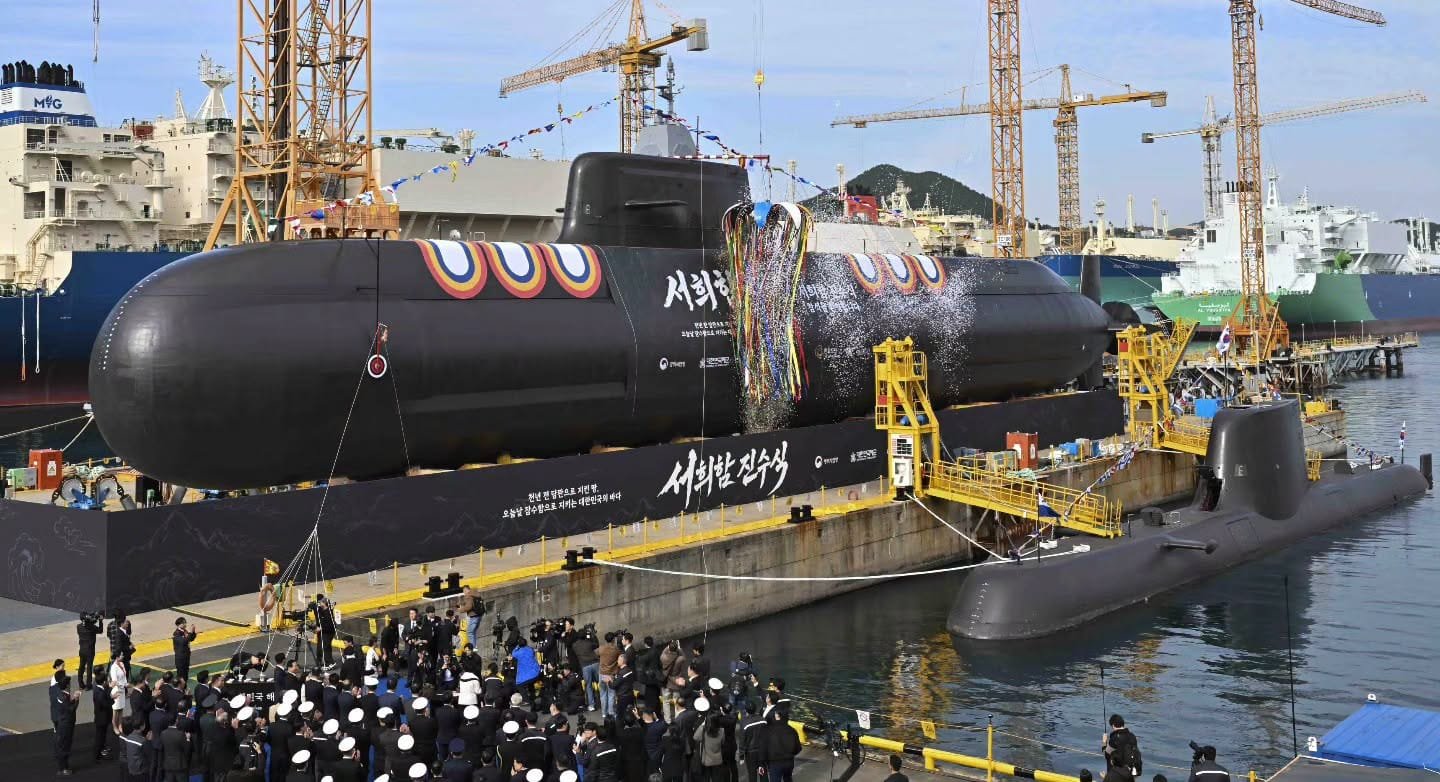
The developments come as South Korea expands its conventional submarine fleet. On 6 November, the country launched the second Jang Bogo KSS-III Batch II submarine, Seo Hui (SS-088).
DAPA said the 3,600-tonne submarine incorporates 70 domestically developed and manufactured technologies. The vessel is scheduled to be handed over to the ROKN in 2028.
The KSS-III programme is a key component of South Korea’s effort to develop a more capable indigenous submarine force. The Batch II boats build on the first batch, incorporating improvements to sensors, combat systems and other onboard technologies.
Together, the nuclear-powered submarine programme and continued KSS-III construction reflect Seoul’s ambition to expand its underwater capabilities, while North Korea’s latest torpedo announcement points to continued investment in underwater weapons development.
by Chen Chuanren, Singapore
