


South Korea’s Hanwha has recently announced its plans to establish armoured vehicle production in Canada. Their offer depends on being selected to supply the Canadian Patrol Submarine Project (CPSP), the Navy’s next submarine programme.
The submarine programme, which will see up to twelve vessels deployed, is expected to formally commence in 2024. Two teams have been shortlisted: one is the 212CD submarine from ThyssenKrupp Marine Systems (TKMS), with Canada joining the German-Norwegian project, and the other is Hanwha Ocean’s KSS-III submarine. A final decision by the Canadian Government is expected later this year, in what could be its largest defence programme to date. The production, along with subsequent investments in operations, maintenance, and life support, could span over twenty years.
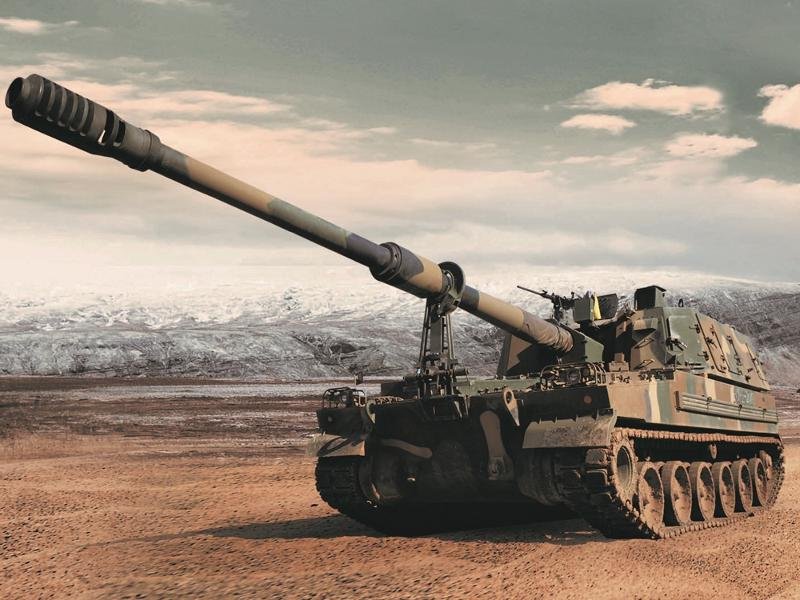
The Hanwha local armoured vehicle production offer is well-calculated, as the Canadian Army has also announced that it is examining options to modernise its ground forces. A major investment in its indirect supporting fires capability is a priority. In fact, Hanwha has several weapon systems that could serve as suitable candidates for the Army’s modernisation efforts. Hanwha has already proposed its K-9 Thunder 155mm self-propelled howitzer to meet the artillery requirement. Alternatively, recognising the growing interest and possible Canadian preference for wheeled self-propelled artillery, Hanwha also offers its K9MH Mobile Howitzer. Furthermore, the company has showcased its production facilities in Australia, established under its contracts there, for the Redback Infantry Fighting Vehicle and K-9 Self-Propelled Howitzers. Considering the total production of K9, K10, and Redbacks is approximately 174 vehicles, it remains unclear how the projected 80 to 98 new artillery systems required by the Canadian Army would support the establishment of an economically viable local manufacturing industry.

Taking their offer a step further on 29 April, Canada’s Automotive Parts Manufacturers’ Association (APMA) and Hanwha Corporation announced a proposed joint venture that would establish domestic production of military and non-commercial industrial vehicles. The new company would be Canadian-controlled, with majority Canadian ownership, a Canadian board, and a Canadian chief executive officer. Its market focus would be the Canadian government and defence, as well as export. Domestically sourced materials, including steel and aluminium, would be used.
Hanwha clearly recognises the strong Canadian preference for locally manufactured defence systems and the political importance of domestic economic value. It has an established and favourable track record in securing and successfully executing not only several foreign military programme contracts but also in building local production capabilities, which makes its offer significantly more credible. To what extent this land system proposal will influence the CPSP award selection remains to be seen.
by Stephen W. Miller
