

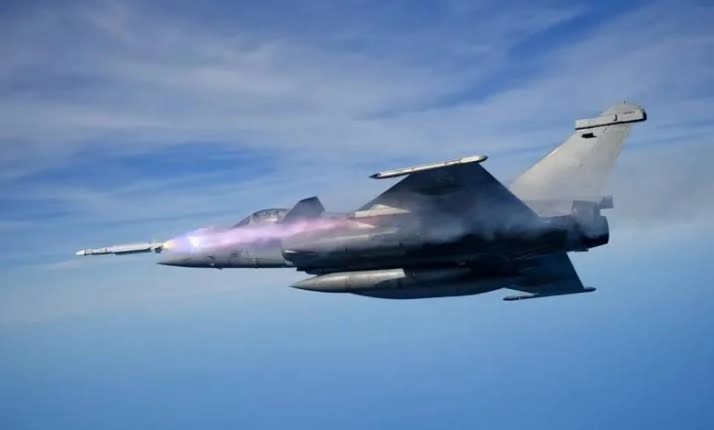
Defense Feeds, Paris — France is advancing its precision strike capabilities as the France 68mm guided rocket program boosts Rafale strike capability through the development of a new APKWS-style system.
The initiative aims to provide a cost-effective and flexible air-to-ground weapon for platforms such as the Rafale fighter and Tiger attack helicopter. As modern conflicts demand greater precision with reduced collateral damage, guided rocket systems are gaining renewed importance.
The new 68mm guided rocket is expected to function similarly to the widely used Advanced Precision Kill Weapon System. By converting unguided rockets into precision-guided munitions, the system offers an efficient way to enhance existing arsenals. This approach allows forces to maintain flexibility while improving accuracy in complex operational environments.
France’s move reflects a broader trend among modern militaries to expand precision strike options. Instead of relying solely on high-cost missiles, guided rockets provide a balanced solution for engaging a wide range of targets. The program highlights the importance of adaptable and scalable weapon systems in contemporary warfare.
Precision Strike Capability for Rafale and Tiger
The integration of a 68mm guided rocket into platforms like the Rafale and Tiger represents a significant capability enhancement. These aircraft already play key roles in France’s air operations, and the addition of precision-guided rockets increases their versatility. Pilots can engage targets more accurately while reducing the risk of unintended damage.
Guided rockets are particularly useful in scenarios where traditional munitions may be excessive. They offer a middle ground between unguided rockets and larger missiles. This makes them suitable for engaging light vehicles, fortified positions and other tactical targets.
For the Rafale, the new system adds another layer to its multi-role capabilities. The aircraft can perform air superiority, reconnaissance and strike missions, and the addition of guided rockets further enhances its flexibility. This aligns with the broader goal of maximizing the effectiveness of existing platforms.
The Tiger helicopter also benefits from such integration. As an attack helicopter, it operates in environments where precision and responsiveness are critical. Guided rockets provide an effective tool for supporting ground forces and engaging targets in close proximity.

Cost-Effective Alternative to Traditional Missiles
One of the main advantages of APKWS-style systems is their cost efficiency. Traditional guided missiles can be expensive, limiting their use in certain scenarios. Guided rockets, on the other hand, provide a more affordable option while still delivering precision.
By upgrading existing rocket systems with guidance kits, militaries can extend the usefulness of their inventories. This reduces the need for entirely new weapon systems and lowers overall costs. It also allows for faster deployment and integration.
The cost factor is particularly important in prolonged operations. Using high-cost munitions for every engagement is not always practical. Guided rockets offer a sustainable solution for maintaining operational effectiveness over time.
In addition, these systems are easier to produce and maintain. This supports logistical efficiency and ensures that sufficient stockpiles are available when needed. The balance between cost and capability makes guided rockets an attractive option for modern forces.
Strategic Implications for Modern Air Warfare
The development of a 68mm guided rocket reflects a broader shift in air warfare strategy. Precision is becoming increasingly important, not only for effectiveness but also for minimizing collateral damage. Guided rockets support this objective by providing accurate engagement options.
For France, the program enhances both national capability and interoperability with allied forces. Many NATO members already use similar systems, and adopting a comparable approach supports joint operations. This ensures compatibility in multinational missions.
The initiative also highlights the importance of innovation in defense technology. As threats evolve, militaries must adapt by developing new solutions that address emerging challenges. Guided rockets represent one such solution, combining simplicity with advanced capability.
Looking ahead, the success of the program will depend on effective integration and operational use. Training, testing and refinement will all play key roles in ensuring the system meets its objectives. If implemented successfully, the new rocket will become a valuable addition to France’s arsenal.
The move underscores France’s commitment to maintaining a modern and capable air force. In an increasingly complex security environment, investments in precision and flexibility are essential. The development of this guided rocket system is a clear step in that direction.
