

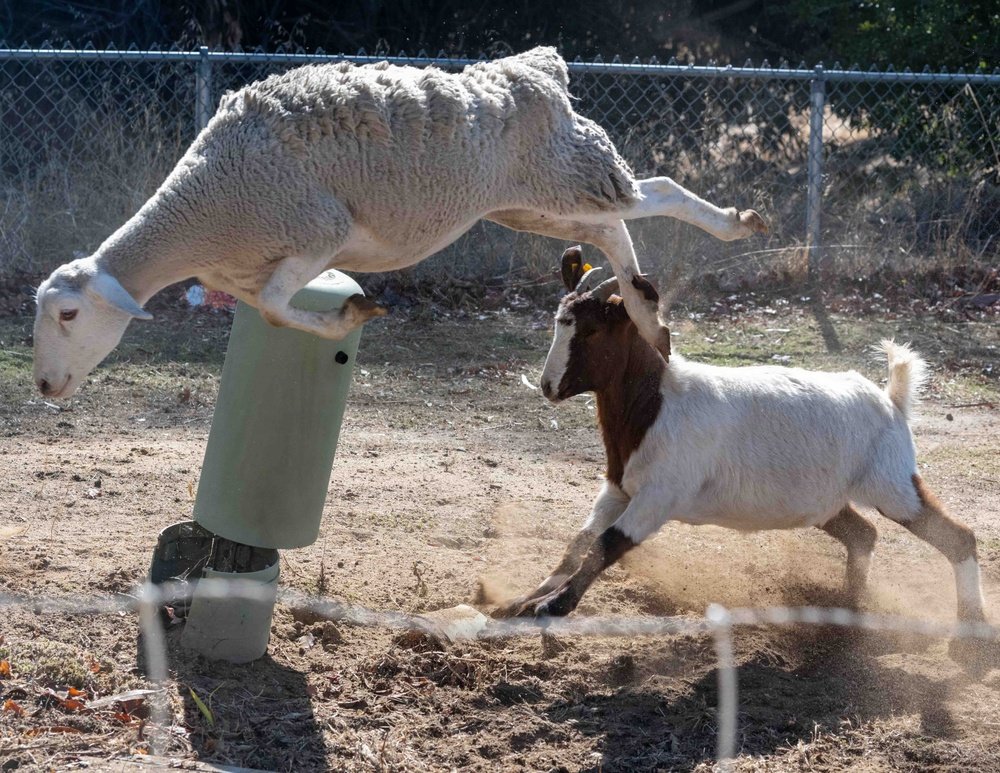
With thousands of acres of land, Travis AFB has turned to an unlikely crew: sheep and goats. This grazing initiative provides a highly effective, sustainable method for mitigating overgrown weeds and dry brush. However, integrating livestock safely onto an active military installation requires meticulous planning and close interagency coordination.
The 60th Civil Engineer Squadron contracted the livestock to graze in structured rotations. The initial phase deploys a combined flock of 400 sheep and 420 goats.
Though the base has utilized grazing programs in the past, this marks the first integration of goats into the rotation.
Alexander Bajakian, 60th CES biological scientist, explained the importance of having both sheep and goats graze the area.
“Sheep and goats graze together because they have different feeding preferences. Sheep tend to prefer grass and low-growing plants, while goats tend to favor brush, broadleaf weeds and small woody vegetation,” said Bajakian. “Co-grazing helps land managers treat a wider range of vegetation types, which helps reduce wildfire spread and intensity.”
For the sheep and goats, it’s just another meal; for Travis AFB, it’s a multitude of benefits. This targeted grazing initiative leverages managed livestock to naturally clear excess vegetation, drastically reducing fire hazards and fuel loads during the dry season.
“Having sheep and goats here,” explained Emily Perea, 60th CES natural resource manager, “it provides two things: it provides wildfire prevention as well as invasive species management, and both of those really help protect our base to be able to keep it operating.”
Perea also emphasized avoiding touching or interacting with the animals or crossing the fence, while suggesting observers can feel free to watch the animals graze or take photos.
In addition, sheepdogs will be accompanying the sheep and goats at all times. The dogs will be working to protect the animals from wildlife that may threaten them.
Overall, the project is an important part of Travis AFB’s vegetation-management efforts. Sheep and goats will graze multiple plots across the installation, reducing excess vegetation in fire-prone areas and helping mitigate wildfire risk. The project is anticipated to take five to seven weeks.
