

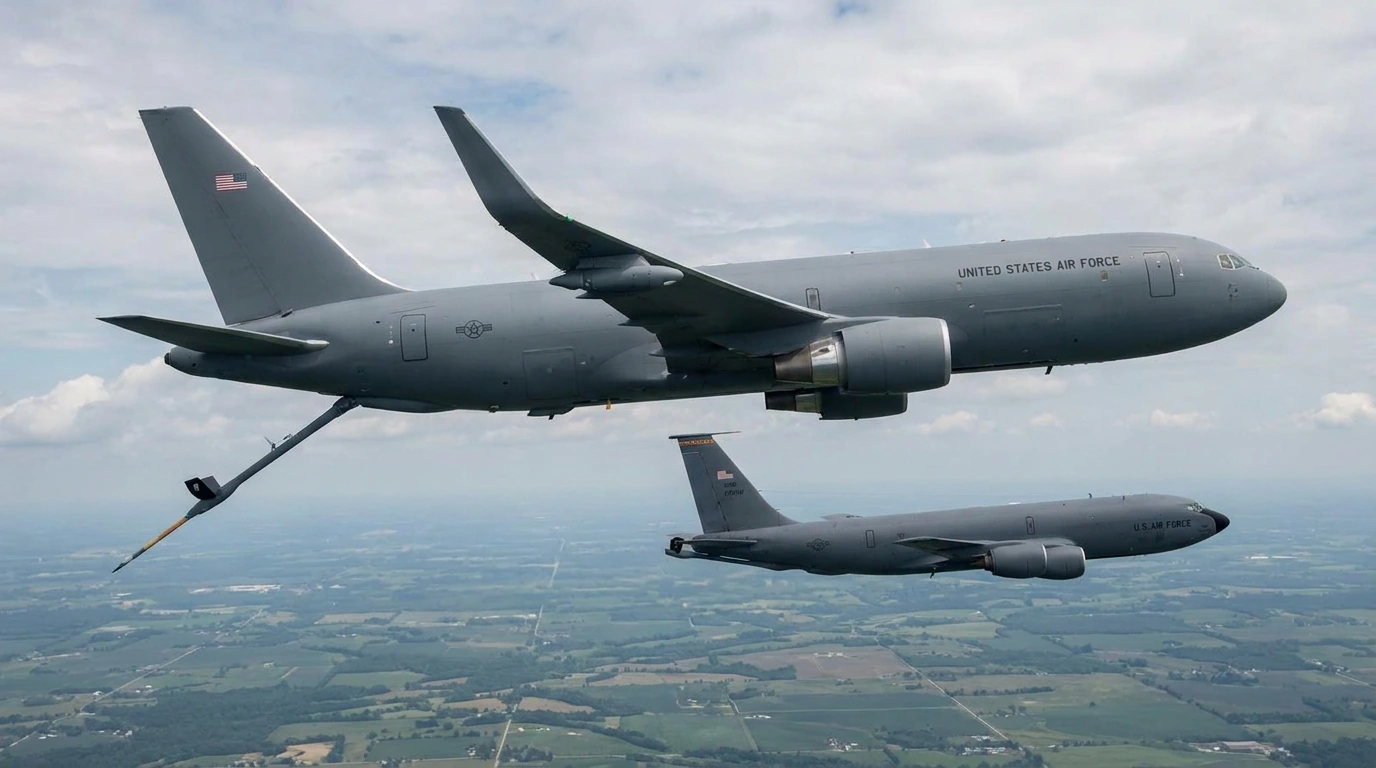
If you’ve ever watched a fighter jet streak across the sky and wondered how it can stay airborne for hours, or cross an ocean without landing, the answer usually isn’t another fighter. It’s a tanker aircraft quietly doing its job miles away from the spotlight.
In the world of military aviation, tankers are the unsung workhorses, and the debate over KC-46 vs KC-135 has become one of the most fascinating stories in modern airpower.
At first glance, comparing these two aircraft seems straightforward.
The KC-135 Stratotanker is the veteran, a Cold War icon that entered service in the late 1950s and has supported nearly every major U.S. military operation since.
The KC-46 Pegasus, on the other hand, represents a new generation of aerial refueling, built to handle missions that didn’t even exist when the KC-135 first took flight.
But this isn’t simply an old-versus-new contest.
The real question is whether the latest technology automatically creates a better tanker. Aerial warfare has evolved dramatically over the past few decades.
Modern military aircraft fly farther, carry more advanced systems, and operate in increasingly complex environments. Tankers now need to do much more than pump fuel. They transport cargo, carry passengers, support medical evacuation missions, and integrate into sophisticated digital command networks.
There’s another layer to the story. Despite being more than 65 years old, many KC-135s remain in active service, while the KC-46 continues to expand its role across the U.S. Air Force.
Rather than replacing one aircraft overnight, the two platforms are working side by side during a major transition in American military aviation.
In this post, we’ll explore their history, specifications, fuel capacity, refueling systems, cargo capabilities, technology, operating costs, and future roles. Along the way, we’ll explain why choosing the “better” tanker isn’t as simple as comparing numbers on a specification sheet.
KC-46 and KC-135 at a Glance
The easiest way to understand the KC-46 vs KC-135 comparison is to think of them as two generations of the same idea. Both exist for one critical purpose, keeping military aircraft in the air longer by refueling them during flight.
Yet they were designed for very different eras, and that difference shapes almost everything about their capabilities.
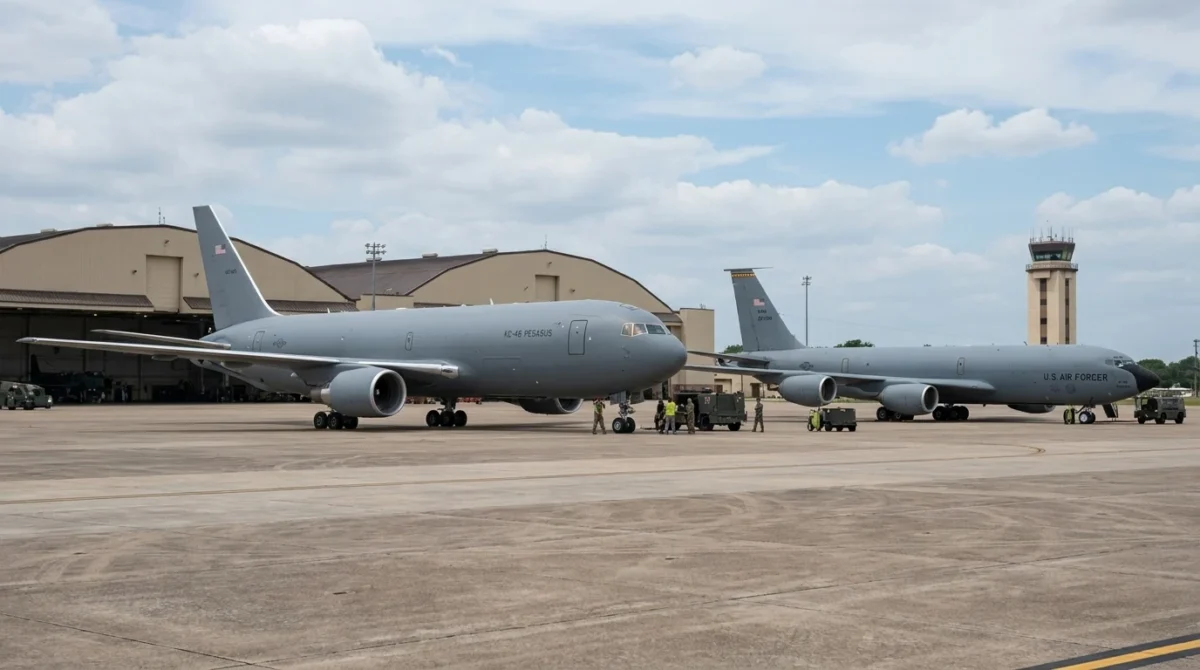
The KC-135 Stratotanker first entered U.S. Air Force service in 1957. Built from Boeing’s early jetliner technology, it was created during the Cold War when long-range nuclear deterrence was a top priority. Its mission was simple but essential: extend the range of strategic bombers and fighter aircraft.
More than six decades later, the KC-135 has participated in conflicts from Vietnam and the Gulf War to operations in Iraq, Afghanistan, and beyond. Few military aircraft can match its operational résumé.
The KC-46 Pegasus comes from a completely different world. Based on the Boeing 767 commercial airliner, it officially joined the Air Force fleet in 2019 as part of a modernization effort to replace aging tankers.
While aerial refueling remains its primary job, the Pegasus was designed to be a true multi-role platform. It can carry passengers, transport cargo, support aeromedical evacuation missions, and operate with advanced digital communication systems.
What’s surprising in the KC-46 Pegasus vs KC-135 debate is that the newer aircraft wasn’t built because the older one became ineffective. The KC-135 still performs its mission exceptionally well.
The KC-46 simply expands what a tanker can do, reflecting the changing demands of 21st-century military operations.
KC-46 vs KC-135 Specifications Comparison
Specification tables can be a little deceptive. Two aircraft might have similar dimensions yet perform very different missions. That’s certainly the case in the KC-46 vs KC-135 matchup.
While both are designed to refuel aircraft in flight, the Pegasus was engineered to carry more fuel, more cargo, and more people while integrating modern technology into nearly every aspect of its operation.
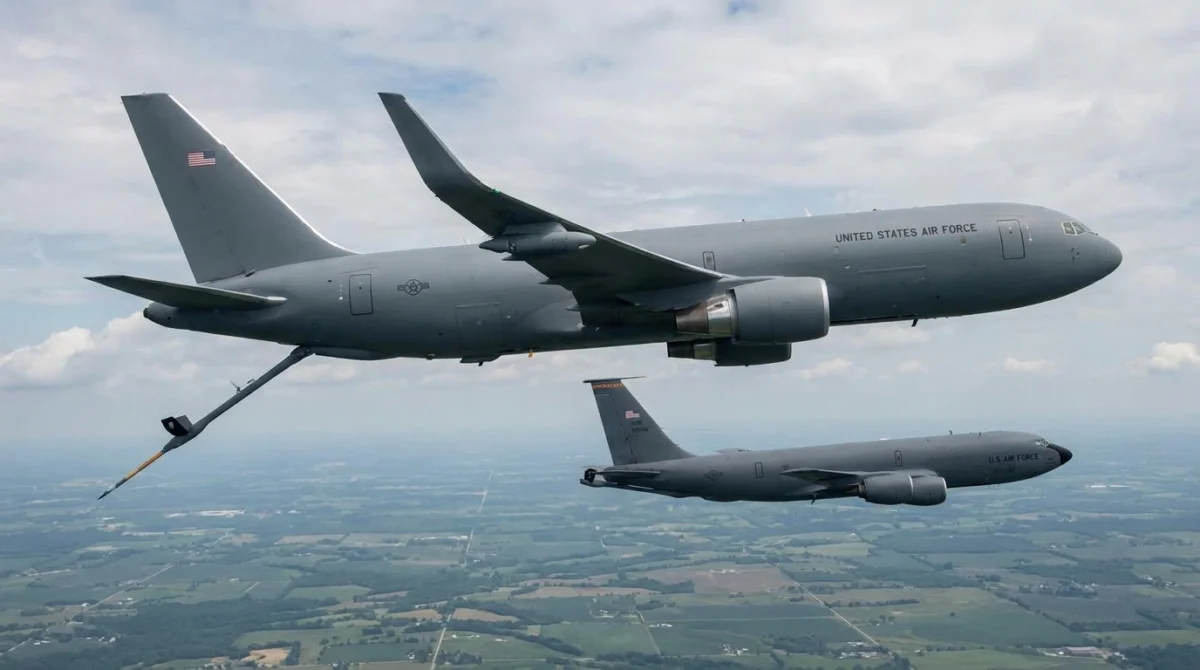
The KC-135 Stratotanker measures about 136 feet long with a wingspan of 131 feet. Depending on the mission, it can carry roughly 200,000 pounds of fuel and cruise at speeds approaching 530 mph.
Despite its age, these numbers remain impressive and explain why the aircraft continues to serve around the globe.
The KC-46 Pegasus is noticeably larger. At about 165 feet in length with a 156-foot wingspan, it can carry approximately 212,000 pounds of fuel while also accommodating cargo pallets, passengers, or medical evacuation equipment. Its maximum takeoff weight exceeds 400,000 pounds, giving it greater flexibility for multi-role missions.
Here’s a side-by-side look:
| Specification | KC-46 Pegasus | KC-135 Stratotanker |
| Service Entry | 2019 | 1957 |
| Length | 165 ft | 136 ft |
| Wingspan | 156 ft | 131 ft |
| Max Takeoff Weight | ~415,000 lb | ~322,500 lb |
| Fuel Capacity | ~212,000 lb | ~200,000 lb |
| Cruise Speed | ~530 mph | ~530 mph |
| Cargo Capability | 18 pallets | Limited |
| Passenger Capacity | Up to 114 | Up to 80 |
The numbers tell an interesting story.
The KC-46 Pegasus vs KC-135 comparison isn’t about one aircraft dramatically outperforming the other in speed or basic refueling.
Instead, the Pegasus adds capability around the tanker mission. It can haul troops to a deployment, deliver cargo to a forward base, evacuate wounded personnel, and then refuel combat aircraft on the same deployment.
That extra versatility is exactly why the U.S. Air Force sees the KC-46 as more than a replacement, it’s a tanker built for a broader set of missions than the KC-135 was ever expected to perform.
Fuel Capacity and Refueling Performance
When people compare the KC-46 vs KC-135, they usually ask one question first: which aircraft can deliver more fuel? It’s a fair question, but the answer is a little more nuanced than a simple number on a specification sheet.
In aerial refueling, carrying fuel is only part of the equation. The real challenge is getting that fuel to the right aircraft, at the right time, under demanding conditions.
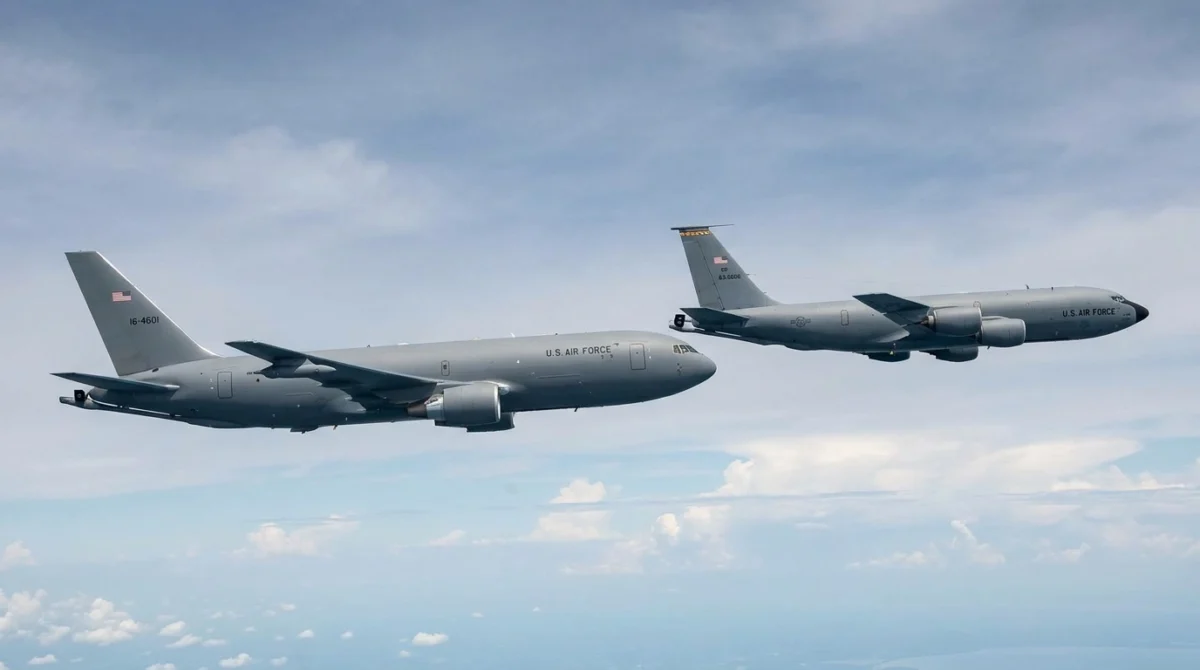
The KC-135 Stratotanker has built its reputation on reliability. It can carry around 200,000 pounds of fuel and has spent decades refueling everything from F-15s and F-16s to B-52 bombers and reconnaissance aircraft.
Over its service life, the fleet has transferred billions of pounds of fuel during training exercises and combat operations, proving that experience counts for a lot.
The KC-46 Pegasus edges ahead with a fuel capacity of approximately 212,000 pounds. That extra fuel may not sound revolutionary, but combined with its larger airframe and modern systems, it gives mission planners more flexibility for long-range deployments.
Here’s a quick comparison:
| Refueling Feature | KC-46 Pegasus | KC-135 Stratotanker |
| Fuel Capacity | ~212,000 lb | ~200,000 lb |
| Flying Boom | Yes | Yes |
| Probe-and-Drogue Pods | Yes | Limited variants |
| Multi-Mission Capability | High | Moderate |
| Allied Aircraft Compatibility | Extensive | Extensive |
Perhaps the biggest advantage in the KC-46 Pegasus vs KC-135 debate isn’t fuel quantity, it’s versatility.
The Pegasus can use both its advanced flying boom and wing-mounted hose-and-drogue pods to support a wider variety of U.S. and allied aircraft. That means Navy fighters, Air Force jets, and coalition partners can all receive fuel during joint operations.
In practical terms, the KC-135 remains an exceptional tanker.
The KC-46 simply expands the mission. It’s not just carrying more fuel into the sky; it’s designed to refuel a broader mix of aircraft while adapting to the increasingly complex demands of modern military operations.
Technology and Avionics
If the KC-135 Stratotanker is the dependable old pickup truck that somehow keeps running after half a century, the KC-46 Pegasus is the modern work vehicle packed with sensors, cameras, and computers.
Both can get the job done, but they go about it in very different ways. That’s what makes technology one of the most interesting aspects of the KC-46 vs KC-135 comparison.
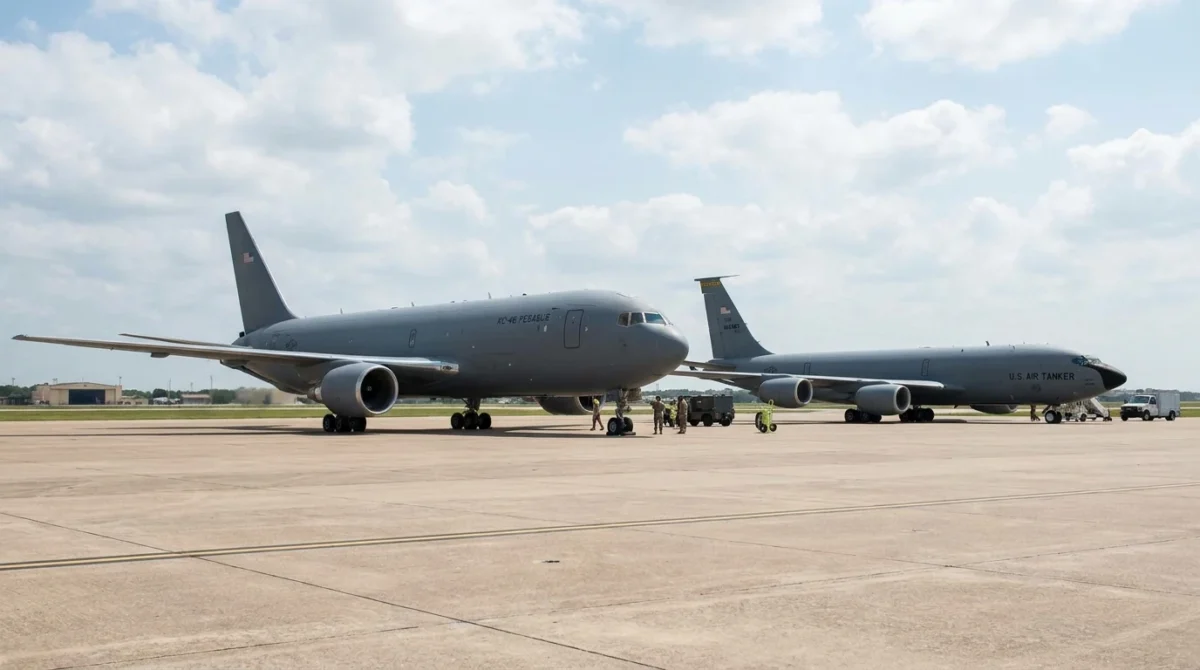
The KC-135 has benefited from decades of upgrades. Modern navigation systems, digital flight instruments, and improved communications have kept the aircraft relevant long after its original technology became outdated.
These improvements allow the tanker to operate effectively in today’s airspace, but its underlying design still reflects the engineering priorities of the 1950s.
The KC-46 was built for a digital battlefield from day one. Its cockpit features large multifunction displays, advanced flight management systems, and automated controls that reduce pilot workload.
The aircraft also integrates secure communications and network capabilities, helping crews share information across military operations in real time.
One of the Pegasus’s most talked-about features is the Remote Vision System (RVS). Instead of sitting at a rear observation window like KC-135 boom operators, KC-46 operators use high-definition cameras and 3D displays to guide the refueling boom.
The system has experienced well-publicized development challenges, but ongoing upgrades aim to improve accuracy and performance.
| Technology Feature | KC-46 Pegasus | KC-135 Stratotanker |
| Digital Cockpit | Advanced | Modernized |
| Remote Boom Operation | Yes | No |
| Advanced Cameras | Yes | Limited |
| Secure Network Integration | Extensive | Upgraded |
| Crew Automation | High | Moderate |
The technology gap between the KC-46 Pegasus vs KC-135 isn’t simply about having newer gadgets. It’s about preparing for future conflicts where tankers must operate as connected platforms rather than standalone aircraft.
While the KC-135 remains highly capable, the KC-46 was designed to fit into an increasingly data-driven battlespace, where information can be just as valuable as fuel.
Operational Costs and Maintenance
Military aircraft age a little like old houses. From the outside, they can look perfectly fine, but behind the walls, the maintenance bills have a habit of growing. That’s one of the biggest factors in the KC-46 vs KC-135 discussion. It’s not just about what these tankers can do, it’s about how much effort and money it takes to keep them flying.
The KC-135 Stratotanker has an extraordinary track record. Many of the aircraft flying today were built during the Eisenhower administration, a fact that still surprises aviation enthusiasts.
Through regular upgrades, engine replacements, and structural improvements, the Air Force has managed to extend the fleet’s service life far beyond its original expectations.
The downside? Age catches up with everything. Older aircraft require more inspections, specialized parts, and maintenance hours. Components wear out, corrosion becomes a constant concern, and keeping decades-old systems operational can be a logistical puzzle.

The KC-46 Pegasus was introduced partly to reduce that burden. Built on the commercial Boeing 767 platform, it benefits from modern manufacturing techniques and access to a broad supply chain.
Newer systems are designed with easier maintenance in mind, and digital diagnostics can help crews identify problems before they become serious.
Of course, the story isn’t entirely one-sided. The KC-46 program faced development delays and technical issues that increased costs during its early years.
Meanwhile, the KC-135 has a well-established maintenance network backed by decades of operational experience.
The real takeaway from the KC-46 Pegasus vs KC-135 comparison is that the Air Force faces a balancing act. The KC-135 remains a dependable and relatively economical tanker because the infrastructure to support it already exists.

The KC-46 requires upfront investment but promises lower long-term maintenance demands and greater operational flexibility. In the end, modernization isn’t just about buying new aircraft, it’s about reducing future costs while preparing for missions that haven’t happened yet.
Which Tanker Is Better?
After diving into the numbers, the technology, and the mission profiles, we’re left with the million-dollar, or perhaps billion-dollar, question: in the KC-46 vs KC-135 debate, which tanker is actually better?
The short answer is that there’s no universal winner. The longer answer is much more interesting.
If reliability and proven performance were the only criteria, the KC-135 Stratotanker would be hard to beat.
This aircraft has logged millions of flight hours and supported virtually every major U.S. military operation since the late 1950s. Its crews know the platform inside and out, and its maintenance network is one of the most mature in military aviation.
There’s an old saying in aviation: “A good airplane is one that shows up.” The KC-135 has been showing up for decades.
The KC-46 Pegasus plays a different game. It was designed for a world where military operations stretch across continents and require more than aerial refueling. It can transport troops, carry cargo, support medical evacuations, and communicate across advanced digital networks while performing tanker duties. That’s a significant leap in capability.
| Mission Type | Better Choice |
| Proven Refueling Operations | KC-135 |
| Multi-Role Missions | KC-46 |
| Cargo and Passenger Transport | KC-46 |
| Lower Legacy Infrastructure Costs | KC-135 |
| Future Battlefield Requirements | KC-46 |
Another factor often overlooked is geography. Future military planning increasingly focuses on the Indo-Pacific region, where vast distances place enormous demands on logistics and aerial refueling. In those scenarios, the KC-46’s extra flexibility becomes particularly valuable.
The reality is that the KC-46 Pegasus vs KC-135 comparison isn’t a battle where one aircraft sends the other into retirement. The Air Force benefits from having both.
The KC-135 continues to provide dependable global refueling capacity, while the KC-46 gradually expands the fleet’s capabilities for future conflicts.
In the end, the better tanker depends on what you value. If you’re measuring by history, reliability, and an unmatched operational record, the KC-135 remains a legend. If you’re looking toward the next generation of military aviation, the KC-46 is clearly the aircraft built for the challenges ahead.
The smartest answer, and perhaps the Air Force’s own conclusion, is that today’s mission needs both.
