

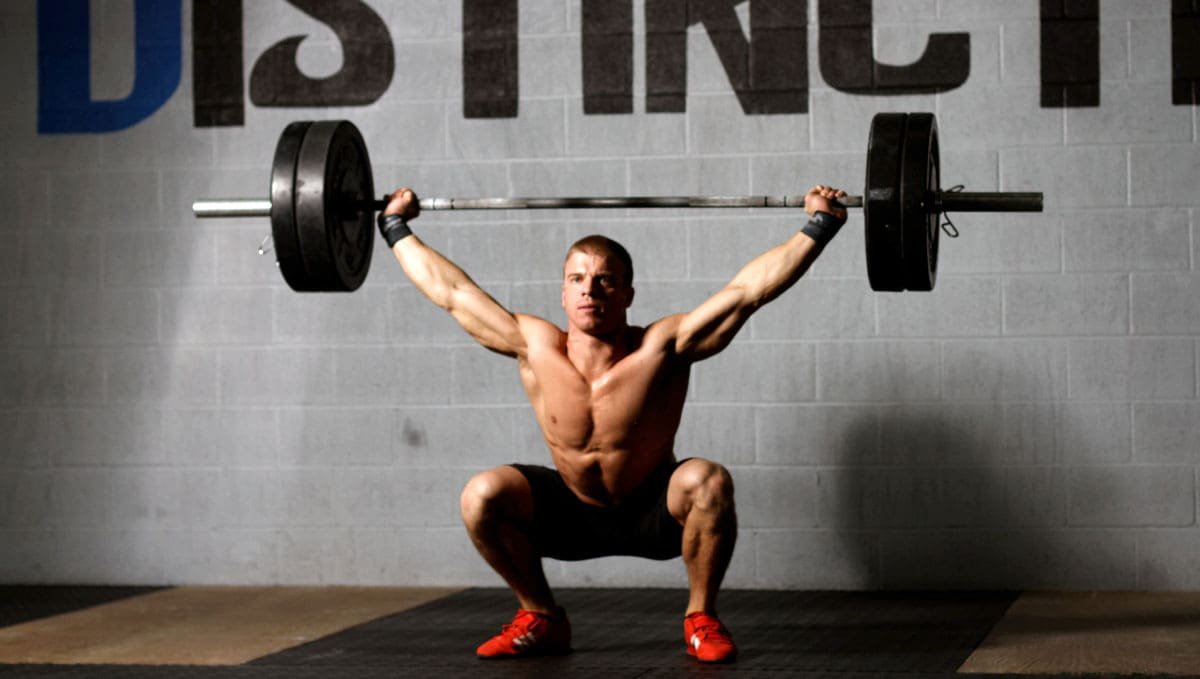
The term 4/3/2/1 means how many plates you are able to rack onto the barbell when you deadlift, squat, bench and shoulder press.
You might be much stronger in certain areas, but if you can complete all of the following number as a baseline then you pass the test.
This works out as:
- 180kg Deadlift, 4 plates on either side
- 140kg Squat, 3 plates on either side
- 100kg Bench, 2 plates on either side
- 60kg Shoulder Press, 1 plate on either side
If you can complete each one of these lifts, then you are a 4/3/2/1 man and you are stronger than 95% of other men in the gym.
The Big Four Barbell Lifts and Why They Are Worth Your Time
If you want to build strength in a simple, practical way, the deadlift, squat, bench press, and shoulder press are hard to beat. These four lifts train a lot of muscle at once, teach your body to produce force, and carry over well to everyday movement. You do not need to be a powerlifter to benefit from them, and you do not need to chase huge numbers for them to be useful.
Are Skull Crushers the Perfect Triceps Exercise for More Muscle Mass?
What makes these lifts so valuable is that they are compound exercises, which means they use several joints and muscle groups at the same time. Research on resistance training shows that compound lifts can improve strength, muscle size, bone health, functional ability, and metabolic health when they are performed consistently and progressed sensibly. In plain English, they help you get stronger in ways you can actually feel outside the gym.
Why Compound Lifts Work So Well
Compound lifts make your body work as a connected system. Instead of training one small muscle in isolation, you are asking your legs, hips, trunk, shoulders, arms, and upper back to coordinate together. That is one reason these exercises are so efficient. A well planned workout built around the big lifts can train most major muscle groups without needing a long list of exercises.
They also make progression easy to track. If your squat, deadlift, bench press, or shoulder press improves over time with good technique, you have a clear sign that your body is adapting. Studies on resistance training show that progressive overload, which means gradually increasing the challenge, is one of the main drivers of strength and muscle gains. That challenge can come from adding weight, doing more quality reps, improving control, or increasing total weekly work.
Another major benefit is that these lifts can support long term health. Resistance training has been linked with improved bone mineral density, better glucose control, healthier body composition, and better physical function. That matters because strength is not only about how much weight you can lift in the gym. It is also about making daily life easier, protecting independence as you age, and giving your body more capacity for work, sport, and recreation.
The Deadlift
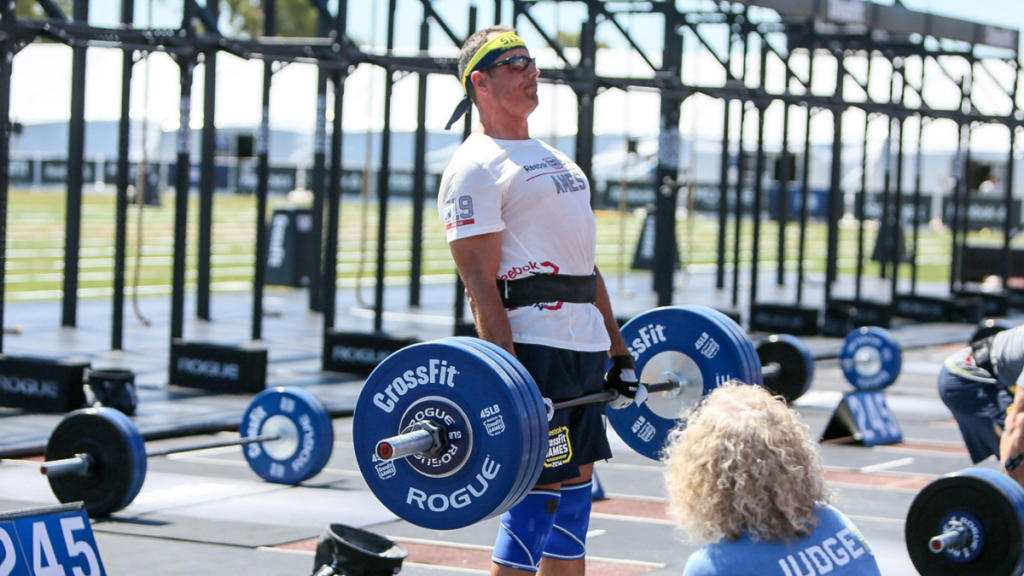
What the Deadlift Trains
The deadlift is one of the most complete strength exercises because it trains the movement pattern of picking something up from the floor. It heavily involves the glutes, hamstrings, spinal erectors, upper back, lats, grip, and core. Your quads also contribute, especially from the floor, but the deadlift is best known as a hip dominant lift.
When you deadlift well, you learn how to brace your trunk, hinge at the hips, keep the bar close, and use your legs and hips together. That skill matters because many everyday tasks involve the same basic pattern. Lifting a box, moving furniture, carrying groceries, and picking up a child all require some version of hip strength, trunk control, and grip.
Main Benefits of the Deadlift
The biggest benefit of the deadlift is posterior chain strength. The posterior chain includes the muscles along the back side of your body, especially the glutes, hamstrings, and back extensors. Research has shown that deadlift variations create high activation in these areas, which helps explain why the lift is so useful for developing hip and back strength.
The deadlift can also improve grip strength because your hands have to hold the bar while the rest of your body produces force. Grip strength is useful in the gym, but it is also linked in research with broader measures of health and physical function. That does not mean deadlifting is magic, but it does mean that training grip and total body strength is a smart investment.
Another underrated benefit is confidence. There is something very practical and satisfying about learning to lift a weight from the floor with control. For many people, the deadlift turns into a clear reminder that strength is a skill you can build. Start light, learn the setup, keep your reps clean, and the lift becomes far less intimidating.
The Squat

What the Squat Trains
The squat trains your lower body through a deep bend of the hips, knees, and ankles. It works the quads, glutes, adductors, hamstrings, calves, and trunk. Depending on your body structure and squat style, you may feel it more in your quads or glutes, but it is always a major lower body lift.
A good squat also teaches balance, mobility, and control. You have to keep your feet rooted, knees tracking well, torso braced, and hips moving smoothly. That combination makes the squat useful for building strength that carries over to standing up, climbing stairs, playing sports, and moving with more confidence.
Main Benefits of the Squat
The squat is excellent for building leg strength. Research comparing squat training with other lower body exercises shows that squats can improve maximal strength, jumping ability, and functional performance. This makes sense because the squat uses the same major joints involved in many athletic and daily movements.
Squats can also support muscle growth because they allow you to train large muscles through a meaningful range of motion. Resistance training studies show that muscles grow when they are exposed to enough tension, volume, and effort over time. Since the squat loads the hips and knees together, it gives the lower body a strong growth stimulus when programmed properly.
Another benefit is bone loading. Weight bearing resistance exercises place stress on the skeleton, and that stress can help maintain or improve bone mineral density. This is especially important for adults who want to reduce the risk of age related loss of bone strength. You do not need maximal loads to get this benefit, but you do need consistent training that challenges the body safely.
The Bench Press
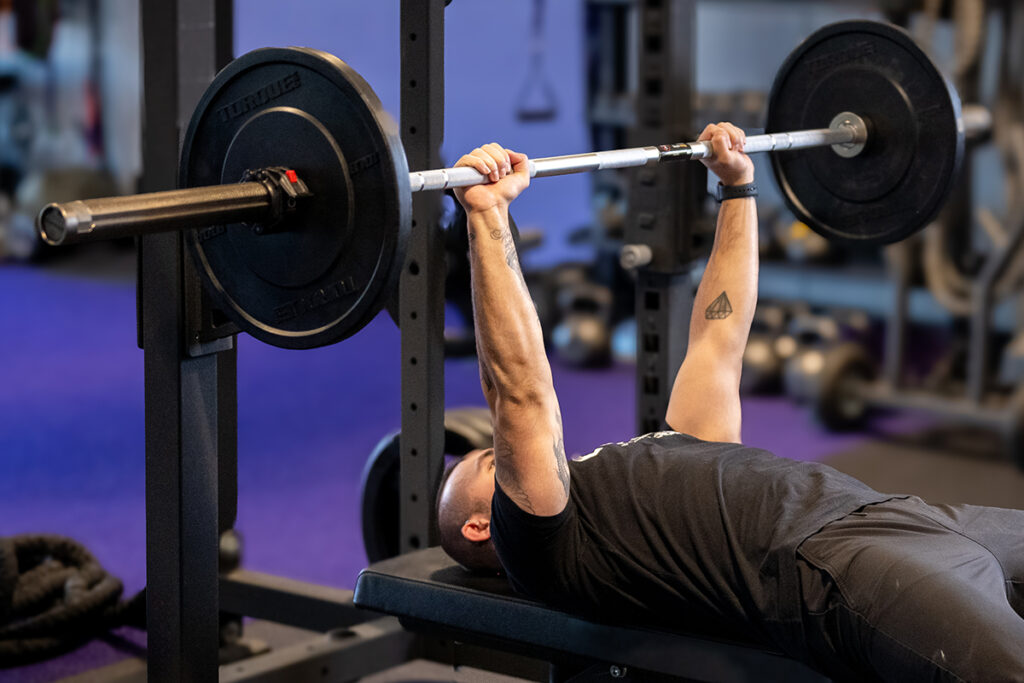
What the Bench Press Trains
The bench press is the classic upper body pressing exercise. It trains the chest, shoulders, and triceps, while the upper back and legs help create stability. Although it looks like a simple push, a strong bench press is really a full body lift when performed with good setup and control.
The main muscles doing the work are the pectoralis major, anterior deltoids, and triceps. Your shoulder blades need to stay stable on the bench, your grip needs to stay firm, and your trunk needs enough tension to keep your position solid. This makes the bench press useful for building pressing strength, not just chest size.
Main Benefits of the Bench Press
The bench press is one of the most effective exercises for developing upper body pushing strength. Studies on muscle activation show strong involvement of the chest, triceps, and front shoulder during pressing movements. That is why the bench press is commonly used in strength programs, sports performance settings, and general fitness routines.
It is also easy to progress. You can adjust the load, reps, tempo, grip width, and range of motion to match your goal and experience level. A beginner might start with dumbbells or a lighter bar variation, while a more experienced lifter can use heavier sets, pauses, or close grip work to target different parts of the movement.
The bench press also pairs well with pulling exercises. For shoulder health and balanced development, most people do best when pressing is matched with rows, pulldowns, and other upper back work. Research on shoulder function supports the importance of strength and control around the shoulder blade, so the bench press should be part of a balanced upper body plan rather than the only upper body exercise you do.
The Shoulder Press

What the Shoulder Press Trains
The shoulder press, often called the overhead press, trains you to press weight above your head. It works the deltoids, triceps, upper chest, upper traps, serratus anterior, and core. If you perform it standing, your glutes, legs, and trunk also help keep your body stable.
This lift is especially useful because overhead strength is easy to neglect. Many people train horizontal pressing with push ups and bench press variations, but they do not always train the ability to move weight overhead with control. The shoulder press fills that gap.
Main Benefits of the Shoulder Press
The shoulder press builds strong, capable shoulders. Research on overhead pressing shows meaningful activation of the deltoids and triceps, and standing variations also challenge trunk stability. That combination makes the lift useful for both muscle development and whole body control.
It can also improve real world strength. Placing a suitcase in an overhead bin, lifting something onto a high shelf, or controlling weight above your head all require overhead strength and shoulder stability. The shoulder press trains that pattern directly, which makes it practical as well as impressive.
Another benefit is posture awareness. To press overhead well, you need to brace your ribs, control your lower back position, and move your shoulders smoothly. People often discover weak spots in their mobility or trunk control when they learn this lift. That feedback is useful because it helps you train smarter instead of simply forcing heavier weights.
Final Thoughts
The deadlift, squat, bench press, and shoulder press are popular for a reason. They are simple, measurable, and effective. They train a lot of muscle, build useful strength, and give you a clear way to track progress over time.
You do not have to perform them perfectly on day one, and you do not have to lift like a competitive athlete to get value from them. Start with versions that fit your body, learn the basics, and progress at a pace you can sustain. If you do that, these four lifts can become some of the most reliable tools in your training.
Key Takeaways
| Lift | Main muscles trained | Biggest benefit | Practical carryover |
|---|---|---|---|
| Deadlift | Glutes, hamstrings, back, grip, core | Builds posterior chain and total body strength | Picking things up safely and carrying heavy objects |
| Squat | Quads, glutes, adductors, hamstrings, core | Builds lower body strength and muscle | Standing, stairs, sport, and daily movement |
| Bench press | Chest, shoulders, triceps, upper back | Builds upper body pushing strength | Pushing strength for training and daily tasks |
| Shoulder press | Shoulders, triceps, upper traps, core | Builds overhead strength and stability | Lifting and controlling objects overhead |
| All four lifts | Major muscle groups across the body | Build strength efficiently when progressed well | Better physical capacity, confidence, and long term function |
References
- Bird, S.P., Tarpenning, K.M. and Marino, F.E. (2005) ‘Designing resistance training programmes to enhance muscular fitness: a review of the acute programme variables’, Sports Medicine, 35(10), pp. 841-851.
- Faigenbaum, A.D. and Myer, G.D. (2010) ‘Resistance training among young athletes: safety, efficacy and injury prevention effects’, British Journal of Sports Medicine, 44(1), pp. 56-63.
- Fragala, M.S., Cadore, E.L., Dorgo, S., Izquierdo, M., Kraemer, W.J., Peterson, M.D. and Ryan, E.D. (2019) ‘Resistance training for older adults: position statement from the National Strength and Conditioning Association’, Journal of Strength and Conditioning Research, 33(8), pp. 2019-2052.
- Grgic, J., Schoenfeld, B.J., Skrepnik, M., Davies, T.B. and Mikulic, P. (2018) ‘Effects of rest interval duration in resistance training on measures of muscular strength: a systematic review’, Sports Medicine, 48(1), pp. 137-151.
- Iversen, V.M., Norum, M., Schoenfeld, B.J. and Fimland, M.S. (2021) ‘No time to lift? Designing time efficient training programs for strength and hypertrophy: a narrative review’, Sports Medicine, 51(10), pp. 2079-2095.
