

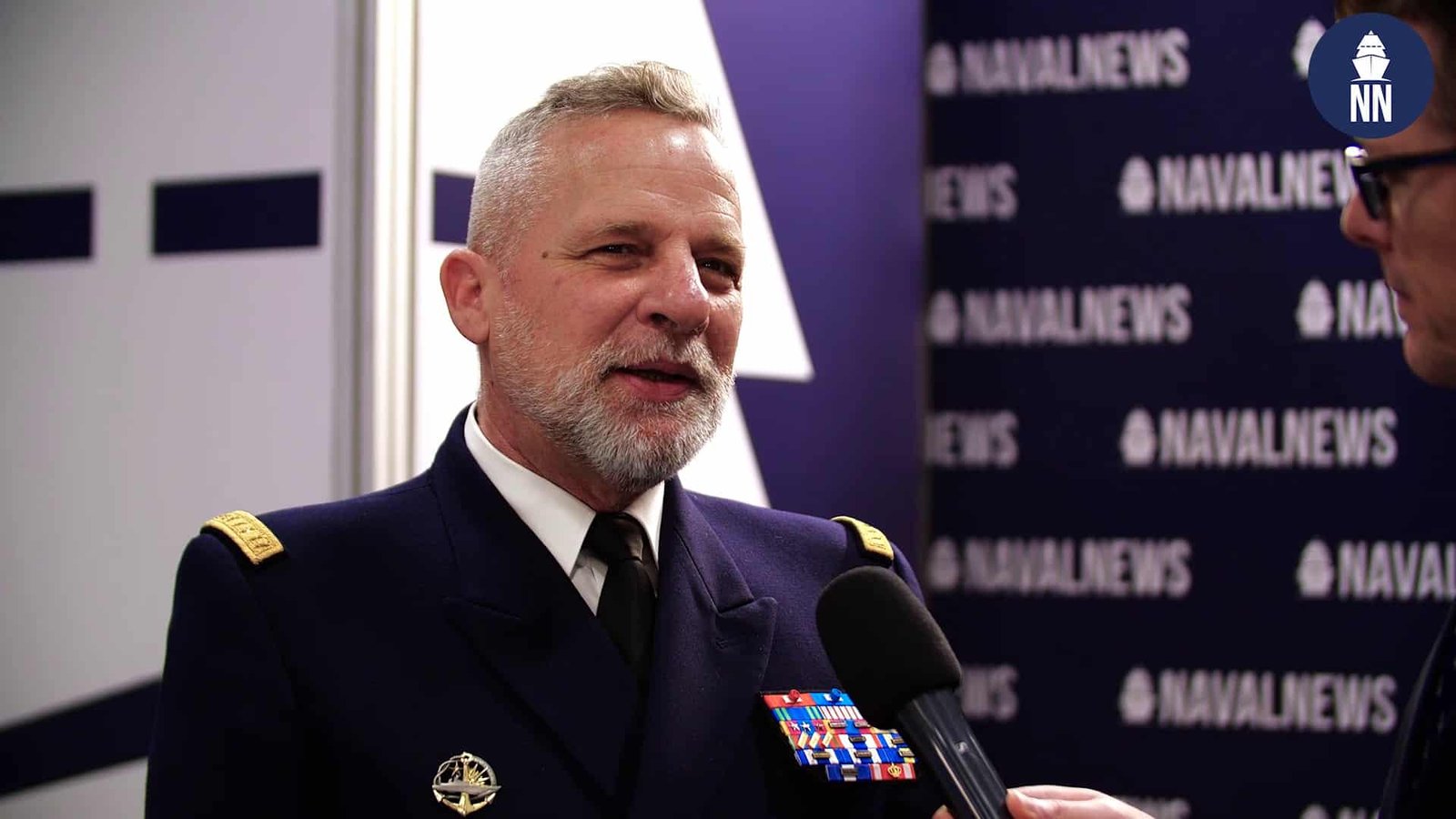
At Euronaval 2026, French Navy Chief Admiral Christophe Cluzel outlined to Naval News France’s “reasoned” hybrid fleet doctrine, pairing heavy capital ships with maritime drones.
While several navies are rushing to embrace uncrewed systems at the expense of traditional large-size crewed warships, France is charting a deliberately measured course. Speaking with Naval News during Euronaval 2026, Admiral Christophe Cluzel, Chief of Staff of the French Navy (Chef d’état-major de la Marine), outlined a doctrine of “reasoned hybridization”. This doctrine calls for the integration of maritime drones to augment, rather than replace, heavy frontline combatants.
Resisting the Trend Toward Smaller Warships
Across the exhibition floor, unmanned systems have taken center stage, prompting some navies to rethink force structures and reduce the size of their first-rank surface ships. Admiral Cluzel cautioned against overstating what hybridization can achieve, arguing that preparing for a high-end clash of wills requires retaining decisive instruments of naval power.
To preserve strategic autonomy and freedom of action, France is maintaining its core power-projection and deterrence assets: Specifically its aircraft carrier, nuclear attack submarines, and ballistic missile submarines under the SNLE 3G program. According to Cluzel, large surface combatants also remain indispensable for enduring rough seas and carrying sufficient weapon payloads. Because operating and maintaining such complex frontline systems cannot be automated anytime soon, he does not foresee these platforms becoming uncrewed over the next five decades.
Instead, as all components of the French fleet undergo renewal, unmanned capabilities are being introduced to complement crewed warships across three operational areas:
- Tactical depth: Expanding surveillance reach to accelerate situational awareness, speed up decision-making, and impose a faster operational tempo on adversaries.
- Self-defense: Pushing back saturation thresholds by deploying drone-intercepting drones alongside short-range, remotely operated munitions designed to counter uncrewed surface vessels.
- Offensive lethality: Reinforcing the fleet’s strike power to impose its will when required.
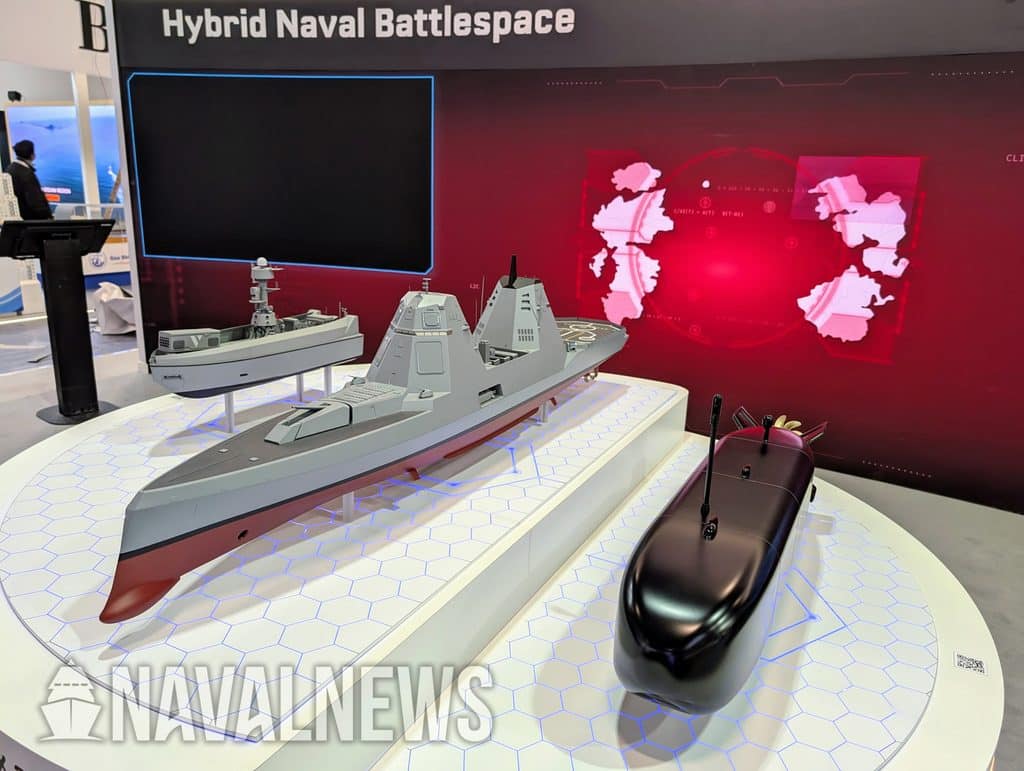
High-Intensity Reality from the Red Sea to Polaris
This balanced fleet architecture reflects operational lessons learned since 2022, as French sailors have confronted high-intensity threats in theaters including the Red Sea and surrounding waters. In an unpredictable maritime environment where conflicts spill into sea lanes and threaten European supply chains, warships face a hardened threat spectrum ranging from suicide drones to hypersonic missiles.
Because air and maritime superiority can now be contested anywhere beyond home waters, the French Navy has spent the past five years sharpening its edge through its flagship Polaris exercises, which have strengthened crew morale and elevated unit training. Against this backdrop, Admiral Cluzel noted that Euronaval 2026 (a record edition with 705 exhibitors, up 40 percent) remains vital for aligning operational needs with industrial innovation while strengthening interoperability with international counterparts.
Watch the exclusive Naval News interview with the Chief of Staff of the French Navy below. (Audio in French. Please turn on closed captions for English subtitles).
Transcript of the final question, from 03:55
Xavier Vavasseur, Naval News:
“Many navies—and we can see it here at the exhibition—are turning to the concept of a hybrid navy or ‘hybrid fleet.’ Some navies are putting drone systems at the center of the concept and tending to reduce the size of their first-rank warships. What is the French concept of a hybrid fleet?”
Admiral Christophe Cluzel, Chief of Staff of the French Navy:
“I am promoting a ‘reasoned’ hybridization. I call it reasoned because I think we shouldn’t fantasize about the benefits of hybridization. At a time when we are preparing for a clash of wills, our navies—and France—must retain their instruments of power. In the naval domain, the instruments of power are the superiority aircraft carrier, the nuclear-powered ballistic missile submarines (SSBNs), and the nuclear-powered attack submarines (SSNs). I am very happy to have seen the SNLE 3G [third-generation SSBN] program launched. This is the guarantee for France that we will maintain our strategic autonomy and freedom of action.
There are large platforms that we will also need to keep in order to endure at sea, to face storms, and to have a sufficient number of weapons in the force. And these platforms, which I had the chance to command a few years ago, are equipped with systems whose operation and maintenance are so complex that I do not see them being uncrewed for the next five decades.
That is why I advocate instead for complementing the current fleet—all components of which are currently being renewed—with drone capabilities. These are capabilities that will allow us to gain tactical depth in surveillance missions, and thus be able to understand the tactical situation more quickly, decide more quickly, and impose our tempo on the adversary. In the area of self-defense, these are capabilities that will allow us to push back saturation thresholds. I’m thinking of drone-intercepting drones and short-range loitering munitions that can intercept surface drones. And finally, in the offensive domain, it will reinforce our lethality to be able to impose our will the day we wish to do so.”
