

Quick Read
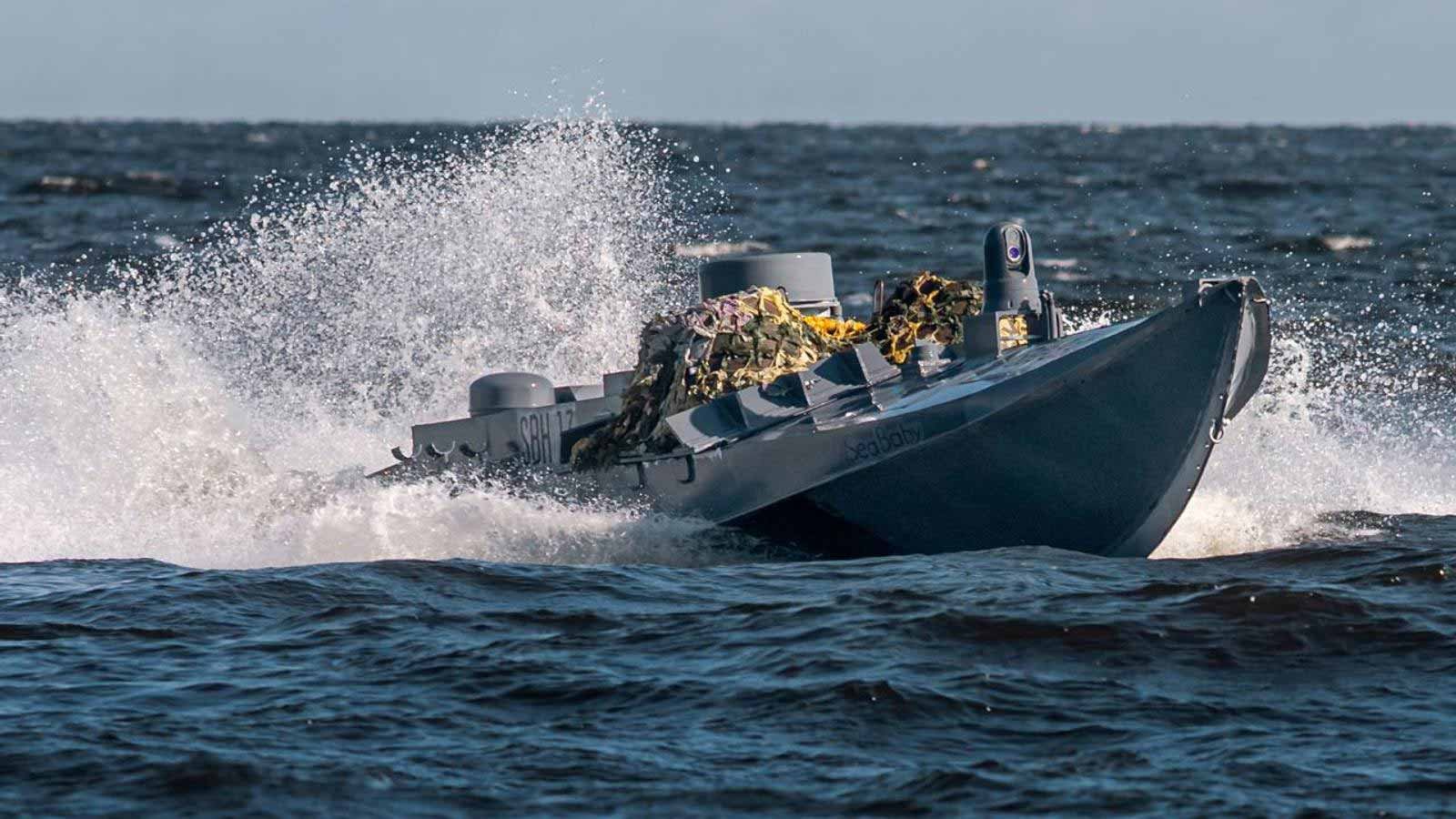
- Ukraine’s Security Service (SBU) unveiled upgraded ‘Sea Baby’ naval drones with 1,500 km range and 2,000 kg payload.
- The drones feature AI-assisted targeting and remote-operated weapons, including rocket launchers and machine guns.
- Sea Baby drones have struck 11 Russian ships and key infrastructure, helping secure Ukraine’s Black Sea trade routes.
- Ukraine produces about 4,000 naval drones annually and is exploring export opportunities to partner countries.
- Self-destruct mechanisms prevent enemy capture; drones are designed for reuse and adaptation.
Ukraine’s Sea Baby Drones: Transforming the Black Sea Battlefield
In the rapidly evolving landscape of modern warfare, Ukraine’s ‘Sea Baby’ naval drones are no longer just experimental gadgets—they’re rewriting the rules on the Black Sea. Unveiled by Ukraine’s Security Service (SBU), these upgraded unmanned boats now boast an impressive operational range of over 1,500 kilometers and can carry payloads up to 2,000 kilograms, nearly doubling their previous capacity. It’s a leap that’s sending ripples far beyond Ukraine’s shores.
AI-Powered Precision and Versatility
Gone are the days when sea drones were merely kamikaze vessels destined for one-way missions. The latest models are equipped with artificial intelligence-assisted friend-or-foe targeting systems, enabling them to distinguish between allies and adversaries with remarkable accuracy. This leap in autonomy means Sea Baby drones can carry remote-controlled weapons, including multiple rocket launchers and stabilized machine-gun turrets. Some variants can even deploy smaller aerial drones for layered attacks.
The operator’s experience has also been transformed. Control centers, often located inside mobile vans, are equipped with banks of screens and sophisticated controls. Operators can monitor live feeds and execute complex maneuvers from afar, making these drones adaptable tools for both offensive strikes and defensive operations against enemy amphibious assaults.
Changing the Strategic Balance in the Black Sea
Since the full-scale war erupted in early 2022, Ukraine’s sea drones have been instrumental in neutralizing Russia’s Black Sea fleet. According to SBU Brigadier General Ivan Lukashevych, these drones have struck eleven Russian ships and contributed to attacks on critical infrastructure, such as the strategic bridge linking Crimea to mainland Russia (Reuters). Their presence has forced Russian naval assets to retreat, keeping Ukraine’s vital commercial shipping lanes open and breathing life into the country’s battered economy.
“We need our commercial fleet to sail, to work, to keep the economy breathing, so that the Russians cannot influence it,” Lukashevych remarked at a recent demonstration. The SBU’s commitment to protecting port infrastructure is mirrored by the growing use of buoy barriers and electronic warfare systems designed to fend off enemy drones and disrupt hostile signals.
Innovation Driven by Necessity—and Global Interest
Ukraine’s naval drone program is a story of relentless innovation under fire. Electronic jamming has become a cat-and-mouse game, with both sides developing devices to scramble each other’s drone communications. To prevent Russian forces from capturing and reverse-engineering Ukrainian technology, Sea Baby drones are fitted with multi-layered self-destruct mechanisms. Yet, their primary goal remains reusability; bringing the drones back for repeated missions is a priority.
The program is funded in part by public donations through a state-run initiative and coordinated closely with Ukraine’s military and political leadership (NDTV). President Volodymyr Zelenskiy has signaled that only half of Ukraine’s annual production of 4,000 naval drones is needed for domestic defense, opening the door for potential sales to international partners—a move that could reshape naval drone warfare worldwide.
Other nations are watching with keen interest. The lessons learned from the drone battles in the Black Sea are being analyzed by military strategists around the world, with particular attention paid to how such tactics might be adapted to other contested waters.
Storm Shadow Missiles and Coordinated Strikes
The Sea Baby drones are not acting alone. Ukraine’s arsenal now includes advanced weaponry like the British-made Storm Shadow cruise missiles. These missiles, developed by MBDA, have a range of about 250 kilometers and can deliver nearly a ton of explosives to hardened targets. They’re often used in tandem with cheaper drones, which are sent in first to exhaust enemy air defenses before the high-value missiles strike precise targets, such as Russia’s naval headquarters in occupied territory (NDTV).
This layered approach—combining swarms of drones with powerful missiles—demonstrates Ukraine’s tactical flexibility and its ability to adapt to the changing dynamics of conflict. The result is a battlefield where unmanned systems are not just supporting actors but often the stars of the show.
Defensive Challenges and the Future of Naval Warfare
Success with sea drones brings new challenges. As Ukraine’s offensive capabilities grow, so does the need to fortify its own port infrastructure. Military analysts like Serhii Kuzan highlight the urgency of strengthening defenses—deploying physical barriers and boosting electronic warfare capacity to protect critical assets from retaliatory attacks.
Meanwhile, Russia is working to reverse-engineer and deploy its own naval drones, underscoring the ongoing technological arms race. The SBU’s focus on making Sea Baby drones both potent and resilient reflects the broader shift toward unmanned, adaptive warfare—where the ability to innovate quickly is as important as sheer firepower.
Global Implications: Export Potential and Strategic Lessons
Ukraine’s experience is shaping how countries view the role of unmanned systems in future conflicts. With only half of its naval drone output earmarked for national defense, Ukraine is exploring the possibility of exporting these technologies to allied nations. As President Zelenskiy put it, “Why not sell those 2,000 to partners? That’s normal. Let companies sell.”
These drones are more than weapons; they’re platforms for innovation—showcasing advances in AI, remote operations, and multi-purpose design. For nations concerned about protecting their own maritime interests, Ukraine’s approach provides a template for how small, agile, and smart systems can punch above their weight.
Ukraine’s Sea Baby drones epitomize a new era in naval warfare—where technological ingenuity, adaptability, and strategic vision matter as much as firepower. Their evolution from simple unmanned boats to AI-driven, multi-role platforms highlights the pace of change in military innovation and the growing importance of unmanned systems on the global stage.
