

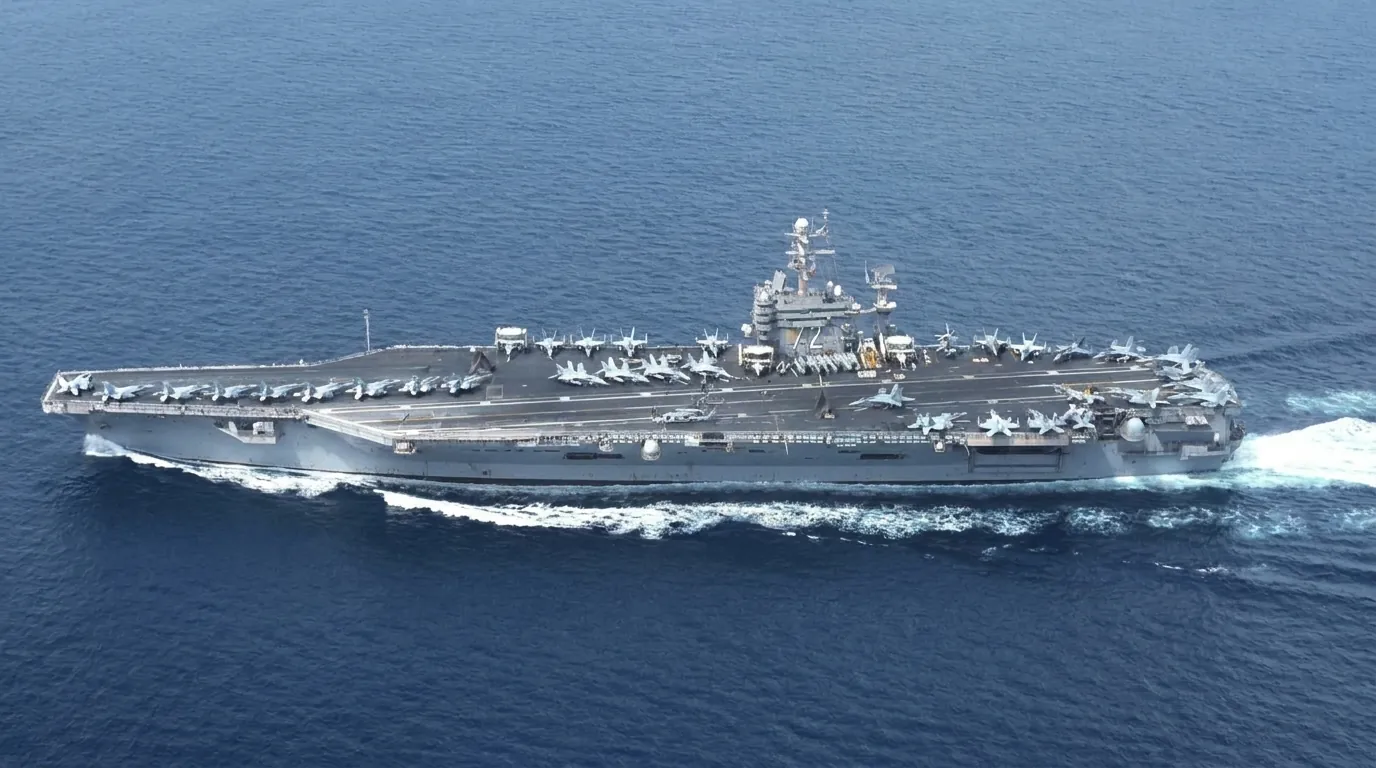
Imagine commanding a floating military airbase that never really sleeps. Thousands of sailors work around the clock, aircraft launch from its flight deck, and sophisticated systems keep everything running. Behind this enormous operation sits an equally enormous financial commitment. Operating an aircraft carrier can cost hundreds of millions of dollars annually.
But where does all that money actually go?
The cost of operating an aircraft carrier involves far more than filling fuel tanks or paying sailors. Maintenance, aircraft operations, spare parts, food supplies, advanced electronics, and logistical support all contribute to its running expenses. Even when a carrier remains in port, its crew and equipment require continuous attention.
The U.S. Navy offers an interesting example. Its nuclear-powered Nimitz-class and Gerald R. Ford-class carriers represent two generations of expensive naval engineering. Although both use nuclear propulsion, their operating requirements and long-term support costs differ considerably.
Historical U.S. Government Accountability Office (GAO) figures provide some perspective. One estimate placed annual operating and support costs at approximately $490 million for a Nimitz-class carrier and $391 million for the Ford-class CVN-78. These figures are historical estimates, not current annual budgets, but they illustrate the scale of the financial commitment.
There’s another important distinction worth understanding. Operating an individual aircraft carrier is not the same as maintaining an entire carrier strike group. Destroyers, submarines, supply ships, and carrier-based aircraft introduce additional expenses.
So, how much does the U.S. Navy spend to keep one of these massive warships operational? And which expenses consume the largest share of its budget?
Let’s examine the numbers, from everyday maintenance to the extraordinary costs of deploying an aircraft carrier at sea.
How Much Does It Cost to Operate an Aircraft Carrier?
Operating an aircraft carrier is a massive financial undertaking, even before its aircraft leave the flight deck. For the U.S. Navy, keeping one of these floating airbases operational can require hundreds of millions of dollars every year.
But exactly how much does it cost?
Historical estimates from the U.S. Government Accountability Office (GAO) provide a useful starting point. A 2017 GAO report estimated that operating and supporting a Nimitz-class aircraft carrier costs approximately $490 million annually. The same report projected around $391 million per year for the newer Gerald R. Ford-class CVN-78.
These figures represent operating and support expenses, not the original construction price. They also reflect historical estimates rather than current annual budgets.
More recent historical data offers another perspective. According to GAO’s analysis of fiscal year 2020 spending, a Nimitz-class carrier averaged approximately $534.5 million in annual operating and support costs, measured in constant FY2021 dollars.
Here’s how those figures translate into daily expenses.
| Aircraft carrier | Annual operating cost | Approximate daily cost |
| Nimitz-class (historical estimate) | $490 million | $1.34 million |
| Ford-class CVN-78 (historical estimate) | $391 million | $1.07 million |
| Nimitz-class (FY2020 data) | $534.5 million | $1.46 million |
Why does the difference matter? A carrier’s financial requirements change throughout its service life. Deployment schedules, maintenance periods, equipment failures, and modernization projects can all influence spending.
The Ford-class was designed to reduce long-term operating expenses through automation and smaller crew requirements. However, those projected savings should not automatically be treated as proven results across the entire class.
One final detail: these figures cover the carrier itself and its associated operating support. They do not represent the full cost of maintaining an entire carrier strike group.
That’s where the numbers become even more interesting.
What Are the Main Operating Expenses of an Aircraft Carrier?
An aircraft carrier is essentially a small floating city, except its residents operate military equipment instead of running ordinary businesses. Thousands of people live and work aboard, while sophisticated machinery runs continuously. Keeping everything functional requires an enormous support budget.
So, where does the money go?
The largest operating expenses generally fall into several categories, each contributing to the carrier’s readiness and ability to perform missions.
Crew Salaries and Personnel
People are one of the biggest expenses. A Nimitz-class aircraft carrier typically carries approximately 5,000 personnel when its embarked air wing is included. Their salaries, benefits, training, medical support, and other personnel expenses add substantially to annual operating costs.
Maintenance and Repairs
A carrier cannot afford equipment failures during critical operations. Its propulsion systems, radar, communications equipment, elevators, and flight deck require regular inspections and repairs. Major overhauls can become particularly expensive, involving specialized shipyard workers and extensive replacement components.
Fuel and Energy
Nuclear-powered carriers do not purchase conventional fuel for propulsion during normal operations. However, they still require energy for electrical systems, aircraft operations, and supporting equipment. Conventional carriers also face substantial propulsion fuel expenses.
Aircraft Operations
The carrier’s air wing introduces another significant expense. Fighter jets, airborne early-warning aircraft, helicopters, and other platforms require aviation fuel, spare parts, specialized technicians, and regular maintenance.
Food, Supplies, and Logistics
Thousands of sailors need meals, drinking water, medical supplies, uniforms, and everyday necessities. Resupply operations become especially important during extended deployments, when the ship operates far from its homeport.
| Major expense | Examples |
| Personnel | Salaries, benefits, training |
| Maintenance | Repairs, inspections, overhauls |
| Energy | Electricity and propulsion support |
| Aviation | Aircraft fuel and spare parts |
| Logistics | Food, water, medical supplies |
Interestingly, reducing crew numbers does not always guarantee lower operating costs. GAO found that personnel savings from smaller crews were sometimes offset by increased maintenance expenses. That’s an important reminder: keeping a carrier operational requires balancing manpower with mechanical reliability.
How Much Does an Aircraft Carrier Spend on Crew and Maintenance?
Two expenses deserve particular attention when examining the cost of operating an aircraft carrier: its crew and maintenance requirements. Both are essential to keeping the vessel ready for combat, but they consume considerable resources.

Consider the crew first. A modern U.S. nuclear-powered aircraft carrier operates with thousands of sailors, officers, and aviation personnel. A Nimitz-class carrier typically accommodates approximately 3,000 ship’s company personnel, with another 2,000 assigned to its embarked air wing.
That’s roughly 5,000 people aboard.
Every person requires food, medical services, training, accommodation, and compensation. The Navy must also maintain specialized teams responsible for nuclear propulsion, aviation maintenance, weapons handling, communications, and damage control.
Reducing crew requirements can therefore produce meaningful savings. The Gerald R. Ford-class incorporates greater automation and improved systems designed to reduce manpower demands compared with older Nimitz-class carriers.
However, fewer sailors do not automatically mean lower total expenses.
Maintenance is equally demanding. Unlike an ordinary commercial vessel, an aircraft carrier operates advanced military systems under harsh conditions. Saltwater corrosion, intense flight operations, mechanical wear, and aging components create a constant repair workload.
The U.S. Navy generally divides ship maintenance into three levels:
- Organizational maintenance: Routine inspections, lubrication, minor repairs, and preventive servicing performed by the ship’s crew.
- Intermediate maintenance: More complex repairs handled by specialized Navy personnel and maintenance facilities.
- Depot maintenance: Major overhauls, structural repairs, equipment modernization, and nuclear refueling performed at shipyards.
The financial impact can be substantial. GAO data for fiscal year 2020 placed average annual Nimitz-class maintenance expenses at approximately $229.5 million, measured in constant FY2021 dollars.
| Expense category | Examples |
| Personnel | Salaries, benefits, training |
| Routine maintenance | Inspections, minor repairs |
| Intermediate maintenance | Specialized equipment repairs |
| Depot maintenance | Major overhauls and refueling |
There’s an interesting lesson here. A smaller crew might reduce personnel expenses, but insufficient manpower can increase maintenance workloads and create readiness problems. GAO identified this relationship in its examination of Navy ship operating costs.
Ultimately, maintaining an aircraft carrier is not simply about fixing broken equipment. It’s about preventing failures before they interrupt operations. And that requires thousands of skilled people, specialized facilities, and a substantial annual budget.
How Much Does It Cost to Fuel and Power an Aircraft Carrier?
Fuel and energy expenses are another important part of the cost of operating an aircraft carrier. However, not every carrier faces the same requirements. The biggest difference comes down to its propulsion system.
The U.S. Navy operates nuclear-powered aircraft carriers, including the Nimitz-class and Gerald R. Ford-class. These vessels use nuclear reactors to generate the enormous energy needed for propulsion and onboard electrical systems.
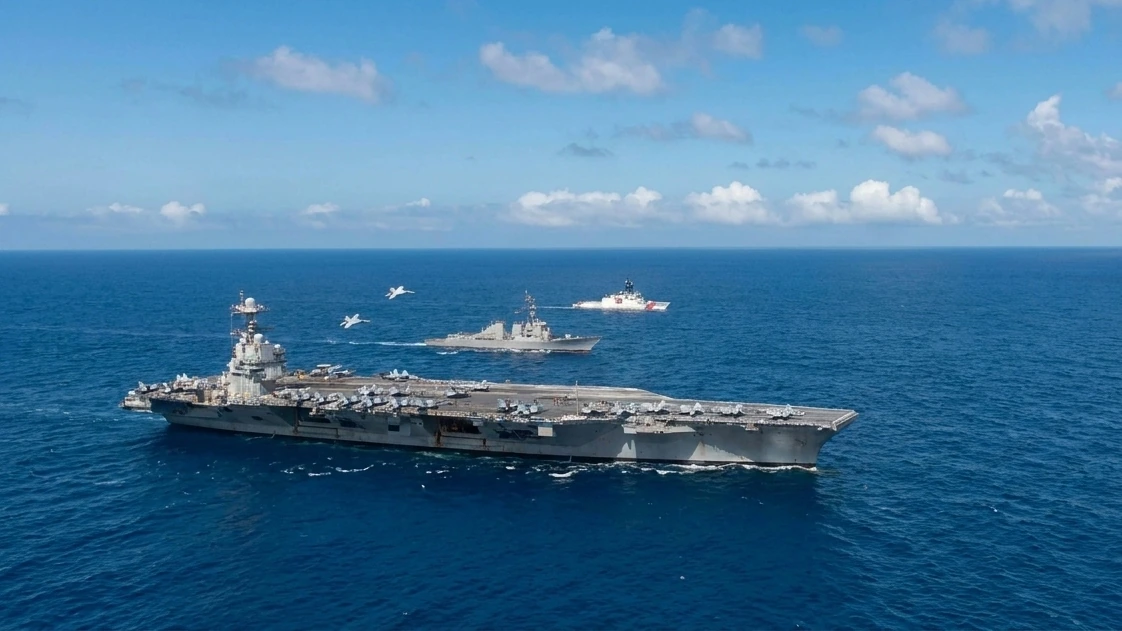
Unlike conventional warships, they do not need regular purchases of diesel or marine fuel to power their main propulsion systems. That’s a significant operational advantage, particularly during extended deployments.
But nuclear propulsion isn’t free.
Reactors require specialized personnel, regular inspections, technical support, and extensive maintenance. Eventually, the vessel also needs nuclear refueling, an expensive and complicated shipyard undertaking.
For example, Nimitz-class carriers generally undergo one major midlife Refueling and Complex Overhaul (RCOH). This process involves replacing nuclear fuel, modernizing equipment, and extending the ship’s service life.
Conventional aircraft carriers face a different financial challenge. Ships powered by gas turbines or diesel engines must regularly purchase fuel for propulsion. Their consumption depends on displacement, operating speed, mission requirements, and time spent at sea.
There’s another expense that applies to both designs: aviation fuel.
Carrier-based aircraft consume large quantities of specialized jet fuel during training and combat operations. Fighter jets such as the F/A-18E/F Super Hornet require substantial fuel support, while helicopters and airborne early-warning aircraft add further demand.
| Energy expense | Nuclear-powered carrier | Conventional carrier |
| Main propulsion | Nuclear reactors | Diesel or gas turbines |
| Propulsion fuel purchases | Not routinely required | Required |
| Reactor maintenance | Required | Not applicable |
| Aircraft fuel | Required | Required |
| Electrical power | Generated onboard | Generated onboard |
One important distinction: nuclear propulsion reduces dependence on conventional propulsion fuel, but it doesn’t eliminate an aircraft carrier’s energy-related expenses.
In fact, aviation operations and nuclear maintenance remain significant financial commitments throughout the vessel’s service life.
How Much Does It Cost to Deploy an Aircraft Carrier?
Operating an aircraft carrier in port is one thing. Sending it across the ocean for several months is another financial challenge entirely.
A deployment requires more than keeping the ship moving. Thousands of sailors must remain supplied, aircraft need constant maintenance, and the carrier must maintain its ability to respond to threats. Every additional operational demand can increase spending.
However, the exact cost depends on the deployment’s duration, location, mission, and intensity.
Several expenses become particularly important once a carrier leaves its homeport.

Aircraft Operations and Maintenance
Flight operations generate substantial expenses. Fighter jets, helicopters, and surveillance aircraft require aviation fuel, replacement components, inspections, and specialized maintenance crews.
Frequent takeoffs and landings also place additional stress on aircraft and flight deck equipment. During combat operations, weapons expenditure and accelerated maintenance requirements can increase costs further.
Food, Supplies, and Logistics
A carrier cannot simply visit a supermarket when supplies run low. It must carry sufficient food, medical equipment, spare parts, and other necessities for thousands of personnel.
Replenishment ships help solve this problem by delivering fuel, ammunition, food, and essential supplies while the carrier remains at sea.
Operational Support
Extended deployments also require additional logistical coordination, communications support, and operational planning. The Navy must ensure the carrier can maintain readiness throughout its mission, even when operating thousands of miles from American bases.
| Deployment expense | Main cost drivers |
| Aviation operations | Aircraft fuel and maintenance |
| Personnel support | Meals, medical care, and services |
| Replenishment | Supplies, fuel, and ammunition |
| Maintenance | Repairs and replacement components |
| Logistics | Transportation and operational support |
Here’s where the financial picture gets interesting. Historical estimates have placed the daily operating cost of an entire U.S. carrier strike group at approximately $6.5 million.
That figure includes much more than the aircraft carrier itself. Destroyers, aircraft, supply vessels, and other supporting assets contribute to the total.
Consequently, a six-month deployment cannot be accurately priced simply by multiplying the carrier’s individual daily operating cost. The mission’s supporting fleet and additional operational requirements must also be considered.
How Much Does a Carrier Strike Group Cost to Operate?
An aircraft carrier rarely operates alone. When the U.S. Navy sends one into a potentially dangerous region, it usually travels with a collection of warships, aircraft, and support vessels known as a carrier strike group (CSG).

Think of it as a mobile military network. The aircraft carrier provides the central aviation platform, while its escorts protect the formation and extend its operational capabilities.
Naturally, maintaining this entire formation costs considerably more than operating the carrier alone.
A typical U.S. Navy carrier strike group includes several major components:
- Aircraft carrier: Serves as the central platform for launching and recovering military aircraft.
- Guided-missile destroyers: Provide air defense, anti-submarine warfare, and precision-strike capabilities.
- Attack submarine: Operates underwater, gathering intelligence and providing additional protection.
- Carrier air wing: Includes fighter jets, helicopters, electronic warfare aircraft, and airborne early-warning platforms.
- Supply ships: Deliver fuel, ammunition, food, and other essential materials.
Each component has its own operating budget. Destroyers require propulsion fuel, maintenance, weapons support, and crew expenses. Attack submarines have specialized nuclear propulsion and maintenance requirements, while aircraft introduce substantial aviation-related spending.
Estimated Daily Cost of a Carrier Strike Group
Historical estimates have placed the daily operating cost of an entire U.S. carrier strike group at approximately $6.5 million. This figure provides a useful indication of the financial commitment involved, although it should not be treated as a current standardized Navy rate.
| Strike group component | Major expenses |
| Aircraft carrier | Personnel, maintenance, ship operations |
| Destroyers | Fuel, crew, weapons, repairs |
| Attack submarine | Nuclear maintenance, personnel |
| Carrier air wing | Aviation fuel, aircraft maintenance |
| Supply ships | Fuel, provisions, transportation |
The distinction matters when evaluating military spending. A carrier’s annual operating cost might reach hundreds of millions of dollars, but maintaining its entire supporting formation requires a much larger financial commitment.
In other words, the aircraft carrier is only one part of an expensive naval operation. Its escorts, aircraft, and logistical network make the complete formation considerably more capable, and considerably more expensive.
Nimitz-Class vs. Ford-Class: Which Aircraft Carrier Is More Expensive to Operate?
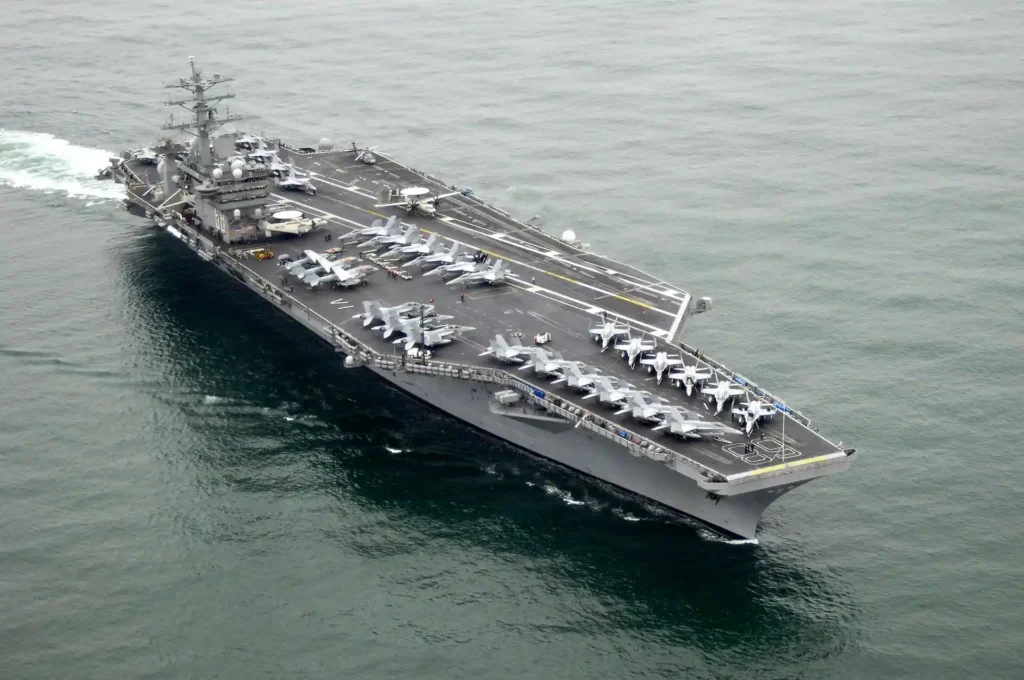
The U.S. Navy’s Nimitz-class and Gerald R. Ford-class represent two generations of nuclear-powered aircraft carriers. Both can project American military power across the oceans, but their operating requirements are quite different.
The Nimitz-class entered service in 1975, establishing a foundation for decades of U.S. carrier operations. Its successor, the Ford-class, introduces advanced technologies designed to improve efficiency, reduce manpower requirements, and lower long-term operating expenses.
But does newer automatically mean cheaper?
Not necessarily.
The Ford-class incorporates several major improvements, including the Electromagnetic Aircraft Launch System (EMALS), Advanced Arresting Gear (AAG), and more automated ship systems. These technologies replace older equipment and are intended to reduce maintenance demands while improving aircraft operations.
Crew requirements also differ. The Ford-class was designed to operate with fewer personnel than the Nimitz-class, potentially reducing salaries, benefits, food supplies, and other personnel-related expenses throughout its service life.
The financial projections are particularly interesting.
Historical GAO estimates placed annual operating and support costs at approximately $490 million for a Nimitz-class carrier and $391 million for the Ford-class CVN-78. These figures suggest a potential operating advantage for the newer design, although they are historical estimates rather than current expenditure figures.
Nimitz-Class vs. Ford-Class Operating Comparison
| Feature | Nimitz-class | Ford-class |
| Propulsion | Nuclear | Nuclear |
| Aircraft launch system | Steam catapults | EMALS |
| Arresting system | Conventional | Advanced Arresting Gear |
| Automation | Older-generation systems | More advanced automation |
| Crew requirements | Higher | Lower design requirement |
| Operating costs | Higher historical estimate | Lower historical estimate |
The Navy has also projected approximately $4 billion in savings over a Ford-class carrier’s 50-year service life compared with the Nimitz-class, based on reduced operating and support expenses.
However, technological improvements bring their own challenges. EMALS and other advanced systems require specialized maintenance, while early Ford-class operations have faced technical difficulties.
The real test is long-term performance. If these systems deliver their intended reliability and efficiency, the Ford-class could offer substantial savings over several decades.
For the Navy, that difference matters. Operating an aircraft carrier is a lifelong financial commitment, not simply an annual budget exercise.
