

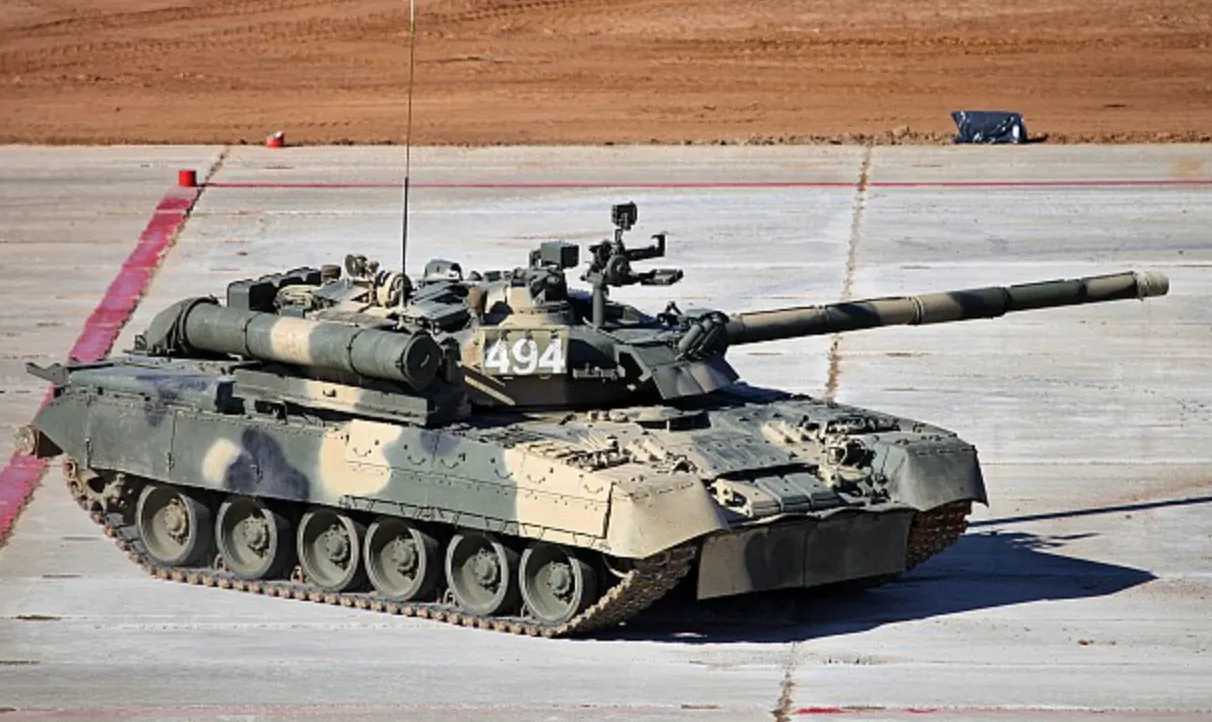
Imagine two main battle tanks facing each other. One weighs around 45 tons, while the other approaches 70 tons. Both carry powerful cannons, advanced armor, and sophisticated targeting systems. Yet, their designs look remarkably different.
This isn’t just an engineering coincidence. It reflects two very different approaches to modern warfare.
Russian tanks, particularly those developed from Soviet designs, have traditionally prioritized compact dimensions, lower silhouettes, and reduced weight. Western tanks, including the American M1 Abrams and German Leopard 2, generally emphasize heavier armor, greater crew protection, and more spacious fighting compartments.
So, why are Russian tanks lighter and smaller than Western tanks?
The answer goes far beyond saving weight. Soviet military doctrine, battlefield requirements, manufacturing capacity, and engineering decisions all played important roles. One particularly significant innovation was the automatic loading system, which allowed Russian tanks to operate with three crew members instead of four.
That single decision influenced turret dimensions, internal space, and the amount of armor needed to protect the vehicle.
However, smaller doesn’t automatically mean weaker. A lighter tank can offer advantages in transportation, mobility, and logistics, especially when operating across challenging terrain.
Western designers simply made different compromises. They invested more heavily in protection, crew comfort, and operational capabilities, producing tanks that are considerably heavier.
Understanding these differences reveals something fascinating about armored warfare: a tank’s dimensions often tell you as much about the army operating it as they do about the engineers who built it.
The Different Military Doctrines Behind Russian and Western Tank Design
To understand why Russian tanks are lighter, you need to look beyond their steel armor and engines. The real explanation begins with Soviet military thinking during World War II and the Cold War.
Soviet military planners envisioned large armored formations advancing across enormous stretches of territory. They needed tanks that could be manufactured in substantial numbers, moved efficiently, and maintained without placing excessive demands on military resources.
In this environment, building the heaviest possible tank wasn’t necessarily the smartest decision.
Quantity, mobility, and operational efficiency mattered enormously.
The experience of World War II reinforced this philosophy. The Soviet Union produced tens of thousands of T-34 tanks, demonstrating the battlefield value of relatively simple, adaptable vehicles that could be manufactured on an industrial scale.
That experience influenced subsequent generations of Soviet armored vehicles, including the T-55, T-62, T-64, and T-72.
Each generation introduced improvements in firepower, armor, and technology. However, the underlying preference for compact designs remained influential.
Western tank development followed a somewhat different path.
During the Cold War, NATO countries anticipated confronting large Soviet armored formations in Europe. Their tanks needed to withstand powerful enemy guns while maintaining the ability to engage targets at considerable distances.
This encouraged the development of heavily protected vehicles, including the American M1 Abrams and German Leopard 2.
These tanks incorporated sophisticated composite armor, larger fighting compartments, and design features intended to improve crew protection.
The difference wasn’t simply about engineering preferences. Geography and military responsibilities also mattered. Soviet planners considered the demands of operating across enormous territories, while NATO armies placed considerable emphasis on defensive engagements and protecting comparatively expensive, highly trained crews.
Neither approach emerged without compromises.
Soviet designers accepted tighter interiors and different ammunition-storage arrangements to reduce vehicle dimensions. Western engineers accepted greater weight to accommodate additional protection and equipment.
In other words, Russian and Western tanks reflect two distinct answers to the same question: what should a modern armored vehicle prioritize?
The contrast became especially visible in the T-72 and Leopard 2. The Soviet tank was designed around a compact, economical platform, while the German vehicle reflected NATO’s growing emphasis on protection and crew accommodation.
That difference wasn’t accidental. It was built into the military thinking behind each vehicle.
How Autoloaders Make Russian Tanks Smaller and Lighter
One of the biggest secrets behind the compact design of Russian tanks sits beneath the turret. It’s called an automatic loading system, or autoloader, and it fundamentally changes how a tank is built.
Most Soviet-designed main battle tanks, starting with the T-64, use an autoloader to feed ammunition into the main gun. This eliminates the need for a dedicated human loader, reducing the crew from four people to three.
Read also: Tank Autoloaders Explained: Are They Better Than Manual Loaders?
That might sound like a small change. In tank engineering, however, it makes a considerable difference.
Consider the American M1 Abrams. Its four-person crew includes a commander, gunner, driver, and loader. The loader occupies a dedicated position inside the turret, where there’s enough room to handle heavy 120 mm ammunition.
The Russian T-72 takes another approach.
Instead of relying on a fourth crew member, it uses a mechanical system to select, lift, and load ammunition automatically. Its carousel magazine sits low in the fighting compartment, beneath the turret.

How the T-72 Autoloader Works
The T-72’s carousel stores 22 ready rounds in separate loading trays. These contain the projectile and propellant charge in a two-part arrangement.
When the gunner selects ammunition, the carousel rotates until the correct round reaches the loading position. A mechanical lifting mechanism then brings the ammunition toward the gun’s breech.
The system loads the projectile and propellant charge in sequence. The gun is then ready to fire.
This arrangement removes the need for a standing loader and frees designers from accommodating another crew station. Consequently, the turret can be shorter and the overall fighting compartment more compact.
The T-90 family continues this Soviet design tradition, although individual models incorporate different refinements.
Why Does This Reduce Tank Weight?
The connection is straightforward: fewer crew members require less internal space. Less internal space means a smaller vehicle, with less surface area requiring armor protection.
That creates a weight-saving effect throughout the design. The turret can be smaller, the hull can be more compact, and engineers have greater flexibility when distributing armor.
According to the Royal United Services Institute (RUSI), this combination of a three-person crew and carousel autoloader helped Soviet designers reduce tank height, internal volume, and overall weight.
However, there’s a trade-off.
The T-72’s carousel stores ammunition inside the crew compartment rather than behind an isolated armored bulkhead. A penetrating hit can therefore ignite stored propellant and trigger catastrophic explosions.
Western tanks such as the Abrams use separated ammunition compartments with blowout panels to direct explosive pressure away from the crew.
Interestingly, autoloaders aren’t inherently less safe. French Leclerc tanks also use automatic loading systems but employ a different ammunition-storage arrangement.
The real difference isn’t automation itself. It’s where engineers choose to put the ammunition.
Why Russian Tanks Have Lower Profiles and Smaller Turrets
Look at a T-72 standing beside an M1 Abrams. One of the first things you’ll notice is their height. The Russian tank looks noticeably shorter, with a compact turret that barely rises above its hull.
This isn’t merely an aesthetic choice. A smaller silhouette can make a tank harder to detect, target, and hit.
Soviet engineers deliberately prioritized low-profile designs because they understood the battlefield advantages of presenting less vehicle to enemy weapons.
The T-72 is a particularly good example. Its overall height is approximately 2.19 meters, making it considerably shorter than many Western main battle tanks. Its rounded turret and sloped frontal armor further reduce the exposed surface area.

How Smaller Turrets Reduce Weight
A turret is among the most heavily protected parts of a main battle tank. It must accommodate the main gun, ammunition-handling equipment, sights, and crew positions.
A larger turret generally requires more material to protect its exposed surfaces.
By keeping the turret compact, Soviet designers reduced the area requiring armor coverage. This helped control overall vehicle weight without abandoning substantial frontal protection.
The rounded shape also creates oblique angles that can influence how incoming projectiles interact with the armor.
However, compactness comes with disadvantages.
Russian tanks generally provide less room for crew movement, equipment installation, and future upgrades. Their lower turret geometry also limits gun depression, typically around five degrees for the T-72 and T-90, compared with approximately ten degrees for the Leopard 2.
That difference matters when fighting from elevated positions or behind uneven terrain.
A tank that cannot lower its gun sufficiently may need to expose more of its hull to engage a target.
Ultimately, Russian engineers traded interior space and some firing flexibility for a smaller, lighter fighting vehicle. On paper, it’s an attractive compromise. On the battlefield, its effectiveness depends heavily on terrain, positioning, and the enemy’s weapons.
Armor Protection: Why Western Tanks Are Generally Heavier
If smaller dimensions explain part of the weight difference, armor explains much of the rest. Western tank designers have generally accepted greater vehicle weight to accommodate additional protection and improve crew survivability.
The American M1 Abrams and German Leopard 2 illustrate this philosophy particularly well. Both feature sophisticated composite armor designed to resist powerful kinetic-energy penetrators and shaped-charge warheads.
Unlike conventional steel armor, composite protection combines different materials to disrupt incoming projectiles. Depending on the design, these materials can include steel, ceramics, and specialized layered structures.
The result is a protective system that can provide substantial resistance without relying entirely on extremely thick steel plates.

Russian tanks also use composite armor. The T-72, T-80, and T-90 families incorporate layered protection, while later variants add explosive reactive armor (ERA) to improve resistance against certain anti-tank weapons.
However, the overall arrangement differs considerably.
Why More Armor Usually Means More Weight
Think of tank armor as a protective shell surrounding a vehicle’s most valuable components. Increasing its thickness, coverage, or complexity usually adds considerable mass.
Western engineers have often devoted more weight to protecting the turret, hull, and crew compartment. Additional armor packages can increase protection, although they also affect mobility and transportation requirements.
The Abrams provides a useful example. Early M1 variants weighed approximately 55–57 metric tons, while later configurations, including the M1A2 SEP variants, can exceed 65 tons depending on equipment and armor packages.
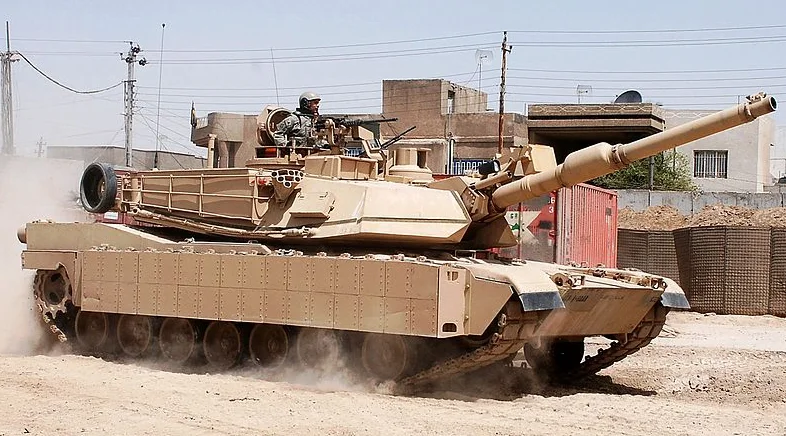
The Leopard 2 has followed a similar development path. Early models weighed around 55 tons, while later configurations approach or exceed 60 tons.
Russian tanks generally remain lighter, partly because their smaller dimensions require less armor material to cover.
But there’s another important distinction: how ammunition is protected.
The Abrams stores most of its ready ammunition in a separate compartment behind the turret. Armored doors isolate this ammunition from the crew, while specially designed blowout panels direct an explosion upward and away from the fighting compartment.
Many Russian T-72 and T-90 variants use a different arrangement. Their carousel autoloaders store ammunition beneath the turret, inside the fighting compartment. If penetrating damage ignites the ammunition, the consequences can be catastrophic.
This difference highlights an important design philosophy: Western engineers invested heavily in protecting the crew even after armor penetration.
Russian designers prioritized a smaller fighting compartment and compact ammunition-handling system, accepting different survivability risks.
It’s also worth remembering that modern Russian tanks have introduced additional armor technologies, including Relikt explosive reactive armor. Protection varies considerably between generations and configurations.
Ultimately, Western tanks aren’t heavier simply because they carry thicker armor. Their ammunition arrangements, internal architecture, and crew-protection systems also contribute to their weight.
In tank design, protecting the people inside can be just as demanding as protecting the vehicle itself.
The Advantages of Smaller and Lighter Tanks on the Battlefield
A lighter tank isn’t necessarily a weaker tank. In certain battlefield conditions, carrying fewer tons of steel can provide meaningful operational advantages.
Russian tank designers understood this when developing vehicles such as the T-72 and T-90. Their relatively compact dimensions and lower weight were intended to make armored formations easier to deploy, maneuver, and sustain.
One major advantage is transportation.
Moving dozens or hundreds of tanks across a country requires an extensive logistical network. Railways, heavy transporters, recovery vehicles, and suitable roads all become important considerations.

A tank weighing approximately 45–50 tons generally places fewer demands on transportation infrastructure than a Western counterpart weighing 65–70 tons.
This difference becomes particularly important when crossing bridges with strict weight restrictions or operating in regions with limited infrastructure.
Better Mobility Across Difficult Terrain
Weight also influences how a tank interacts with the ground.
A vehicle’s ground pressure depends on its weight and the area of its tracks touching the surface. Generally, reducing weight while maintaining similar track contact area lowers ground pressure.
This can improve mobility across soft soil, muddy fields, and certain difficult landscapes.
However, weight alone doesn’t determine whether a tank becomes stuck. Track width, suspension design, engine performance, and driving conditions matter considerably.
The T-72, for example, combines a relatively lightweight chassis with a powerful diesel engine. This gives it a useful balance between mobility and mechanical simplicity.
Lower Logistical Demands
Fuel consumption is another consideration.
Heavier tanks generally require more energy to accelerate and move, although actual consumption depends on engine efficiency, transmission design, terrain, and operating conditions.
The M1 Abrams uses a powerful gas turbine engine, while most Russian T-72 and T-90 variants use diesel powerplants.
Diesel engines generally offer advantages in fuel economy compared with gas turbines under many operating conditions. This can help reduce logistical pressure during extended operations.
Manufacturing costs also matter. A smaller vehicle with fewer crew stations and a more compact structure can potentially be cheaper to produce.
For armies maintaining large armored fleets, those savings can be significant.
But there’s a catch: lighter tanks still need sufficient protection, firepower, and reliability. Reducing weight only makes sense when the resulting vehicle can perform its intended battlefield mission.
That’s the central advantage of Russian tank design: achieving useful combat capability without carrying as much mass as many Western alternatives.
Russian vs. Western Tanks: Comparing Weight, Size, and Crew
Numbers often explain the differences between Russian and Western tanks better than photographs. Put their specifications side by side, and the contrasting engineering philosophies become immediately apparent.
Russian main battle tanks generally occupy a lower weight category. Western counterparts, particularly modern Abrams and Leopard 2 variants, carry considerably more mass.
Consider four widely recognized examples: the Russian T-72B3 and T-90M, alongside the American M1A2 Abrams and German Leopard 2A6.
Russian and Western Tank Specifications Compared
| Specification | T-72B3 | T-90M | M1A2 Abrams | Leopard 2A6 |
| Country | Russia | Russia | USA | Germany |
| Combat weight | ~45 tons | ~48–50 tons | ~62–67 tons | ~62–63 tons |
| Crew | 3 | 3 | 4 | 4 |
| Main gun | 125 mm | 125 mm | 120 mm | 120 mm |
| Loading system | Automatic | Automatic | Manual | Manual |
| Engine power | 840 hp | 1,130 hp | 1,500 hp | 1,500 hp |
| Approx. height | 2.19 m | 2.23 m | 2.44 m | 2.64 m |
Figures are approximate and vary with production batches, equipment, armor packages, and measurement conventions. Engine specifications represent commonly published configurations.
The weight difference is particularly striking.
An M1A2 Abrams can weigh roughly 15–20 tons more than a T-72B3. That’s equivalent to adding another small military vehicle to the American tank’s overall mass.
The Leopard 2A6 also outweighs both Russian examples substantially.
Why Do These Differences Matter?
Start with crew configuration.
Russian tanks accommodate three people, while Abrams and Leopard 2 vehicles require four. Eliminating the dedicated loader reduces the space needed inside the turret.
Then consider vehicle dimensions. The T-72B3 stands approximately 2.19 meters tall, compared with roughly 2.44 meters for the Abrams and 2.64 meters for the Leopard 2A6.
That creates a noticeable difference in battlefield silhouette.
Weight also affects transportation. A 45-ton tank can generally use infrastructure that might present challenges for a vehicle approaching 70 tons.
However, specifications don’t tell the entire story.
The Abrams and Leopard 2 offer larger internal spaces, substantial protection systems, and different ammunition-storage arrangements. Their additional weight supports capabilities that Russian designers approached differently.
Is a Heavier Tank More Powerful?
Not automatically.
Both Russian and Western tanks carry formidable main guns, sophisticated fire-control systems, and modern ammunition.
A tank’s effectiveness depends on much more than its weight. Crew training, sensors, ammunition quality, tactical positioning, maintenance, and supporting forces all influence battlefield performance.
The numbers reveal two different engineering priorities, not a simple winner.
