

Terry Gerton We are all much more aware of brain injuries than we used to be between football players and combat injuries. And military folks by their very nature have more exposure risk to blast brain injuries. You’ve been watching this for a while. What has been DoD’s approach in the past to both monitoring and then treating military brain health?
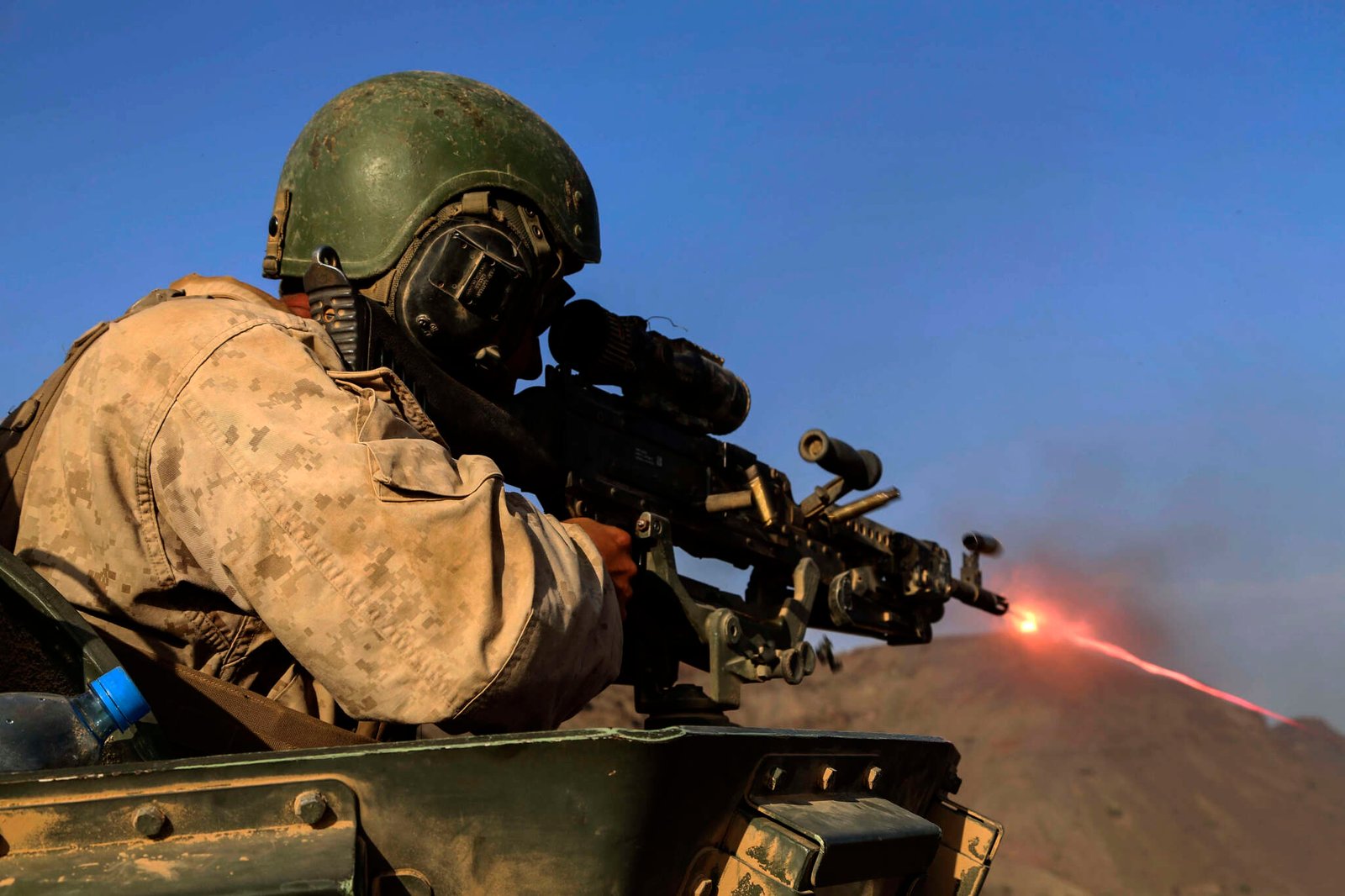
Alyssa Hundrup Yeah, so I think in the past, I think it was understood that for like big events like explosives that there was an injury, but what we’ve been learning over time is that there’s really a serious health risk with low level exposures. So these are exposures, repeated exposures that happen on a daily basis for people, military service members firing weapons, whether that’s through training exercises or in a military operational setting. So even just firing a weapon, a .50 caliber rifle or shoulder fire rifles, that as they’re doing that, as they are expending those munitions, they can experience a low-level blast. And what that is, is basically the simply firing of a weapon releases energy. And that causes the sudden pressure waves. Those pressure waves can travel through the skull and cause micro injuries to the brain. So I think it was well understood before that the big explosions would certainly cause those kinds of effects on the brain. But what we’re learning is those smaller exposures and those repeated exposures over time can have cumulative effects and can really cause symptoms immediately, such as headaches and slowed reaction time. And then over time, even memory loss, and in some cases, traumatic brain injuries. So these are soldiers you know, firing weapons through training exercises or what have you. And so the department really has had to change the way it is thinking and its approach to brain health effects from blast over pressure.
Terry Gerton That is so helpful, and I think, you know, we used to associate those with hearing loss issues, but not so much with brain injuries. And so you’ve got a new report out now that describes a number of initiatives that are underway. What is DoD actually trying to measure or monitor with respect to these blast injuries that it wasn’t before?
Alyssa Hundrup Yeah, I think in terms of monitoring, I think there’s a couple of things. I think it’s taking an approach across where it’s really trying to think about prevention, and then, of course, mitigation, awareness, and then treatment. But in terms monitoring, it’s starting with cognitive assessments. And what a cognitive assessment does is it’ll measure the speed and accuracy of attention and memory. So really understanding, ideally in a perfect world, having that baseline assessment of a service member so that they can then go back and reassess that maybe after an event or on a regular basis. So that’s one of the primary goals with their new requirements that they’re looking at. A second one is exposure tracking. So again, in a perfect world, they would be able to track each of the exposures. So anytime there’s a soldier out there having a training or, you know, using certain weapons. They would be able to say what weapon, when that was, how much was, and then in a perfect world, we’re not there yet, it’s in its infancy, but what the department is working for is to also be able to have sensors so they can track actual exposures. So then the service member over the life of their career would be be able document all of those and that could then be used to, if in the event that there is a health concern, they could look across and use that for identifying and then eventually treating the effect if that were needed.
Terry Gerton As you’re describing these kinds of potential injuries situations, it sounds like every service member everywhere is eventually going to be exposed in some way, shape or form. Does the department have the capacity or the capability to actually build a tracking mechanism like that that would account for cumulative injury over a service member’s career?
Alyssa Hundrup Well, I will start by saying that there are some specialties that are considered more at high risk than others. And they have identified a list of those now. It is what I would call the start, a very important start to those considered at high risk. That is going to need to be evaluated and it will evolve and grow and there’s going to be needed to be a continued attention. One example of that that I would highlight is just right now there’s a decent understanding of blast overpressure for land activities. I’ve been talking a lot about the firing of weapons. But we’re also learning, and in the infancy of learning and understanding blast over pressure in different environments, in an air environment, on sea, right, on water. So absolutely, yes, there is the potential that blast over pressure could touch just about every service member. And I think that’s what we found in our review, is that they really don’t yet have the resources. They’ve had challenges having the staff, the technology, the ability to really be able to get their arms around every service member. They’ve taken a prioritized approach by really focusing on the high-risk service members, and we’re happy to see that. But I think they really need fundamentally to get more staffing in order to be able to look at both the cognitive assessment side as well as the exposure tracking.
Terry Gerton Alyssa Hundrup is a director on the healthcare team at U.S. Government Accountability Office. Alyssa, DoD says it started a one-year pilot this past summer to really test out the functionality, the capacity, the requirements. What did you see there?
Alyssa Hundrup Yeah, so this is very, very early in its infancy. Before the pilot started, the way they were conducting cognitive assessments were with special computers, there had to be a proctor to facilitate it. So service members would have to go to a particular room on a particular computer. And it was, so it’s very staff and technology intensive. What they have now, and this is just getting underway in the summer of 2026, is a new pilot that’s a web-based application. So. I do think it shows great promise in terms of reducing the heavy resource needs from both a staffing and a technology perspective, but it was too early on in our review to really understand how well it’s working and how quickly they’ll be able to conduct these. But I do it shows a great promise, and so it will be very important for the department to assess the impacts of the pilot, see how successful it is, see if it can be scaled up and rolled out and then, you know, adjust and adjust from there. But I do think that that’s going to be really important in terms of really understanding in its ability to implement the requirements across, because these requirements are continuing to expand. I mean, they’ve started with new entry-level service members coming in. They have a focus on high-risk members. And then, really, the idea is to roll out for everybody. And the requirement there is, “as soon as possible.” But then they need to do this on a continuing basis. The idea is to get that baseline and then to do it at a minimum every five years from there. So this is really an important effort and there will be a continued emphasis in order to make sure that they’re meeting those requirements.
Terry Gerton Alyssa, this conversation has just laid out a whole bunch of obstacles just even to get to the tracking and diagnostic stage, right? But let’s move forward in imaginary time to the point where they do have the tracking and diagnostic process in place for every service member all the time. What happens next? Are they going to be responsible for treatment? What’s going to you know, what comes after the basic tracking knowledge?
Alyssa Hundrup Yeah, no, that’s absolutely right. I think that the tracking, what the tracking allows them to do, and they do have, you know, the ability to treat. They have some pretty advanced treatment facilities now for individuals that do experience a severe traumatic brain injury. But I think the idea is that if you have the tracking information, then we can get a better handle on the cumulative effects. I think where there’s a lot that’s unknown. I think it’s easier when you have an acute effect, right, and somebody needs treatment. In a, you know, again, in a perfect case, that would be made available, but I think one of the concerns and one of the emerging concerns is this cumulative health risk. So by having the tracking information, hopefully that will be documented information that a provider can use. If somebody comes in, whether it’s short-term or long-term, they would be able to quickly access that information in the system and see just how much exposures that individual has had, how severe perhaps. And we can start maybe making some ties with some of those things that’s just not there now. So really getting at the cumulative effects and then using that in the treatment plan to understand what might be happening.
Terry Gerton Sounds like the world’s largest brain injury research project because then I can imagine that this kind of data would be useful for researchers and medical researchers worldwide to think about what’s happening and how to treat brain injury going forward.
Alyssa Hundrup Absolutely, and I think it’ll be critical information as these individuals move into becoming veterans and information for their health care as they either get health care from the Department of Veterans Affairs or afterwards. I think its going to be an important source of information throughout the rest of there, but also broadly at a macro level, absolutely. And then we can better understand kind of looping back to get to the prevention because the ultimate goal is prevention, right? We don’t even want to have this to begin with. But I think better information with what’s happening now will allow us to maybe design weapons, design the right protective equipment, design right kinds of protocols to have in place so that we’re preventing this at the beginning.
Copyright
© 2026 Federal News Network. All rights reserved. This website is not intended for users located within the European Economic Area.
