

Turkey continues to show growing signs of hostility toward Israel, prompting Western analysts to intensify their assessment of Ankara’s expanding military capabilities.
Turkey’s increasing involvement in Syria has become a growing source of concern in Israel, with the United States reportedly being asked to closely monitor these developments.
While Turkey does not currently pose the same direct military threat to Israel as Iran, it represents a rising strategic challenge. The greater risk lies in an escalating political and military rivalry, growing proxy pressure in Syria, potential confrontation in the Eastern Mediterranean, and Turkey’s ability to leverage its NATO membership and expanding defense industry to constrain Israel both diplomatically and militarily.
Relations between Israel and Turkey have continued to deteriorate publicly. Turkish President Recep Tayyip Erdoğan has argued that Israeli military operations in Syria and Lebanon also threaten Turkey’s security, while Israeli analysts increasingly describe Turkey as a regional rival. This shift is significant because the confrontation is no longer limited to political rhetoric. It is increasingly tied to Syria, where both countries maintain operational interests that could quickly come into direct conflict.
Turkey achieved major step with missile
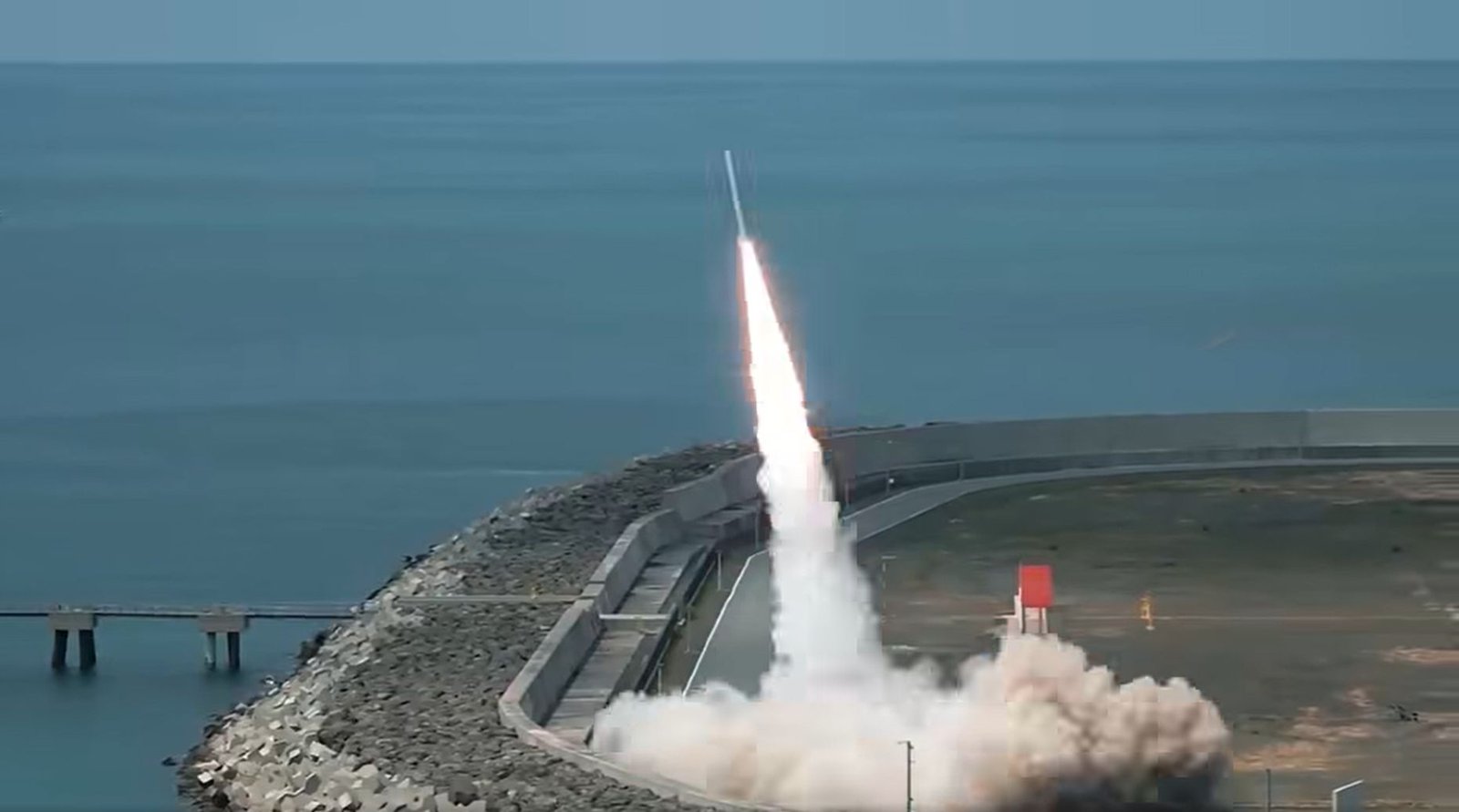
A major development came on July 4, 2026, when Turkey successfully tested a version of its Typhoon Block 3 ballistic missile, designed to engage naval targets.
According to available information, the test demonstrated a direct hit on a small naval target measuring approximately seven meters in length at a distance of several hundred kilometers from the launch site.
Unlike ballistic missiles designed to strike fixed land targets, an anti-ship ballistic missile (ASBM) operates as part of a much broader combat system. Its effectiveness depends on an integrated coastal surveillance network supported by naval and aerial assets—including UAVs, submarines, and electronic warfare capabilities—to generate a comprehensive maritime picture and continuously update the missile during flight. The launch decision is made by the naval command, while guidance is maintained through an uplink data channel until impact and subsequent battle damage assessment (BDA).


The new Typhoon Block 3A is an extended version of the Typhoon Block 2, which entered serial production at ROKETSAN in 2023.
The missile is believed to carry a warhead protected by a reinforced casing or ceramic re-entry cone capable of withstanding the extreme thermal and mechanical stresses generated during atmospheric re-entry and terminal maneuvering.
Development appears to have focused on the ability to accurately engage small, moving naval targets at supersonic speeds while carrying a comparatively large warhead.
Estimated Specifications of Typhoon Block 3A
- Maximum range: 560–800 km (with estimates suggesting an operational range closer to 800 km)
- Export range: Approximately 280–500 km
- Payload: 250–500 kg
- Warhead: Likely derived from the ATMACA anti-ship cruise missile
- Weight: Approximately 2.3 tons
- Length: Approximately 6 meters
Analysts estimate that the missile employs an active radar seeker derived from the ATMACA naval cruise missile, operating in the Ku-band with an antenna diameter of approximately 350 mm.
Analysis of launch imagery from the Typhoon Block 3 indicates the presence of a redesigned nose section or radome, together with additional electronic components associated with the seeker. These modifications likely account for the missile’s increased overall length.
One of the missile’s greatest technical challenges is detecting, identifying, and tracking a small moving naval target while approaching at a steep angle through significant sea clutter. Successfully completing such an engagement may also require lateral maneuvering during the terminal phase of flight.
Author: Arie Egozi, Correspondent Israel
