

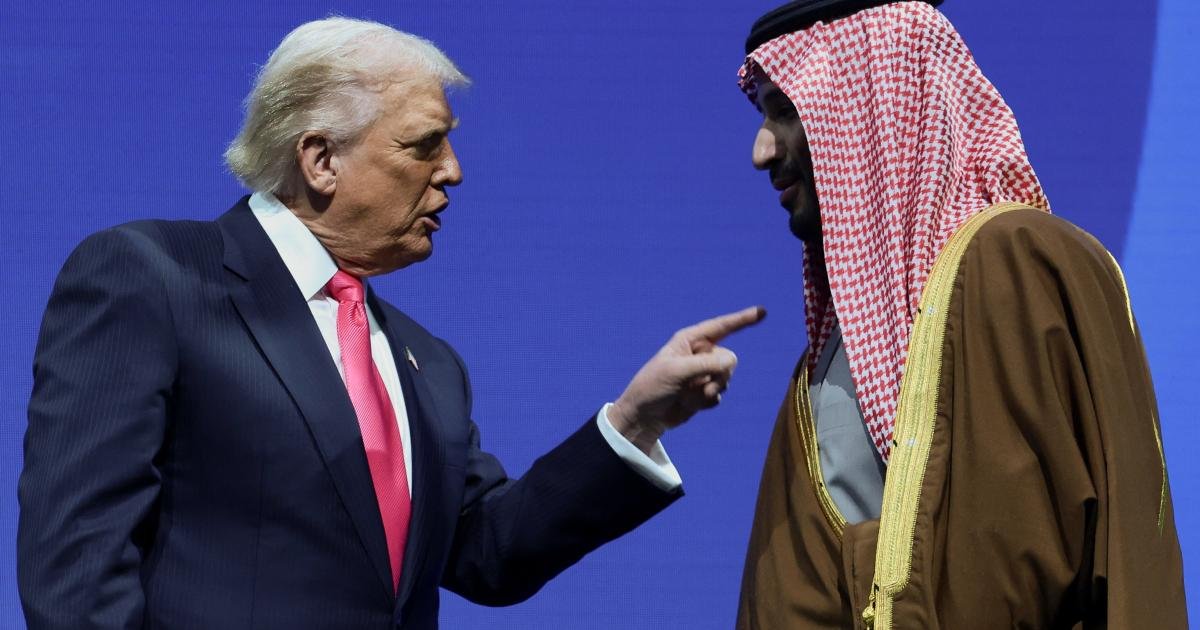
Last May, U.S. President Donald Trump paid a triumphant visit to Saudi Arabia, Qatar, and the United Arab Emirates. Over the course of a four-day tour, he admired the Gulf capitals’ “gleaming marvels,” cheered on their ambitious modernization plans, and showcased over $3 trillion in pledged Gulf investment and “mega-deals” between U.S. and Gulf businesses.
What a difference a year makes. For weeks after the United States and Israel began their attack on Iran, on February 28, Bahrain, Kuwait, Oman, Qatar, Saudi Arabia, and the United Arab Emirates all faced barrages of Iranian missiles and drones aimed at military bases, airports, oil refineries, and data centers. On April 8, a cease-fire stopped most of the fighting, but Iran has effectively blocked the Strait of Hormuz, halting shipping of Gulf oil, gas, and other commodities. The problem Gulf leaders now face is broader than the status of the Strait of Hormuz. They do not want a regional order in which a hostile neighbor can dictate how their economies connect to the world, and many are unsettled by how Washington has handled the war and is handling negotiations of a possible peace. There are strategists in every Gulf state arguing to downgrade or cut ties with the United States, pointing out that American security commitments failed to deter Iranian attacks and entangled the region in a months-long war.
The Gulf countries never required perfect peace in their dangerous neighborhood. Yet their efforts over the past decade to diversify their economies away from fossil fuels and to loosen political and social constraints do depend on keeping regional disorder in check. For the foreseeable future, that means continuing to look to the United States as their primary strategic and security partner, because ties run deep and the Gulf has no good alternatives. Various Gulf countries might, in theory, try to make a separate peace with Iran, punish Iran, band together and turn inward, or find other external partners to replace some of what the United States offers. But none of these options will deliver them the stability they need to pursue their domestic goals.
For all Washington’s culpability in the current war, the capriciousness of its policies, and the damage its actions have done to the regional and global economies, in the wake of the conflict there will be an opportunity to deepen the U.S.-Gulf partnership. The United States may lose this opportunity if it effectively cedes the Strait of Hormuz to Iranian control. But if Washington can end the war and secure freedom of navigation in this crucial waterway, it will have a chance to shore up its strategic relationships with the region and reap the economic benefits of participating in its postwar recovery. The global economic disruption of this war has proven the hollowness of the claim that the Gulf needs Washington, but Washington no longer needs the Gulf. In fact, both sides need the economic and strategic partnership the other offers to help them navigate a competitive, unpredictable world.
WHERE IS THE LEVERAGE?
This war has prompted some soul-searching in the Gulf. The U.S. security guarantee and military presence was supposed to backstop the Gulf states’ development strategies, keeping a lid on regional disorder so that they could pursue domestic transformation. Instead, it attracted Iranian retaliation on Gulf soil. Gulf states’ attempts over the past several years to seek détente with Iran failed to prevent Tehran from striking them. Multinational firms have not fled, but commercial facilities have been damaged, revenues lost, and business halted, all of which has raised questions about the Gulf’s future as a competitive destination for international talent and investment. Factories can be rebuilt and revenues can recover, but confidence is harder to restore.
Gulf countries’ nightmare scenario is for the war to end with Iran weakened but not defeated, the Strait of Hormuz effectively blocked, and the Gulf squarely in a vengeful regime’s crosshairs. Some Gulf leaders may wish for Washington to “finish the job,” as U.S. Senator Lindsay Graham and others have put it, and decisively disarm Iran. But most recognize that other outcomes are more likely. Even an extended cease-fire, punctuated by occasional U.S. and Israeli strikes on Iran, would still mean years of economic uncertainty.
Yet the Gulf states’ options to try to restore their security are all underwhelming. In an attempt to reduce the threat from Iran, for instance, some Gulf states might lend their own militaries to the U.S.-Israeli war effort. Yet others would likely be concerned about Iranian retaliation or be wary of Israel, which they now see as contributing to regional instability. By and large, Gulf states were not happy to be dragged into this war, which Washington launched against their advice, and the Trump administrationʼs volatile rhetoric and actions since the war’s beginning have raised questions about the reliability of the United States. Yet Gulf leaders largely recognize both the enduring Iranian threat and the irreplaceable American role in confronting it. As the Emirati presidential adviser Anwar Gargash put it, “the missiles were Iranian and the defense systems were American.” Although deterrence failed, these defenses have largely succeeded in intercepting Iranian missiles and preventing mass-casualty attacks in the Gulf, and Gulf countries and are rightly proud of their own militaries’ performance and societies’ resilience. But taking a more confrontational approach toward Iran would risk further delaying the Gulf states’ domestic economic projects and putting their territories at risk—and there would be no guarantee that Washington would help them manage the fallout.
This war has prompted some soul-searching in the Gulf.
The Gulf states might also band together in an attempt to strengthen their collective security, integrate their economies, and use their leverage with Tehran and Washington to ensure that Gulf interests are accounted for in talks to end the war. Yet political divisions among these countries, including tensions between Saudi Arabia and the UAE that escalated late last year, have stood in the way of such an effort. Although all have been harmed by the war, Gulf states experienced the conflict very differently and now disagree about what to do next. The UAE, for instance, has faced more incoming Iranian missiles and drones than Israel, and nearly as many as the rest of the Gulf combined; the country is now deeply apprehensive about the prospects of diplomacy. Oman, meanwhile, has direct access to the Indian Ocean, which has enabled it to benefit economically from Iran’s blockage of the Strait of Hormuz, and in its long-standing role as regional mediator it has sought a diplomatic accommodation with Iran. Others fall somewhere in between, and there have been few convincing displays of unity among them. Gulf countries are more likely to act individually—as was evident most recently in the UAE’s withdrawal from OPEC, reflecting its desire not to be beholden to decisions made by Saudi Arabia, the de facto leader of the bloc.
Rather than going on the offensive against Iran themselves or waiting for Washington to end the war, individual Gulf countries could pursue accommodations with Iran. With the likely exception of the UAE, all of them may conclude that securing their economies requires de-escalation and some kind of modus vivendi in the Strait of Hormuz—and if they fear that Washington may not achieve such a resolution, Gulf leaders may want to strike deals with Tehran themselves. But détente is not likely to be quick or easy. Iranian missiles and drones have just rained down on Gulf cities. Gulf leaders are no strangers to expedient bargaining with adversaries, but they will be reluctant to concede to the extortionate demands Tehran might make to allow Gulf ships passage through the strait.
In the wake of the war, Gulf countries could also diversify their partnerships to lessen their economic and strategic reliance on Washington. Gulf states have enjoyed strong relations with Russia and China for years, and they may seek to deepen these relationships. The problem is that no other power can offer them what the United States does. Russia is preoccupied with Ukraine and is barely hanging onto its Middle Eastern foothold in Syria. China wields influence in Tehran because of the size of its economy and its role as the primary purchaser of Iranian oil, but it has shown no appetite to take on the responsibility of providing regional security. Chinese leaders have largely stayed out of the current conflict, only wading into diplomatic efforts to end the war when it began to affect China-bound oil tankers. China does have substantial trade and investment ties with the Gulf states, but the leading edge of the region’s artificial intelligence industry remains dominated by U.S. firms. Gulf states, moreover, are likely to be wary of Russia’s and China’s continued political and military support for the Iranian regime, especially following reports that both countries have aided Iran’s targeting of U.S. forces, including strikes on Gulf territory.
Middle powers such as Canada, India, and countries in Europe and East Asia can all provide valuable economic, technological, military, and political partnership, and shared concerns about U.S. reliability may make them more eager to cooperate with the Gulf. Nearly two dozen countries have already expressed their willingness to help protect commercial traffic through the Strait of Hormuz. France, Israel, South Korea, Turkey, Ukraine, the United Kingdom, and other countries are providing defensive and political support to Gulf States. Several Gulf states are also working with regional networks. Saudi Arabia has been joined by Egypt, Pakistan, and Turkey in negotiations to end the war. The UAE cooperates closely with Pakistan’s rival, India, and with Israel, which according to Axios has deployed its own forces and air defenses inside Emirati territory. These partnerships may all offer the Gulf states meaningful economic and political support, but, ultimately, they cannot substitute for comprehensive defense, diplomatic, intelligence, and technological support that the United States provides.
WHAT COMES NEXT
Because no actions that various Gulf countries can take will by themselves restore their prewar sense of security, the United States will have an opportunity—however undeserved—to shore up its Gulf relationships as the conflict comes to a close. Continued involvement in this region is in Washington’s interest. As the war has clearly shown, the global economy, and therefore the U.S. economy, relies on freedom of navigation and on Gulf industries—not just oil and gas, but also fertilizer, petrochemicals, and other products.
The United States must demonstrate that it remains willing to lead, first and foremost by reopening the Strait of Hormuz, the most pressing concern in the region’s capitals. It can recruit its Gulf partners to the effort, too, working with them to build a global coalition to police the waterway. Maritime coalitions are difficult to put together, but the extent of the recent global economic disruption and credible fears of U.S. abandonment will encourage countries to send ships and contribute actively to operations—provided that Washington leads the way and that the mission remains separate from the unpopular U.S.-Israeli war. Iranʼs decision to price some tolls on ships passing through the Strait of Hormuz in Chinese renminbi should give the United States a further incentive to marshal such an effort.
Next, the United States should enlist Gulf partners to help build the next generation of antimissile and counter-drone defenses. Working with the Gulf on security doesn’t have to mean a crude exchange of security for fealty; it could be a more collaborative endeavor that also benefits the U.S. defense industrial base. The current war has given Gulf states the unenviable distinction, together with Ukraine, of being the U.S. partners most experienced in fighting off Iranian missiles and drones. (Russia has also used Iranian Shahed drones in Ukraine.) The Gulf states will be motivated to apply these lessons, so the United States will have an opportunity to forge a new security relationship in which these countries are not only customers but investors in, co-developers of, and even joint manufacturers of defensive technologies. The U.S. defense industrial base needs this additional capacity if it is to keep up with proliferating new threats.
Continued involvement in this region is in Washington’s interest.
As the war ends, the United States should also revive the ambitious agenda for economic partnership laid out last May, which included deals related to aviation, energy, infrastructure, AI, and quantum computing. Washington has an interest in promoting a regional model that is neither overly militaristic nor reliant on religious austerity for legitimacy, and a U.S.-backed economic transformation in the Gulf offers precisely that. The strategic rationale behind U.S.-Gulf AI deals—the central component of the agenda—still holds despite changing security conditions: U.S. tech companies will draw on Gulf capital, energy, and land to build large data centers with the computing power to support AI and fuel an entire technological ecosystem. Gulf states may have fewer resources than before, and physical infrastructure will need to be built with redundancies and additional protection against missiles and drones. But Gulf leaders will continue to prioritize investment in emerging industries such as AI. They will be eager to resume normal commerce and restore international businesses’ confidence. And they may be more drawn to safe investments in the United States as long as regional instability persists.
The war has highlighted new opportunities for investment, too. A month of Iranian bombardment showed that secure, redundant infrastructure will be critical to the region’s economic future. Saudi Arabia and Oman in particular are geographically positioned to provide alternatives to other Gulf states to bypass the Strait of Hormuz and reach the Red Sea, the Indian Ocean, and the Levant should the Strait of Hormuz be blocked again. There will be demand for new oil and gas pipelines through Iraq, Jordan, Lebanon, and Syria, as well as rail and other transport infrastructure, to connect the Gulf to markets to the eastern Mediterranean and Europe. U.S. firms should be participating in these projects, and the U.S. government can use its unique diplomatic convening power to help see them through.
Ultimately, the United States must invest in both Middle Eastern security and Middle Eastern prosperity. As the current war has made clear, military tools can bring battlefield success but may not deliver strategic victory. It would be foolish to continue spending as much as the United States does on security without doing more to promote economic ties. Washington had been shifting its policies in this direction last May, before shoving the opportunity aside with a war of Trump’s own making. That impulse is now worth rediscovering.
The United States’ willingness to ignore the advice of allies and eagerness to enter ill-conceived wars has generated substantial discontent, but this is unlikely to be the conflict that decisively drives the Gulf states to give up on Washington. Leon Trotsky once said that “War is the locomotive of history.” But for the moment, rather than driving ahead toward a post-American Middle East, the train is still stuck in the station. If the United States can navigate the difficult negotiations ahead and reach an acceptable resolution to the conflict, it will have a chance to salvage and even strengthen its partnerships with the Gulf states in the aftermath of this misbegotten war.
Loading…
