

Stability is one of the most overlooked parts of fitness. Most people focus on how much they can lift, how fast they can run, or how many calories they burn. Those are all useful measures of performance, but they tell only part of the story.
Good stability allows you to control your body during movement. It helps you maintain balance, transfer force efficiently, protect your joints, and perform everyday tasks with confidence. Whether you are walking upstairs, carrying groceries, playing sports, or lifting weights, your body depends on stability to move safely and effectively.

Poor stability is linked with a higher risk of falls in older adults, increased injury risk in athletes, and reduced movement efficiency across all ages. Fortunately, you do not need expensive equipment or laboratory testing to assess your stability. A few simple movements can reveal a surprising amount about your balance, coordination, and muscular control.
Here are three stability tests that almost everyone should be able to perform. Passing them does not mean you are immune to injury, but struggling with any of them is a useful sign that you could benefit from targeted balance and stability training.
Why Stability Matters More Than You Think
Stability is the ability to maintain control of your body’s position during both static and dynamic movements. It depends on several systems working together.
Your muscles must produce the right amount of force at the right time. Your nervous system has to coordinate movement efficiently. Your eyes provide visual feedback about your surroundings. Tiny receptors in your muscles, tendons, and joints send constant information about body position to your brain. Your inner ear also contributes by helping maintain balance.
If any part of this system performs poorly, movement becomes less efficient. Small losses of stability can reduce athletic performance and increase stress on joints. Larger deficits may contribute to falls, sprains, or chronic pain.
Research consistently shows that balance and stability training improves functional movement, athletic performance, and injury prevention across a wide range of populations. Even healthy adults benefit from regularly challenging their balance.
Test 1: Single Leg Balance
How to Perform the Test
- Stand barefoot on a firm surface with your arms by your sides.
- Lift one foot off the floor and balance on the other leg.
- Keep your standing knee slightly bent and your hips level.
- Look straight ahead rather than at your feet.
- Time how long you can maintain the position without placing your raised foot down, hopping, or grabbing support.
- Repeat on the opposite leg.
What Counts as a Pass?
Healthy adults under the age of 60 should generally aim to maintain balance for at least 30 seconds on each leg.
Older adults may naturally perform slightly lower, but anyone who cannot maintain balance for around 10 seconds should take it seriously. Research has shown that inability to balance on one leg for 10 seconds is associated with an increased risk of all cause mortality in middle aged and older adults.
The goal is not simply staying upright. Your hips should remain level, your trunk should stay relatively still, and your foot should not constantly wobble.
Why This Test Matters
Standing on one leg challenges nearly every part of your balance system.
Your ankle muscles constantly make tiny adjustments. Your gluteal muscles stabilize the pelvis. Your core controls trunk movement. Your nervous system rapidly processes information from your joints, muscles, eyes, and inner ear.
Single leg balance is especially important because walking is essentially a controlled series of single leg stances. Every step requires your body to briefly support your entire weight on one leg.
Athletes who demonstrate poor single leg control may also show greater knee valgus during jumping and landing, which has been linked with increased injury risk.
If You Struggle
Practice balancing for short periods several times each week.
Once 30 seconds becomes easy, increase the challenge by closing your eyes, standing on a cushion, or performing gentle head turns while maintaining balance.
Test 2: Single Leg Sit to Stand
How to Perform the Test
- Sit on a sturdy chair with one foot flat on the floor and the other leg extended slightly forward.
- Cross your arms over your chest.
- Using only your standing leg, rise to a full standing position before sitting back down under control.
- Repeat with both legs.
What Counts as a Pass?
Healthy adults should be able to perform at least five smooth repetitions on each leg without using momentum, twisting the trunk excessively, or allowing the knee to collapse inward.
You should maintain good posture throughout the movement and demonstrate similar performance on both sides. Large differences between legs may indicate weakness, reduced stability, or mobility limitations.
Why This Test Matters
This movement combines balance, lower body strength, coordination, and joint control. The gluteus medius helps stabilize the pelvis while the quadriceps, hamstrings, and calf muscles work together to control the movement.
Researchers frequently use variations of single leg sit to stand testing when evaluating lower limb function following injury or surgery because it provides valuable information about functional stability.
3 Best Beginner Exercises for Jacked 6 Pack Abs Using Only Bodyweight Exercises
The test also reflects movements people perform every day. Standing up from chairs, toilets, or low seats becomes increasingly challenging with age if strength and stability decline.
Common Mistakes
Many people lean heavily to one side, push through momentum, or allow the knee to move dramatically inward. These movement patterns often suggest poor hip strength or reduced neuromuscular control. Improving hip strength, ankle mobility, and core stability usually leads to noticeable improvements in this test.
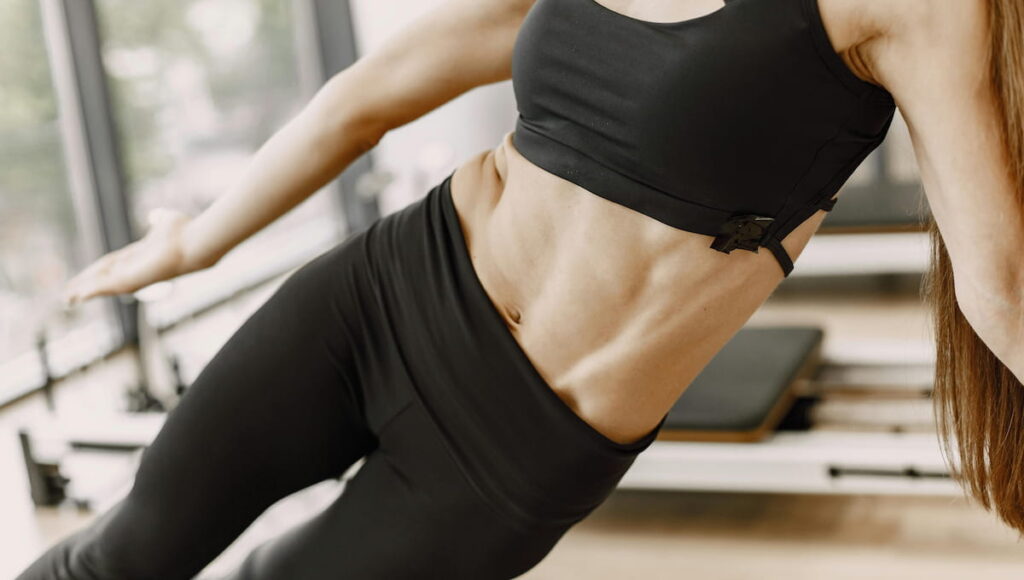
Test 3: The Side Plank Hold
How to Perform the Test
- Lie on your side with your elbow directly beneath your shoulder.
- Stack your feet and lift your hips until your body forms a straight line from head to heels.
- Keep your head neutral and avoid rotating your shoulders or hips.
- Hold the position for as long as you can while maintaining proper alignment.
- Repeat on the opposite side.
What Counts as a Pass?
Most healthy adults should aim for at least 45 seconds on each side. Well trained individuals may comfortably exceed one minute. The exact number matters less than maintaining excellent technique. If your hips drop, shoulders rotate, or you compensate by bending at the waist, end the test.
Differences of more than about 10 percent between sides may suggest muscular imbalances that deserve attention.
Why This Test Matters
The side plank primarily assesses lateral core stability. Unlike traditional abdominal exercises, it challenges the muscles responsible for resisting side bending and rotation.
These muscles play an important role during walking, running, lifting, and nearly every athletic movement. Research has shown that core endurance contributes to spinal stability and may reduce the risk of lower back problems. While no single exercise predicts injury on its own, adequate endurance of the lateral trunk muscles supports healthy movement patterns.
How to Improve
Begin with bent knees if the full version is too difficult. Gradually increase your hold time while maintaining perfect technique. Once you can comfortably hold the position for one minute, progress by lifting the top leg or reaching the upper arm overhead.
Why Passing All Three Tests Is Important
Each of these tests measures a different component of stability.
- The single leg balance test focuses primarily on balance and sensory control.
- The single leg sit to stand evaluates strength, coordination, and lower body stability during movement.
- The side plank assesses core endurance and trunk control.
Passing only one or two tests does not necessarily mean your overall stability is excellent. Strong legs cannot fully compensate for poor balance. Likewise, excellent balance cannot make up for weak hips or poor core endurance.
Together, these tests provide a well rounded picture of how effectively your body controls movement.
What If You Fail One or More Tests?
Failing one of these assessments should not be viewed as a diagnosis. Instead, treat it as useful feedback.
Most stability deficits improve remarkably quickly with consistent practice. Studies have shown that balance training can improve neuromuscular control within a few weeks, while longer training periods produce greater improvements in strength, coordination, and functional performance.
Exercises that commonly improve stability include single leg stands, split squats, lunges, step ups, side planks, bird dogs, farmer carries, and controlled single leg deadlifts. Performing stability exercises two or three times each week is usually enough to produce measurable improvements.
Stability Is Trainable at Any Age
Many people assume declining balance is an unavoidable part of aging. Although balance naturally declines over time, research shows that targeted exercise significantly slows this process.
Older adults who regularly perform balance exercises reduce their risk of falls while improving confidence during daily activities. Athletes also benefit because improved stability often enhances movement efficiency, agility, and force production. Children, adults, and older individuals all respond positively to appropriately designed stability training. The body continually adapts to the challenges placed upon it.
Final Thoughts
You do not need sophisticated equipment to learn a great deal about your movement quality. The single leg balance test, single leg sit to stand, and side plank hold each evaluate different but equally important aspects of stability. Together they assess balance, muscular control, coordination, and core endurance using only your body weight.
If you pass all three with good technique, you are demonstrating a strong foundation for healthy movement. If one exposes a weakness, that is valuable information rather than bad news. Stability responds extremely well to regular practice, and even small improvements can make everyday movement feel easier while supporting long term health and athletic performance.
Rather than chasing bigger lifts or faster race times alone, spend a few minutes assessing and improving your stability. Your joints, muscles, and future self will thank you.
Key Takeaways
| Test | What It Measures | Passing Standard | Why It Matters |
|---|---|---|---|
| Single Leg Balance | Static balance and neuromuscular control | About 30 seconds per leg for healthy adults under 60 | Reflects balance, fall risk, and lower limb control |
| Single Leg Sit to Stand | Functional strength and dynamic stability | Five controlled repetitions per leg | Assesses lower body strength, coordination, and movement quality |
| Side Plank Hold | Lateral core endurance and trunk stability | At least 45 seconds per side | Supports spinal stability and efficient movement |
| Overall Performance | Whole body stability | Pass all three with good technique and minimal side differences | Provides a simple assessment of functional movement quality |
References
- American College of Sports Medicine. (2022). ACSM’s Guidelines for Exercise Testing and Prescription. 11th ed. Philadelphia: Wolters Kluwer.
- Granacher, U., Muehlbauer, T., Gollhofer, A., Kressig, R.W. and Zahner, L. (2011). Effects of balance training on postural control in older adults. Sports Medicine, 41(9), pp. 771 to 791.
- Kibler, W.B., Press, J. and Sciascia, A. (2006). The role of core stability in athletic function. Sports Medicine, 36(3), pp. 189 to 198.
- McGill, S.M. (2007). Low Back Disorders: Evidence Based Prevention and Rehabilitation. 2nd ed. Champaign: Human Kinetics.
- Muehlbauer, T., Gollhofer, A. and Granacher, U. (2013). Associations between measures of balance and lower extremity muscle strength in middle aged adults. Journal of Strength and Conditioning Research, 27(7), pp. 1921 to 1928.
- Ribeiro, F. and Oliveira, J. (2007). Aging effects on joint proprioception. Sports Medicine, 37(2), pp. 103 to 118.
- Sibley, K.M., Beauchamp, M.K., Van Ooteghem, K., Straus, S.E. and Jaglal, S.B. (2015). Using the systems framework for postural control to analyze the components of balance evaluated in standardized balance measures. Archives of Physical Medicine and Rehabilitation, 96(1), pp. 122 to 132.
- Springer, B.A., Marin, R., Cyhan, T., Roberts, H. and Gill, N.W. (2007). Normative values for the unipedal stance test with eyes open and closed. Journal of Geriatric Physical Therapy, 30(1), pp. 8 to 15.
