

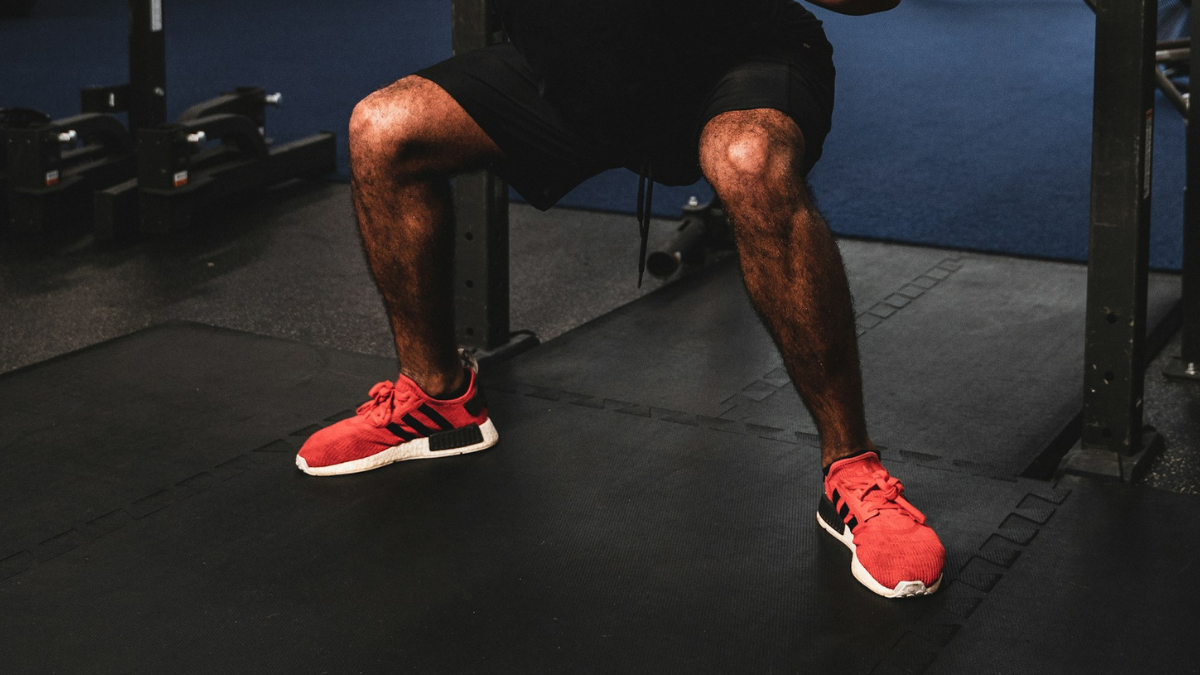
Strong legs are one of the most important foundations of health, performance, and longevity. For men over 50, lower body strength is not just about building muscle or maintaining athletic ability. It is directly linked to mobility, balance, bone health, metabolic function, and independence as the years go by.
After the age of 50, the body naturally begins to lose muscle mass and strength through a process known as sarcopenia. Research shows that muscle mass declines progressively with age, while strength often decreases at an even faster rate. This loss affects the legs more significantly than many other muscle groups. Weak lower body muscles can increase the risk of falls, reduce walking speed, impair daily activities, and negatively impact overall quality of life.

The good news is that resistance training remains one of the most effective tools for slowing or even reversing many age related declines. Numerous studies have demonstrated that men over 50 can build significant strength, increase muscle mass, improve bone density, and enhance physical function through appropriately selected resistance exercises.
When it comes to training efficiency, not all exercises are equal. Some movements provide far greater benefits than others because they recruit more muscle mass, improve functional strength, and translate directly into real world activities.
Why Leg Training Matters More After 50
Many men focus heavily on upper body training while neglecting their lower body. This becomes increasingly problematic with age because lower body strength plays a critical role in maintaining independence and preventing injury.
Research has consistently shown that leg strength is associated with:
• Improved balance and stability
• Reduced risk of falls
• Better mobility and walking performance
• Increased bone mineral density
• Enhanced metabolic health
• Greater longevity
• Better athletic performance
• Improved quality of life
Lower body training also stimulates large amounts of muscle tissue, creating a powerful anabolic effect that supports overall strength and health.
Studies examining aging populations have repeatedly found that lower body weakness is one of the strongest predictors of disability and loss of independence later in life. Maintaining leg strength therefore becomes a crucial investment in future health.
1. The Squat
The squat has earned its reputation as one of the most effective exercises ever created. For men over 50, it remains one of the most valuable tools for maintaining strength, muscle mass, and function.
Why Squats Are So Effective
Squats involve coordinated movement across multiple joints and muscle groups. During a properly performed squat, the body recruits:
• Quadriceps
• Gluteus maximus
• Hamstrings
• Adductors
• Calves
• Core musculature
Because so many muscles are activated simultaneously, squats provide exceptional strength and muscle building stimulus. Research using electromyography consistently demonstrates high activation levels in the quadriceps and gluteal muscles during squat variations.
Real World Benefits
The squat closely resembles one of the most fundamental human movements: sitting down and standing up. Every day, people perform squat like movements when:
• Getting out of a chair
• Using the bathroom
• Picking objects off the floor
• Entering and exiting vehicles
• Climbing stairs
Improving squat strength directly improves these daily activities.
Bone Density Advantages
Heavy resistance exercises that load the spine and hips are particularly beneficial for bone health. Research indicates that resistance training involving compound lower body movements can help maintain or improve bone mineral density in older adults. This is especially important because osteoporosis risk increases with age.
Best Squat Variations for Men Over 50
Not every man over 50 needs to perform heavy barbell back squats. Several effective alternatives exist.
Safety Bar Squat
The safety bar squat reduces shoulder stress and encourages a more upright torso position. This variation can be particularly useful for individuals with limited shoulder mobility.
Box Squat
Box squats help reinforce proper depth and improve confidence while reducing stress on the knees.
How Often Should Men Over 50 Squat?
Most men over 50 benefit from squatting one to three times per week depending on training experience and recovery capacity. Moderate volume combined with consistent progression tends to produce the best long term results.
2. The Romanian Deadlift
While squats dominate knee extension strength, the Romanian deadlift excels at developing the posterior chain. The posterior chain includes some of the most important muscles for healthy aging:
• Hamstrings
• Glutes
• Erector spinae
• Deep stabilizing muscles
Why Posterior Chain Strength Matters
Modern lifestyles often involve prolonged periods of sitting at desks, in cars, and on the couch, which can lead to a range of physical issues that become more pronounced with age. Extended sitting is associated with weakened glute muscles, tight hip flexors, poor posture, reduced athletic performance, and an increased risk of injury. These changes can negatively affect everyday movements such as walking, climbing stairs, lifting objects, and maintaining balance. The Romanian deadlift directly addresses these problems by strengthening the posterior chain, particularly the glutes, hamstrings, and lower back muscles, while reinforcing proper hip hinge mechanics.
As a result, it helps restore muscular balance, improve posture, enhance functional strength, and support healthier movement patterns both inside and outside the gym.
Scientific Benefits of Romanian Deadlifts
Research consistently demonstrates that hip hinge exercises are highly effective for strengthening the posterior chain while improving functional movement patterns that carry over into everyday life. Strong hamstrings and glutes play a crucial role in walking efficiency, running performance, stair climbing ability, balance, and lower back support. These muscles also help stabilize the body during movement and reduce the likelihood of falls, which remain one of the leading causes of injury and loss of independence in older adults.
By developing strength in these key muscle groups, exercises such as the Romanian deadlift can improve mobility, enhance physical performance, and provide valuable protection against age related declines in function and stability.
How to Perform the Romanian Deadlift
The movement begins from a standing position.
Key steps include:
- Hold the weight close to the body.
- Push the hips backward.
- Maintain a neutral spine.
- Feel a stretch in the hamstrings.
- Drive the hips forward to return to standing.
The movement should be controlled throughout the entire range of motion.
3. The Step Up
The third exercise may be less glamorous than squats or deadlifts, but it offers exceptional benefits for older trainees. The step up is one of the most functional lower body exercises available.
Why Step Ups Are So Valuable
Step ups closely mirror real life movements such as climbing stairs, walking uphill, stepping onto curbs, hiking, and moving across uneven ground. This makes them especially useful because they train the legs in a way that directly supports everyday strength, balance, and mobility.
Joint Friendly Nature
Many men over 50 experience knee discomfort. Step ups can often be performed comfortably because the height of the platform can be adjusted according to individual ability. This allows gradual progression without excessive joint stress.
Muscle Activation
Step ups are highly effective because they recruit multiple lower body muscle groups at the same time, including the glutes, quadriceps, hamstrings, calves, and smaller hip stabilizing muscles. This comprehensive muscle activation helps improve strength, balance, and coordination while supporting everyday movement. Research comparing lower body exercises has also found that step up variations produce substantial glute activation, making them particularly valuable for maintaining lower body power and stability as you age.
How to Perform Step Ups Correctly
Proper execution is essential. Key points include:
• Place the entire foot on the platform
• Drive through the lead leg
• Avoid pushing excessively from the trailing foot
• Maintain an upright posture
• Lower yourself under control
Why Step Ups Are Especially Useful After 50
Unlike some machine based exercises, step ups build strength while simultaneously improving movement quality and balance. This combination makes them particularly valuable for long term health and independence.
How to Combine These Three Exercises Into a Complete Leg Workout
These three movements complement one another exceptionally well.
Each exercise targets different movement patterns:
- Squat: knee dominant strength
- Romanian deadlift: hip dominant strength
- Step up: unilateral strength and balance
Together they provide comprehensive lower body development.
Sample Workout
- Exercise 1: Goblet Squat
- 3 to 4 sets of 6 to 10 repetitions
- Exercise 2: Romanian Deadlift
- 3 to 4 sets of 8 to 12 repetitions
- Exercise 3: Step Up
- 3 sets of 8 to 12 repetitions per leg
This workout can be performed two times per week by most healthy men over 50.
Final Thoughts
The best leg exercises for men over 50 are not necessarily the newest or most complicated movements. The most effective exercises are those that build strength, preserve muscle mass, improve balance, support bone health, and enhance everyday function.
Squats provide unmatched lower body strength and muscle building benefits while improving one of the most important movement patterns in daily life. Romanian deadlifts strengthen the posterior chain, improve hip hinge mechanics, and help protect against age related declines in strength and posture.
Step ups develop unilateral strength, balance, and real world functional capacity that directly supports independence and mobility. Together, these three movements form a powerful foundation for lifelong lower body health. Performed consistently and progressively, they can help men over 50 remain strong, capable, active, and resilient for decades to come.
References
• Aagaard, P., Suetta, C., Caserotti, P., Magnusson, S.P. and Kjaer, M. (2010) ‘Role of the nervous system in sarcopenia and muscle atrophy with aging’, Scandinavian Journal of Medicine & Science in Sports, 20(1), pp. 49-64.
• American College of Sports Medicine (2009) ‘Exercise and physical activity for older adults’, Medicine & Science in Sports & Exercise, 41(7), pp. 1510-1530.
• Borde, R., Hortobágyi, T. and Granacher, U. (2015) ‘Dose response relationships of resistance training in healthy old adults’, Sports Medicine, 45(12), pp. 1693-1720.
• Cruz Jentoft, A.J., Bahat, G., Bauer, J., Boirie, Y., Bruyère, O., Cederholm, T., Cooper, C., Landi, F., Rolland, Y., Sayer, A.A., Schneider, S.M., Sieber, C.C., Topinkova, E., Vandewoude, M. and Visser, M. (2019) ‘Sarcopenia: revised European consensus on definition and diagnosis’, Age and Ageing, 48(1), pp. 16-31.
• Fragala, M.S., Cadore, E.L., Dorgo, S., Izquierdo, M., Kraemer, W.J., Peterson, M.D. and Ryan, E.D. (2019) ‘Resistance training for older adults: position statement from the National Strength and Conditioning Association’, Journal of Strength and Conditioning Research, 33(8), pp. 2019-2052.
• Liu, C.J. and Latham, N.K. (2009) ‘Progressive resistance strength training for improving physical function in older adults’, Cochrane Database of Systematic Reviews, 3, CD002759.
