

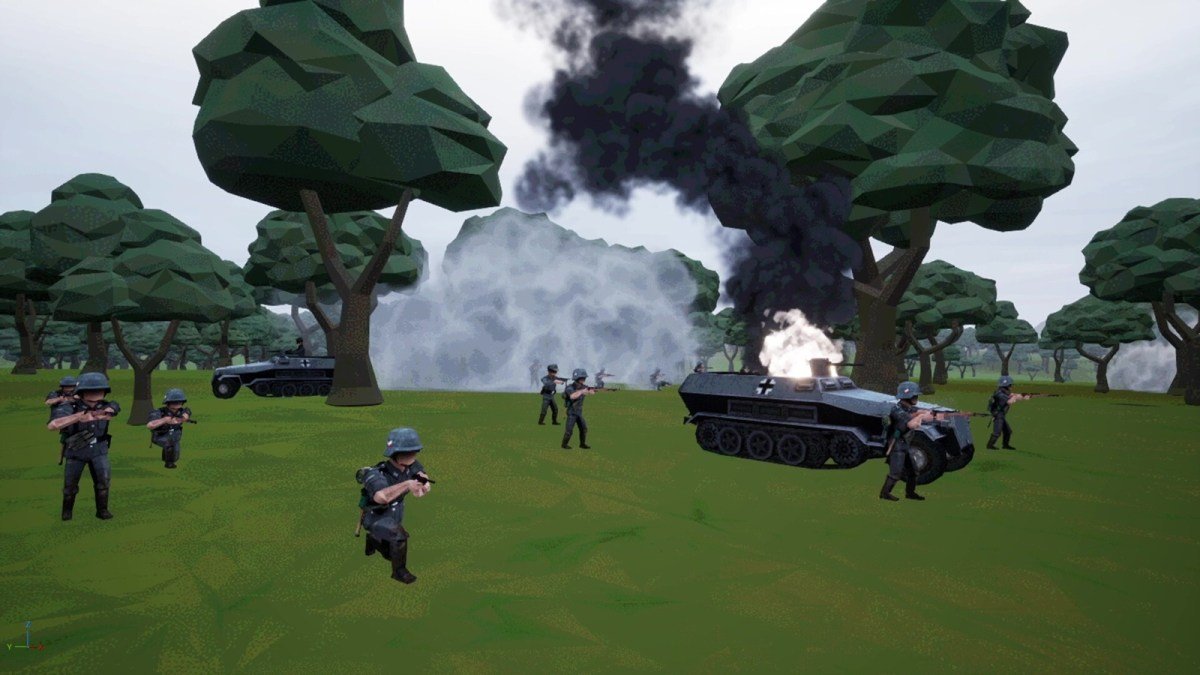
The World War II real-time strategy and wargaming subgenres are notoriously difficult to innovate in. There are tons of classics, with games like War In The East 2 and Steel Division 2, but the market is dominated by long-standing heavyweights like Hearts of Iron IV on the grand strategic end and Company of Heroes on the real-time tactical end.
However, War Company: Fortress Europe, an upcoming real-time tactics strategy title developed and published by BROKE PROTOCOL, promises to break down the barrier between operational grand strategy and real-time squad command. By seamlessly merging a persistent 3D hex-based operational campaign with fully simulated, real-time tactical skirmishes, it tackles one of wargaming’s ultimate ambitions: making every single tactical decision directly impact the strategic tide of war.
The Operational Layer: Macro Strategy For The General Within You
At the core of War Company: Fortress Europe is a dynamic operational campaign set across Western Europe. Rather than relying on rigid, pre-scripted missions, the game uses a 3D hex-grid operational layer with procedurally generated terrain, roads, cities, and dynamic weather conditions. Even “individual shell impacts” (a quote from the game’s Steam Page) can permanently shape the battlefield.
What elevates this macro layer beyond standard turn-based maps is its systemic logistics network:
- Supply Lines & Depots: Armies rely on active road networks and supply hubs to deliver essential fuel, ammunition, and combat reinforcements.
- Front Line Dynamics: Casualties, momentum, and troop concentration reshape the front line.
- Strategic AI: The enemy AI isn’t static, and it actively probes for weak points in your defenses, launches coordinated offensives, and executes deep strikes to sever your supply lines like a real commander would.
- Command Points: A command-point framework encourages structured, efficient planning rather than reckless unit spamming.
When two opposing forces collide on this hex map, the operational layer doesn’t simply resolve the fight via abstract numbers or roll dice. Instead, it seamlessly transitions into a detailed, real-time tactical battle fought directly on terrain generated from that specific region of the campaign map.
The Tactical Layer: Micro Simulation Down to the Squad
Once battle is joined, commanders drop into real-time tactical engagements controlling infantry, armor, support weapons, and air support. The game introduces real-time battles with active pause, allowing players to issue precise movement and attack commands with live path previews.

The tactical simulation leans heavily into realism and environmental persistence:
| Tactical Mechanics | How It Functions in Combat |
| Realistic Ballistics | Armor penetration relies on projectile physics, muzzle velocity, and exact impact angles making flank attacks essential in armored combat |
| Full 3D Simulation | Line of sight, cover, suppression, and morale are modeled realistically across the 3D landscape. |
| Environmental Destruction | Buildings can be leveled, walls breached, and field fortifications reshaped, permanently changing cover options. |
| Adaptive Tactical AI | Enemy squads actively utilize suppression, flanking maneuvers, and synchronized counterattacks. |
Crucially, battlefield destruction is persistent across the campaign. If a town or bridgehead is leveled during an intense morning assault, those ruins remain when forces clash in the same sector days later, forcing players to decide if destroying a whole town and its potential staging ground for an upcoming assault is worth it.
Units Forged in Battle: Veterans vs. Attrition
Another compelling feature of War Company: Fortress Europe is unit persistence. Your forces are not disposable assets generated out of thin air. Instead, armies carry their combat experience, fatigue, and losses from one engagement to the next.

- Veterancy & Commendations: Units gain experience over time, boosting their combat stats, while individual units earn commendations for outstanding performance.
- Attrition & Cohesion: Sustained combat introduces fatigue, high casualty rates, and reduced cohesion. A battle-hardened veteran company surviving from D-Day into 1945 will fight with far greater proficiency than raw replacements, but only if kept supplied and supported by Headquarters.
Can It Take the Wargaming Crown?
By combining a procedural, infinite-replayability campaign with deep tactical simulation, War Company: Fortress Europe strikes at a balance few WWII strategy games attempt. If BROKE PROTOCOL can successfully blend the smooth transition between operational logistics and squad combat, it could serve as the bridge wargamers have wanted for decades: the strategic depth of a true wargame paired with the visceral immediacy of a real-time tactical simulator.
Scheduled for release on PC, War Company: Fortress Europe is definitely a title strategy enthusiasts should keep on their radar, and the Steam page still has a release date for 2026. No price has been announced as of right now.
Support Strategy and Wargaming
I do what I do in Strategy and Wargaming because I love to do this, and I’m never going to stop. If you would like to support me with that, you can buy me a coffee for a dollar if you’re feeling generous. If you can’t, no worries, Strategy and Wargaming will always be free, and I’d love to have you around!
