

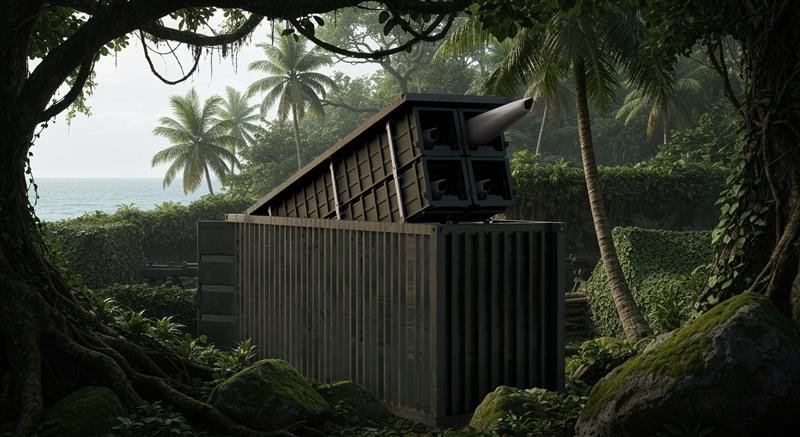
The Senate’s FY2027 NDAA markup injects $40 million to integrate General Atomics’ 300km-range Bullseye cruise missile into U.S. Marine Corps Littoral Regiments for Western Pacific deterrence.
American lawmakers want to fund a U.S. Marine Corps test of General Atomics’ Bullseye cruise missile in the 2027 National Defense Authorization Act.
The Senate Armed Services Committee’s markup of the bill included $40,000,000 for the integration and demonstration of the Bullseye cruise missile through the Marine Corps technology demonstration and prototyping activities.
Bullseye, derived from Israeli defense contractor Rafael’s Ice Breaker, is a General Atomics’ built cruise missile capable of striking ground and maritime targets out to 300 kilometers. General Atomics first showcased the sea-skimming missile on the showfloor of Sea Air Space 2025, at which Naval News interviewed company President Scott Forney on Bullseye.
Since its debut, Bullseye’s has been advertised as a missile designed to take down threats posed by anti-access, area denial networks, such as those fielded by China. A General Atomics advert showcased People’s Liberation Army bases on artificial islands in the South China Sea as some of the “current and future challenges” that the missile can counter.
Deployment from fighters, including carrier based F-18 Hornets, and containers have also been highlighted. The containerized payload, dubbed “Bullseye in a Box” by General Atomics, can pack four Bullseyes. Work to integrate the system on the ubiquitous M142 High Mobility Rocket Artillery System is also underway.
Marine Corps stand-in forces stationed along the first island chain in the Western Pacific want to field increasingly capable long-range missiles to counter the maritime threats that Chinese forces could bring to bear in a potential conflict. Units such as the Japan-based 12th Marine Littoral Regiment recently received Naval Strike Missile-equipped Navy-Marine Expeditionary Ship Interdiction Systems. In the Philippines, the 3rd Marine Littoral Regiment has deployed these unmanned missile launchers in numerous drills since 2025.
Washington Eyes Affordable, Mass Production Missiles
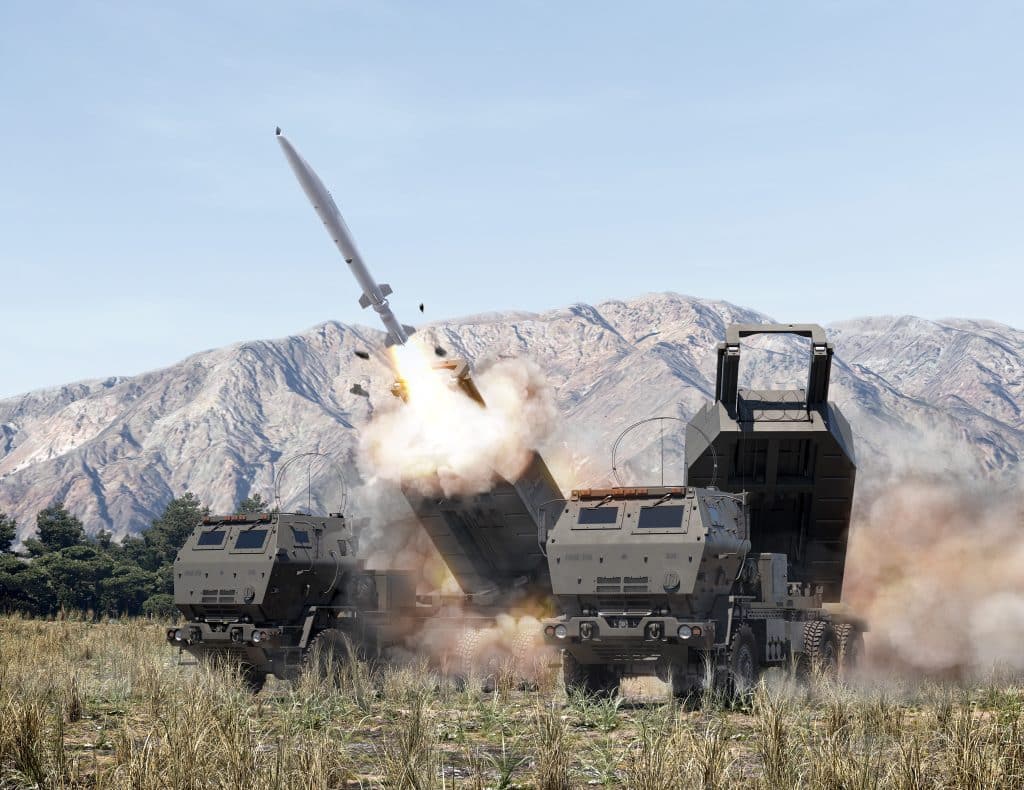
Naval News understands that Bullseye represents General Atomics’ approach to delivering faster to produce and low-cost long-range strike systems to the U.S. military. Company officials previously highlighted their in-house production facilities and control of supply chains. This capability has become increasingly relevant amid concerns of Washington’s ability to counter China as its Cold War-era stocks strain amid conflicts in the Middle East.
At this year’s Surface Navy Association’s national conference, the company showcased deployment plans from containers aboard amphibious assault ships. Chief of Naval Operations, Adm. Daryl Caudle, wants the mass integration of containerized payloads to bolster American naval forces.
In recent months, the Pentagon has turned to various traditional and new defense contractors to support the procurement of tens of thousands of cruise missiles and hypersonics.
