

A modern destroyer is no longer just a fast warship carrying a few big guns. Think of it more like a floating weapons network, part missile battery, part radar station, part submarine hunter, and part command center. That makes identifying the US Navy’s most powerful destroyer surprisingly complicated.
The obvious answer might be the largest ship. But size alone can be misleading.
The U.S. Navy operates destroyers designed around different priorities, and two ships with similar dimensions can have very different strengths. One may excel at detecting and intercepting ballistic missiles. Another may be built around stealth and long-range strike. A third might offer the kind of balanced firepower that makes it valuable almost anywhere in a carrier strike group.
That is why this ranking looks beyond headline specifications.
We’ll compare the most powerful US Navy destroyers using several practical measures: missile capacity, radar and sensors, air and missile defense, anti-ship and anti-submarine capabilities, survivability, stealth, modernization, and potential for future weapons.
Two names dominate the discussion: the Arleigh Burke class and Zumwalt class. The Burke family has become one of the Navy’s workhorse surface combatants, while Zumwalt represents a much more specialized approach, emphasizing stealth, electrical power, and advanced strike technology.
And there’s an interesting twist: the newest destroyer isn’t automatically the best at everything.
So, which warship deserves the top spot? In the following ranking, we’ll separate raw size from useful combat capability and examine the US Navy’s most powerful destroyers, one by one.
How We Rank the US Navy’s Most Powerful Destroyers
Before naming the US Navy’s most powerful destroyer, there’s a small problem to solve: what exactly does “powerful” mean?
Counting missiles alone won’t do it. A destroyer might carry a large weapons load but still be less useful in a complex battle if its sensors, defenses, or networking are behind the curve.
Modern naval combat is closer to a chess match played at missile speed. Seeing the threat first and passing that information to the right weapon can matter just as much as the size of the magazine.
For this ranking, we’ll judge the most powerful US Navy destroyers across several categories: offensive firepower, air and missile defense, radar and sensors, anti-submarine warfare, anti-surface warfare, survivability, stealth, modernization, and future growth.
Missile capacity is still important. The Arleigh Burke class, for example, uses a 96-cell Mk 41 Vertical Launch System, giving it considerable flexibility for different missile combinations. The class also combines Aegis, phased-array radar, sonar, electronic warfare, naval guns, and aviation capabilities in one platform.
But then there’s the Zumwalt class, which changes the equation. The Navy lists it at 610 feet long and about 15,995 metric tons, considerably larger than the Burke design. Its 80 Advanced Vertical Launch System cells are also physically larger, while its integrated power system can generate roughly 78 megawatts, an unusual amount of electrical capacity for a conventionally powered surface combatant.
That creates an interesting trade-off: more missiles today versus greater room for tomorrow’s weapons and sensors.
We’ll therefore rank these destroyers by their practical combat value, not simply by displacement, missile-cell count, or how futuristic they look.
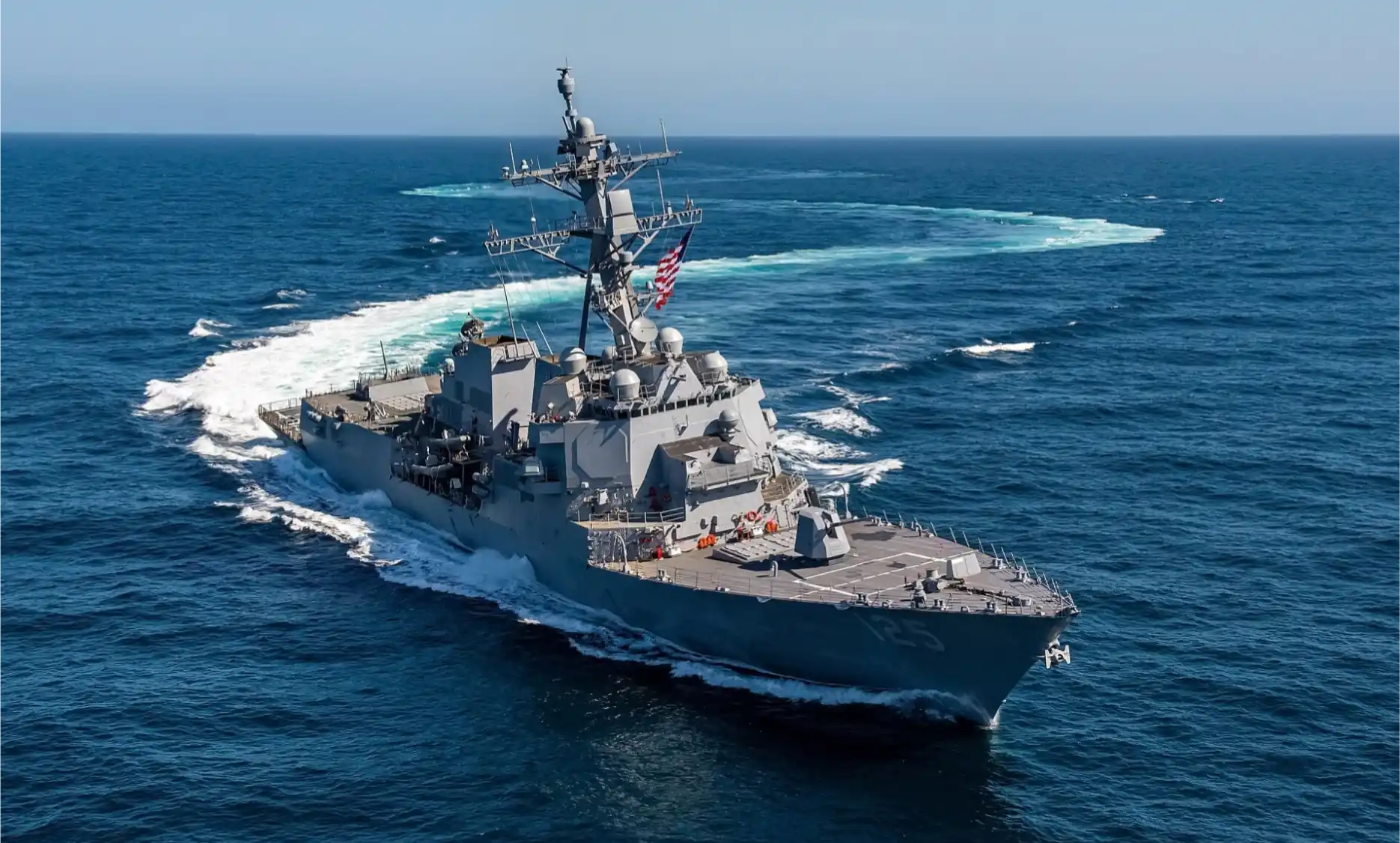
1. Arleigh Burke-Class Flight III — The Most Capable Overall
If you’re looking for the strongest candidate for the US Navy’s most powerful destroyer, Flight III of the Arleigh Burke class makes a compelling case, not because it is the biggest, but because it combines so many capabilities in one proven hull.

The biggest change is the AN/SPY-6(V)1 Air and Missile Defense Radar. Flight III was built around this radar, along with upgrades to the ship’s electrical power and cooling systems. The Navy says these changes provide significantly greater detection and tracking capacity, particularly for integrated air and missile defense.
That matters because a destroyer’s weapons are only as useful as its ability to find, identify, track, and engage threats. Think of SPY-6 as giving the ship a much sharper set of eyes while Aegis acts as the brain coordinating the response.
Read also: Why Arleigh Burke Class is Mass Produced Compared to Others
The basic Arleigh Burke design also brings a serious weapons package. The class uses a 96-cell Mk 41 Vertical Launch System, giving commanders considerable flexibility in how they configure missiles for different missions. Its broader combat system supports anti-air, anti-submarine, and anti-surface warfare.
| Feature | Arleigh Burke Flight III |
| Primary radar | AN/SPY-6(V)1 |
| Combat system | Aegis |
| VLS capacity | 96 cells |
| Main role | Multi-mission warfare |
| Key advantage | Air & missile defense |
What really pushes Flight III toward the top is balance. Zumwalt is larger and more specialized, but Flight III is designed to deliver powerful air-defense and multi-mission capability across the fleet.
The class is also still in production and has received continuous upgrades since USS Arleigh Burke entered service in 1991.
For an all-around destroyer, that combination is hard to ignore.
2. Zumwalt-Class — The Most Advanced and Stealthiest
If Flight III is the better all-around answer to the US Navy’s most powerful destroyer question, the Zumwalt class is the ship that makes the question difficult in the first place.
At 610 feet long and about 15,995 metric tons, Zumwalt is dramatically larger than the Arleigh Burke design. Yet its most interesting feature isn’t its size. It’s what the Navy did with that extra space. The ship was designed around a stealthier hull and superstructure, an integrated electric propulsion system, and substantial room for future weapons and computing systems.
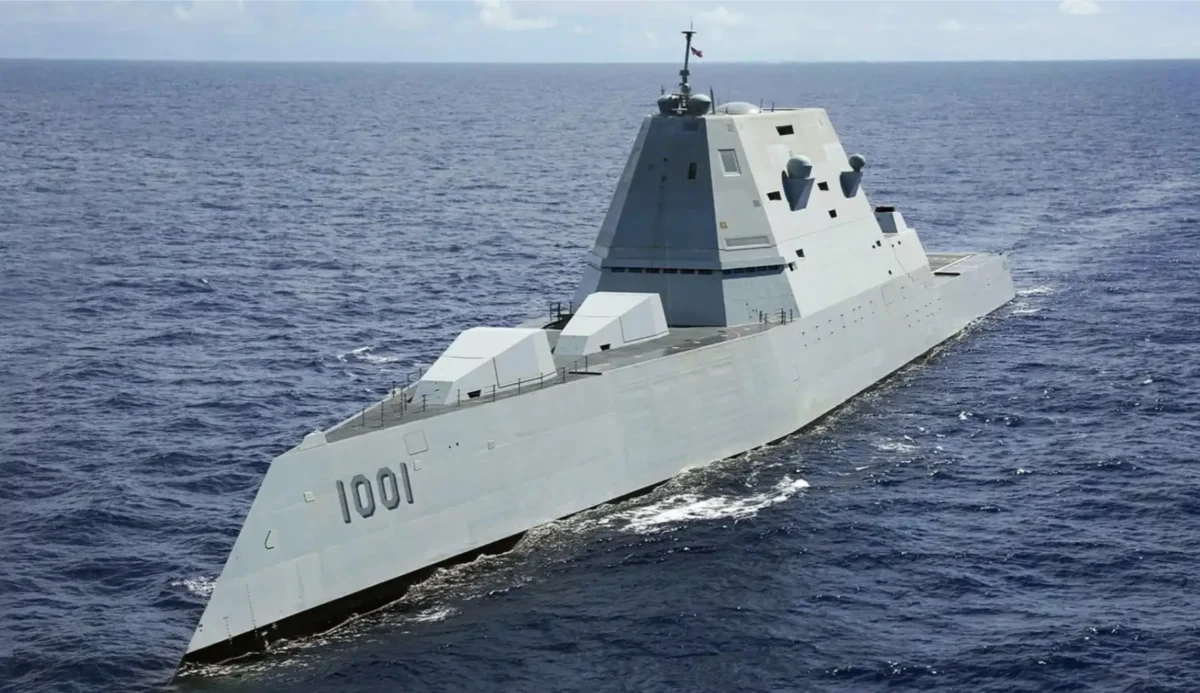
The numbers are unusual for a destroyer. Zumwalt’s integrated power system can generate approximately 78 megawatts, while its propulsion system uses electric motors. That gives the ship an enormous electrical reserve compared with conventional surface combatants, a useful advantage as modern sensors and directed-energy or other advanced weapons demand more power.
Its weapons architecture is equally distinctive. The class has 80 Peripheral Vertical Launch System cells, fewer than the 96 cells found on an Arleigh Burke, but the Zumwalt’s launch cells are physically larger and were designed with future weapons in mind.
The Navy has also been moving the class toward Conventional Prompt Strike, giving Zumwalt an important role in long-range strike development.
| Feature | Zumwalt Class |
| Length | 610 ft |
| Displacement | 15,995 metric tons |
| VLS cells | 80 |
| Installed power | Approx. 78 MW |
| Speed | 30+ knots |
| Primary edge | Stealth, power & future strike |
That creates the Zumwalt’s greatest strength, and its biggest caveat. It isn’t simply a bigger Burke. It’s a different concept of destroyer, optimized to introduce capabilities the fleet may need years down the road.
In other words, Zumwalt isn’t just carrying tomorrow’s weapons. It’s designed to have the electrical and physical space to accommodate them.
3. Arleigh Burke-Class Flight IIA — The Proven Multi-Mission Powerhouse
Here’s where the US Navy’s most powerful destroyer debate gets more interesting. Flight IIA may not have the newest radar or the futuristic appearance of Zumwalt, but it has something that matters enormously at sea: a mature combination of weapons, sensors, aviation, and combat experience.
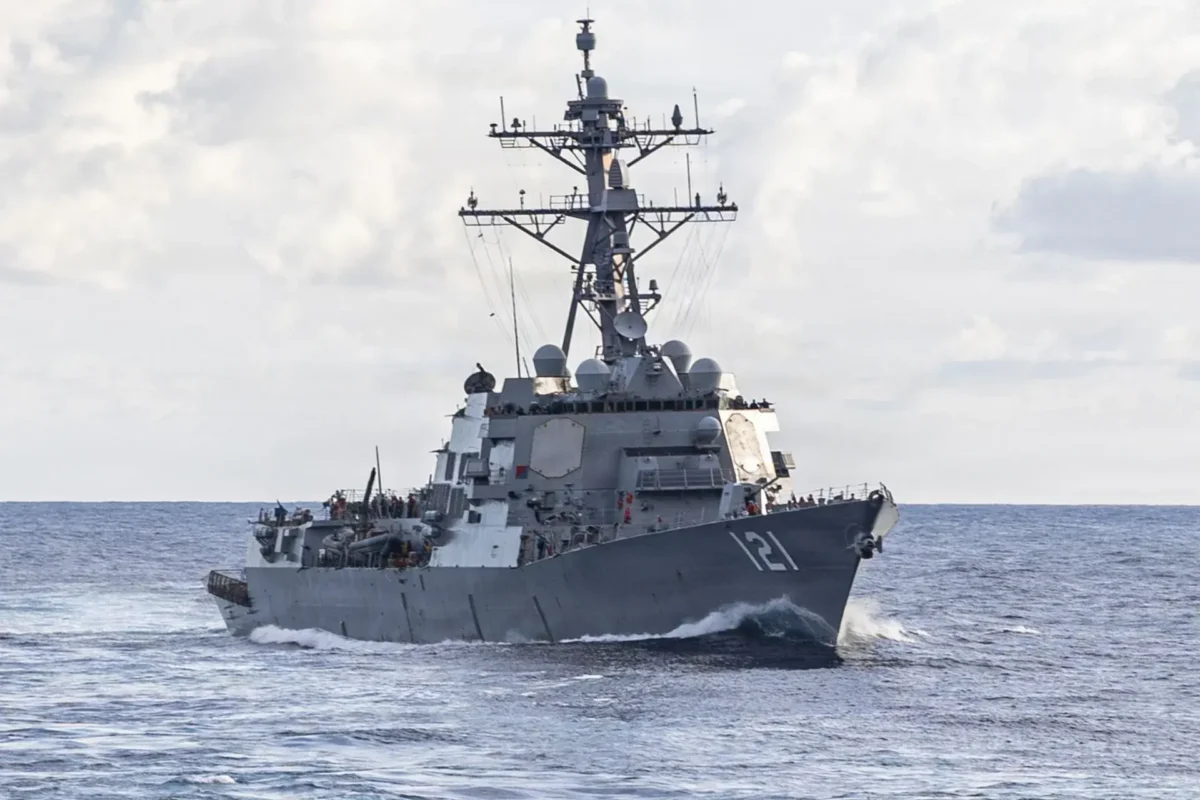
The Flight IIA design entered service as an evolution of the original Arleigh Burke class. Its hull was lengthened to about 509.5 feet, and the design added a dual helicopter hangar, allowing it to support two MH-60 helicopters. That aviation capability gives the destroyer another set of tools for submarine hunting, surface surveillance, and maritime security.
Its weapons architecture is equally versatile. The class uses a 96-cell Mk 41 Vertical Launch System, which can accommodate different combinations of missiles depending on the ship’s mission.
The Navy identifies the class as capable of anti-air, anti-submarine, and anti-surface warfare, while its Aegis combat system links radar, weapons, and other sensors into a single fighting system.
| Feature | Arleigh Burke Flight IIA |
| Length | 509.5 ft |
| Displacement | Up to 9,700 long tons |
| VLS | 96 cells |
| Speed | 30+ knots |
| Helicopters | 2 MH-60s |
| Core system | Aegis |
And there’s an underrated advantage: upgradability. The Navy has continued modernizing Flight IIA ships rather than treating them as yesterday’s technology. Some receive improved combat systems, sensors, electronic warfare equipment, and other upgrades designed to keep the class relevant against changing threats.
That makes Flight IIA less like an old smartphone and more like a dependable laptop that keeps getting new hardware. It may not have the newest architecture, but it can still do an awful lot, and do it across many different missions.
4. Arleigh Burke-Class Flight I/II — The Foundation of the Fleet
It’s easy to overlook the older Arleigh Burke destroyers when discussing the most powerful US Navy destroyer. Newer radar, upgraded computers, and modern weapons naturally steal the spotlight. But Flight I and Flight II ships helped establish the design that remains at the center of the Navy’s destroyer force decades later.
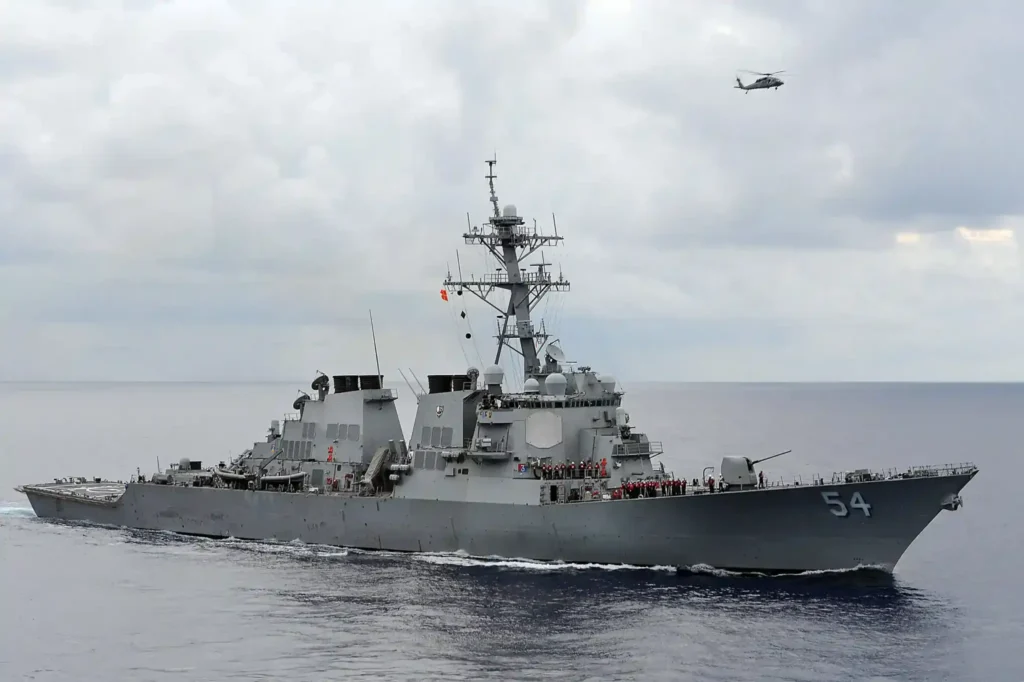
The first Arleigh Burke, USS Arleigh Burke (DDG-51), entered service on July 4, 1991. The original Flight I ships and subsequent Flight II variants were built around the Aegis Weapon System, combining phased-array radar, missile launchers, anti-submarine sensors, and multiple weapons into one integrated combat architecture.
Their basic numbers are still respectable. Flight I and II ships measure about 505 feet long, can exceed 30 knots, and use a 96-cell Mk 41 Vertical Launch System. Depending on configuration, their weapon suite can include Standard missiles, Tomahawk cruise missiles, Vertical Launch ASROC, torpedoes, a 5-inch gun, and close-in defenses.
| Feature | Flight I/II Arleigh Burke |
| Length | 505 ft |
| Speed | 30+ knots |
| VLS | 96 cells |
| Combat system | Aegis |
| Primary roles | Air, surface & submarine warfare |
| Service began | 1991 |
But here’s the fascinating part: the original design was built with longevity in mind. The Navy has continuously upgraded the DDG-51 family with newer sensors, weapons, and support systems rather than treating the ships as disposable technology.
That doesn’t make every Flight I/II ship equal to a Flight III. It shouldn’t. The newer variant has a much more capable SPY-6 radar and other major improvements.
Still, the older Burkes established the blueprint for one of the world’s most enduring guided-missile destroyer families.
Sometimes the most impressive engineering isn’t the ship that looks futuristic. It’s the design that refuses to become obsolete.
5. Modernized Arleigh Burke Destroyers — The Upgrade Advantage
The fifth spot is less about a single ship and more about an idea that often gets lost in lists of the most powerful US Navy destroyers: modernization can be almost as important as the original design.
The Arleigh Burke class entered service in 1991, yet the Navy has continued upgrading the design with newer sensors, weapons, combat systems, and support equipment. That longevity is remarkable for a warship built around technology that is more than three decades old.
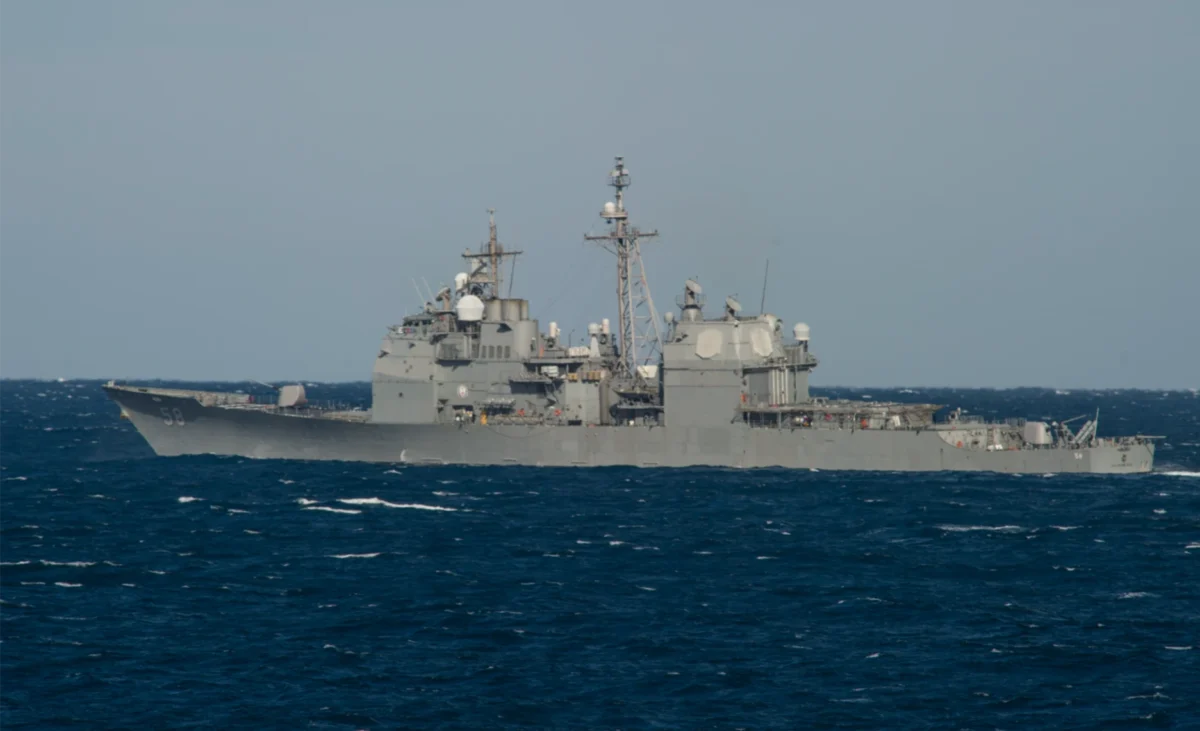
This matters because a destroyer does not fight with the technology it launched with. Radar systems can be replaced. Software can be rewritten. Electronic warfare equipment can evolve. Weapons can be introduced without rebuilding the entire ship from scratch.
The Navy’s Aegis architecture has been particularly important here. Arleigh Burke destroyers combine Aegis with the Mk 41 Vertical Launch System, advanced anti-submarine systems, air-defense missiles, and Tomahawk land-attack missiles. Flight IIA ships also gained facilities for two helicopters, expanding their ability to conduct sea-control and submarine-hunting missions.
| Modernization Area | Why It Matters |
| Combat systems | Improves detection and engagement |
| Radar | Better tracking of modern threats |
| Electronic warfare | Helps detect and counter hostile systems |
| Missiles | Adds newer and more capable weapons |
| Software | Extends combat-system relevance |
| Support systems | Helps keep older ships operational |
There is also a useful lesson here for judging the US Navy’s most powerful destroyer. A ship’s commissioning date doesn’t tell you everything about its combat value.
An older Burke with substantial modernization may remain highly capable, while a newer platform designed around a narrower mission could offer less flexibility in certain scenarios. The Navy’s continuing investment in DDG-51 upgrades is evidence of that philosophy.
So while modernized Burkes may not win every category, they earn their place through something less flashy, and extremely valuable at sea: adaptability.
US Navy’s Most Powerful Destroyer Compared
Numbers can make destroyer comparisons look deceptively simple. Put the ships in a table, count missile cells, compare radar systems, and pick a winner. Real naval power is messier than that.

The Arleigh Burke Flight III has a particularly strong claim to the top because its design combines the established Aegis combat system with the new AN/SPY-6(V)1 radar. The Navy says Flight III provides significantly greater detection range and tracking capacity and is designed to strengthen integrated air and missile defense.
The Zumwalt class, meanwhile, takes a different route. It is substantially larger and was designed around stealth, electrical power, and future weapons. Its 80-cell Advanced Vertical Launch System is smaller in cell count than the Burke’s 96-cell Mk 41 system, but Zumwalt’s architecture leaves considerable room for specialized long-range strike capabilities.
| Destroyer | Standout Capability | VLS Cells | Biggest Advantage |
| Arleigh Burke Flight III | Air & missile defense | 96 | SPY-6 + Aegis |
| Zumwalt class | Stealth & future strike | 80 | Size, power & low observability |
| Arleigh Burke Flight IIA | Multi-mission warfare | 96 | Mature combat system |
| Arleigh Burke Flight I/II | Proven capability | 96 | Long service history |
| Modernized Burke ships | Adaptability | 96 | Continuous upgrades |
There’s another factor worth considering: fleet usefulness. A destroyer isn’t fighting in isolation. These ships can operate independently or as part of carrier strike groups and other naval formations, where networking, air defense, submarine hunting, and surface warfare all have to work together.
That is why the answer changes depending on the question. Want the strongest all-around current destroyer? Flight III is the logical frontrunner. Want stealth and a platform designed around future capabilities? Zumwalt becomes much more compelling.
In naval warfare, the most powerful ship isn’t necessarily the one with the biggest silhouette. It’s the one that can bring the right combination of sensors, weapons, survivability, and flexibility to the fight.
