

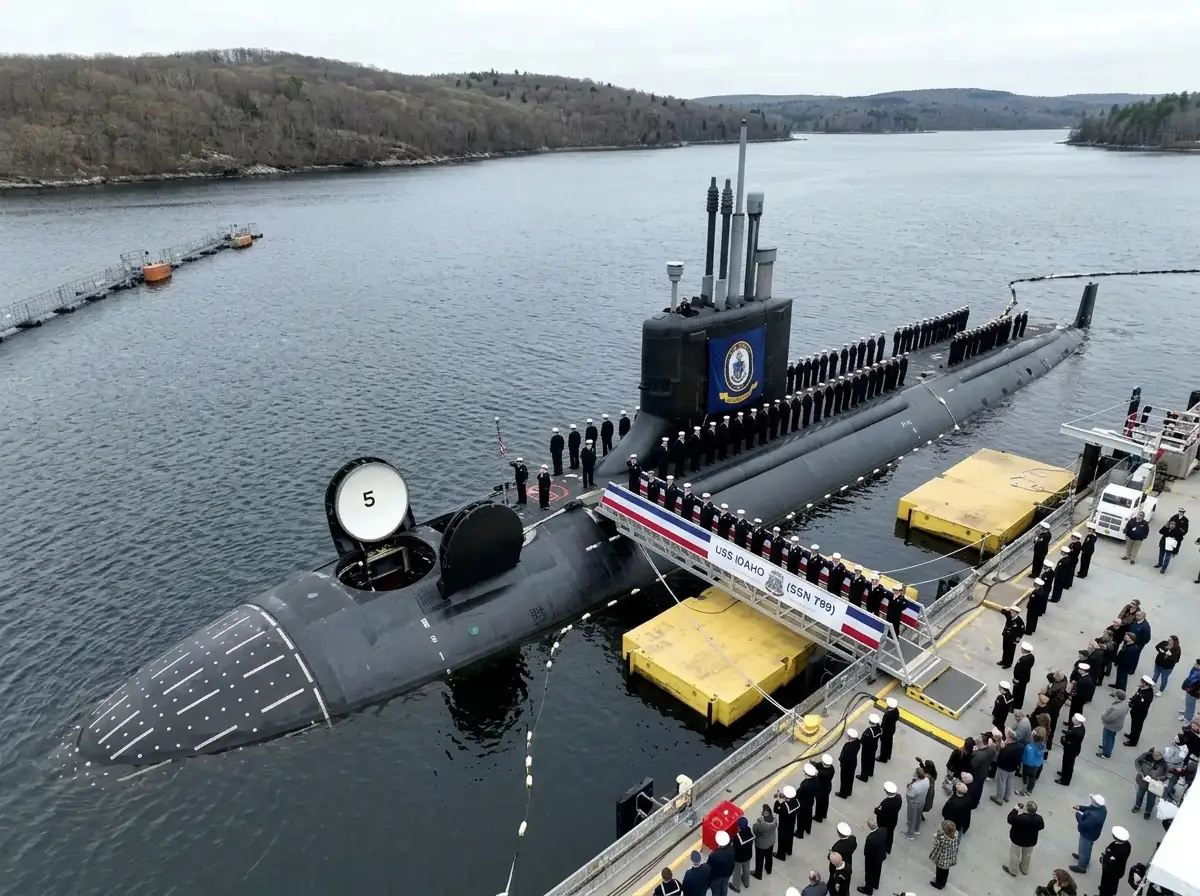
Defense Feeds, Washington — The US Navy is reinforcing its undersea dominance as the US Navy USS Idaho submarine enters service boosting strike power with the commissioning of a new Virginia-class attack submarine.
The addition of USS Idaho marks another step in modernizing the fleet’s submarine force, which remains a critical component of US military strategy. As global competition intensifies, undersea capabilities continue to play a decisive role in deterrence and power projection.
The Virginia-class submarines are designed to operate across a wide range of missions, including intelligence gathering, surveillance and precision strike operations. Known for their stealth and advanced technology, these submarines are among the most capable platforms in the US Navy. The introduction of USS Idaho further strengthens the Navy’s ability to operate in contested maritime environments.
The commissioning also reflects ongoing investment in maintaining a technological edge beneath the surface. Submarines provide a unique advantage by operating undetected, allowing them to conduct missions that are difficult for other platforms. This makes them essential in both peacetime and conflict scenarios.
Advanced Capabilities of Virginia-Class Submarines
The Virginia-class submarine is equipped with a range of advanced systems designed for modern naval warfare. Its stealth capabilities allow it to operate with minimal detection, making it highly effective in intelligence and reconnaissance missions. This advantage is critical in environments where situational awareness is key.
In addition to surveillance, the submarine is capable of launching precision-guided weapons. This includes cruise missiles that can strike targets from significant distances. Such capabilities enable the US Navy to project power without exposing surface ships to direct threats.
The design of the Virginia-class also emphasizes flexibility. These submarines can support special operations, deploy unmanned systems and conduct anti-submarine warfare. This multi-role capability ensures they remain relevant across a wide range of missions.
Furthermore, continuous upgrades to the class ensure that each new submarine incorporates the latest technology. This approach allows the Navy to adapt to evolving threats while maintaining operational effectiveness.

Strengthening Undersea Warfare and Deterrence
The addition of USS Idaho enhances the Navy’s overall undersea warfare capability. Submarines are a key element of deterrence, providing the ability to respond quickly and effectively to potential threats. Their presence alone can influence strategic calculations.
Undersea platforms are particularly valuable in contested regions where access may be limited. Their ability to operate undetected allows them to gather intelligence and monitor adversary activity. This contributes to a more comprehensive understanding of the operational environment.
The USS Idaho also supports the Navy’s broader strategy of maintaining a balanced and capable fleet. By expanding its submarine force, the US ensures that it can address multiple challenges simultaneously. This is especially important as maritime competition continues to grow.
In addition, submarines play a role in supporting joint operations. They can provide targeting information, support surface forces and contribute to integrated defense strategies. This makes them a vital component of modern military operations.

Strategic Importance in Future Naval Operations
The commissioning of USS Idaho comes at a time when undersea warfare is becoming increasingly significant. Advances in technology are changing how conflicts are conducted, and submarines are at the forefront of this transformation. Their ability to operate covertly provides a strategic advantage that is difficult to replicate.
For the US Navy, maintaining a strong submarine fleet is essential for long-term security. The Virginia-class program represents a continued commitment to this objective. Each new submarine adds to the fleet’s capability and ensures readiness for future challenges.
The USS Idaho will also contribute to maintaining stability in key regions. Its deployment can support both deterrence and reassurance efforts among allies. This helps reinforce the broader security framework in areas of strategic importance.
Looking ahead, the role of submarines is expected to expand further. Integration with new technologies, including unmanned systems, will enhance their capabilities. This evolution will shape the future of naval warfare.
The entry of USS Idaho into service underscores the importance of undersea power in today’s security environment. As challenges continue to evolve, the US Navy’s investment in advanced submarines ensures it remains prepared for the demands of modern warfare.
