

The Office of the Director of National Intelligence is among the most significant institutions established in the wake of the 9/11 attacks, yet the DNI’s role and effectiveness continue to be up for debate more than two decades after it was established.
Now, 25 years after the attacks, lawmakers are looking at how to address persistent shortcomings in the DNI role and advancing bipartisan recommendations aimed at strengthening it. But the future of ODNI remains unclear following controversial workforce cuts by the Trump administration.
The DNI role was created by Congress at the recommendation of the 9/11 Commission. The position was established to serve as the president’s principal intelligence advisor and coordinate the sprawling, oft-disjointed intelligence community.
A key reason the 9/11 attacks succeeded, the commission found, was due to a lack of information sharing between intelligence agencies, principally the FBI and the CIA.
In late August, Republican and Democrat leaders on the House Permanent Select Committee on Intelligence released a review of the 9/11 commission’s report, including an assessment of ODNI.
The panel found “the case for a DNI remains as compelling today as it did in the wake of 9/11,” while also identifying concerns “regarding the DNI’s efficacy.”
“The DNI’s role must be strengthened to ensure that the IC can align collection, analysis, operations, and resources to match the highest priority threats our nation faces while bringing to bear integrated authorities,” lawmakers write in the report.
‘Unnecessary bloat’ and ‘un-strategic cuts’
A frequent criticism of ODNI in recent years is that it had grown too large. The office had established a growing series of “mission centers” and often relied on staff detailed from other intelligence agencies.
Mike McConnell, who served as the second DNI from 2007 to 2009, said he believes the office had outgrown its usefulness.
“I wouldn’t get rid of it completely because I do see some value, but it’s not worth the resources being spent on it, and it’s not worth the resources that were taken away from all the agencies to create it and to build it over time,” McConnell told Federal News Network.
Jamil Jaffer, founder and executive director of the National Security Institute at the George Mason University’s Antonin Scalia Law School, echoed that sentiment during a May 20 House Intelligence Committee hearing, telling lawmakers, “ODNI has gotten way bigger than I think we ever expected it to be.”
“I think narrowing it down and focusing it on a couple of things – budget, authorities, integration – those should be its core rather than all the other things it’s got its hands in … It ought to be a tighter team: smaller, tighter, more focused on integration,” Jaffer said.
The Trump administration has already moved quickly to reduce the size of ODNI.
Former DNI Tulsi Gabbard advanced a plan to cut 40% of ODNI’s workforce before she stepped down in May. Then acting DNI Bill Pulte oversaw a series of “layoffs” that he publicly touted on social media platform X.
ODNI’s workforce now sits at a little more than half the roughly 2,000 employees that were there at the start of the second Trump administration, according to the Washington Post, citing congressional aides.
National security experts have raised concerns that the Trump administration has quickly slashed staff without offering any plan to improve the office. The office has also been wrapped up in President Donald Trump’s rhetoric about targeting the “deep state” and the intelligence community.
McConnell said “cutting is not necessarily improving” without a plan.
“How do you improve the performance? How do you improve the value added of the DNI to the country? That cutting comes at the end of the process, not at the beginning,” McConnell said.
The bipartisan House Intelligence Committee’s report also raises worries about the administration’s cuts.
“There have been attempts at rightsizing ODNI, but questions have emerged about whether recent downsizing efforts will have a detrimental effect on key oversight and integration functions of ODNI, which go beyond curtailing unnecessary bloat,” the report states.
Jenny Mattingley, vice president for public policy and stakeholder engagement at the Partnership for Public Service, said the cuts at ODNI are part of a broader trend of the Trump administration targeting staff with critical national security expertise.
The Partnership’s latest report argues the national security lessons of 9/11 are being “tested” by the administration.
“As we’re seeing these un-strategic cuts and the loss of expertise and networks, that lesson of connecting the dots, of having being able to challenge assumptions, being able to have this big view, that’s what we’re seeing erode under the changes that are going on right now,” Mattingley told Federal News Network.
Lawmakers are now probing how the staffing cuts may be damaging national security. Senate Homeland Security and Governmental Affairs Committee Ranking Member Gary Peters (D-Mich.), in a letter to new DNI Jay Clayton this week, wrote that there has yet to be an accounting of “who was fired or for what purposes by Pulte during his short tenure.”
Peters directed Clayton him to “preserve all existing and future records and materials on counterterrorism activities and efforts, including all decisions about personnel, resource allocation and prioritization and any data backing the administration’s counterterrorism priorities.”
Tensions and budget authority
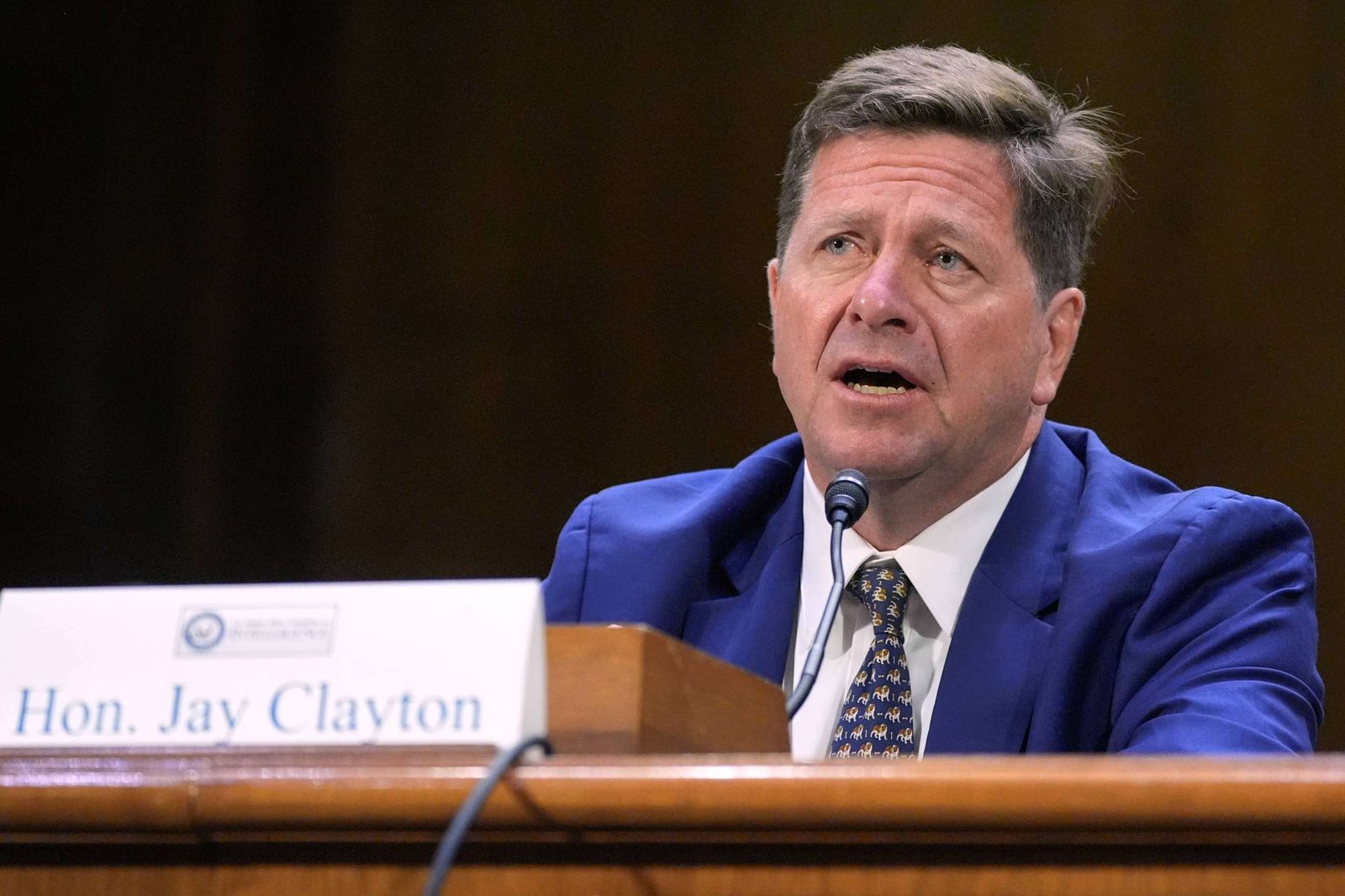
Clayton previously served as U.S. attorney for the southern district of New York and as chairman of the Securities and Exchange Commission. He has kept a low profile since being confirmed in August. But during his Senate nomination hearing, Clayton said ODNI should serve as a “focal point” for the other 17 U.S. intelligence agencies.
“There needs to be a place of oversight, a place to resolve conflict. I look at it as a ‘board of directors’ role,” Clayton said. “And to the extent that the ODNI has gotten into operations or started to play the roles of some of those other agencies, it probably should pull back because it’s difficult to be both operations and oversight, but I think an oversight role is important.”
The DNI role replaced the director of the CIA’s responsibilities to both manage the intelligence community and serve as the president’s top intelligence advisor.
Yet since its inception, tensions between the DNI and the CIA director have raised persistent questions about who really serves as the president’s principal intelligence advisor.
“At times, the DNI had not been properly empowered to carry out full oversight of the IC or did not take full ownership of the role, creating power vacuums that were oftentimes filled by the [director of the CIA] or other leaders,” the House Intelligence Committee’s report states. “These tensions have been present in nearly every administration and have led to a fractured culture within the IC and a DNI role that has not been carried out as originally intended.”
McConnell said before the DNI was created, the CIA was able to control what went into the president’s daily brief. But the DNI now facilitates that preeminent analysis being coordinated across the intelligence community.
“I think it’s good when the president is told there are differences of opinion on an important issue,” McConnell said.
ODNI’s role over intelligence community budgets and personnel has also been ambiguous, leading to further challenges in how the office manages other spy agencies.
The Defense Department also still plays a significant role in managing military intelligence agencies, like the National Security Agency and the Defense Intelligence Agency.
The House Intelligence Committee’s new report proposes giving the DNI “greater budget authority across the IC.”
“Full budget authority would allow the DNI – at the direction of the president of the United States – to better align resource allocations with national intelligence priorities, incentivize the IC to be force multipliers within a joint structure, and ensure that agencies are not protecting legacy programs or institutional status quos,” the report states.
The report adds that “reforms to strengthen ODNI should avoid adding bureaucracy. Instead, reforms should be targeted towards ensuring that the IC can act as a unified enterprise directed against strategic threats that do not align neatly with specific agency and department lines but rather operate within jurisdictional and authorities’ seams, giving an advantage to our adversaries.”
The path forward for the House Intelligence Committee’s proposals is murky. And Senate lawmakers have yet to weigh in with any ODNI reforms of their own.
Regardless of where such reforms land, Mattingley wants to see Congress conduct “more rigorous oversight regarding the agencies and the erosion of capability.”
“We’re really hoping that right now people are watching how the intelligence community is able to coordinate on our national security, because we need that long-term investment in these agencies to make sure that they can work together with the White House and with Congress to keep us safe,” she said.
Copyright
© 2026 Federal News Network. All rights reserved. This website is not intended for users located within the European Economic Area.
