

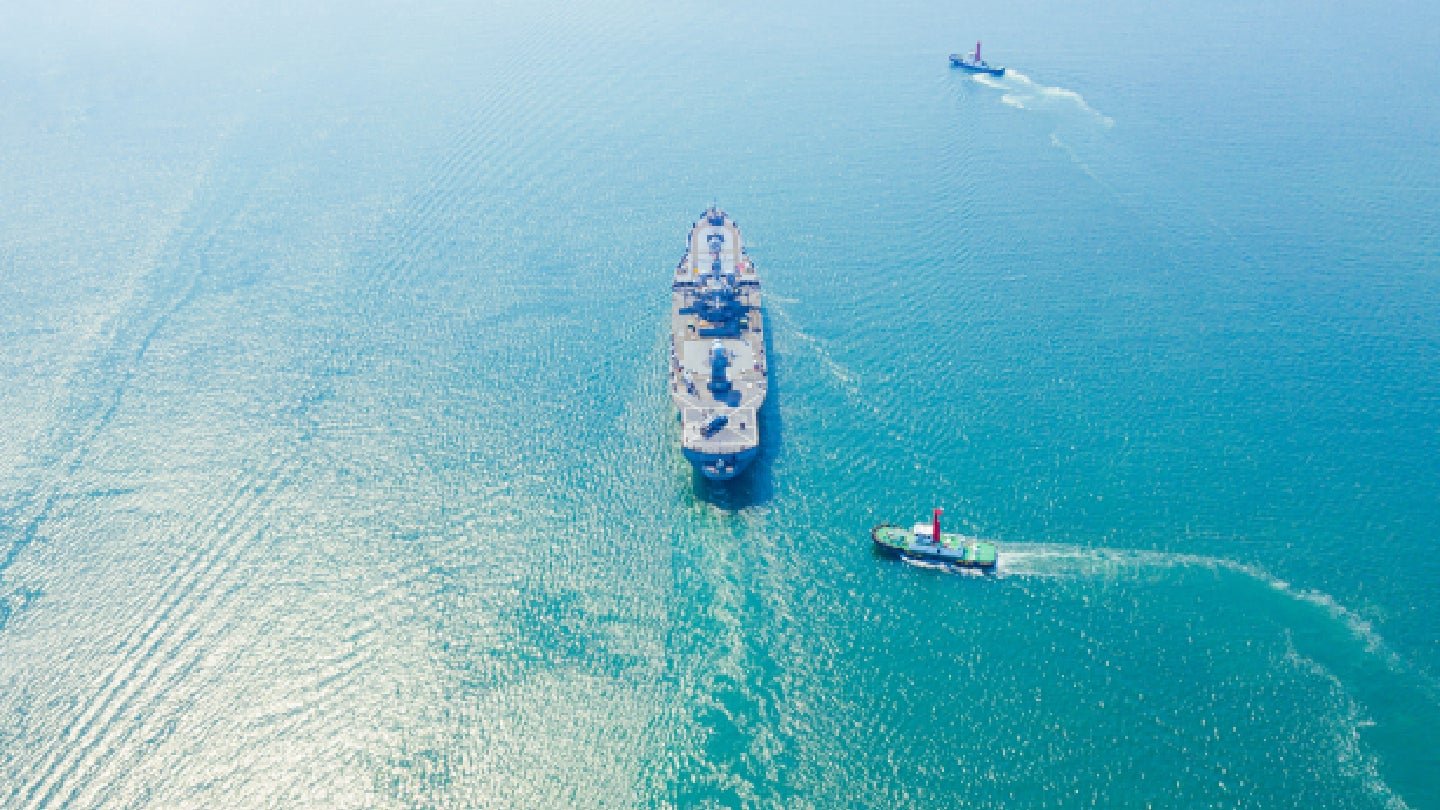
The US Department of the Navy has unveiled its Fiscal Year 2027 (FY27) Shipbuilding Plan, which requests funding for 34 manned ships and five uncrewed platforms in FY27 alone.
In total, 122 ships and 63 uncrewed platforms are planned across the Future Years Defense Program (FYDP).

Discover B2B Marketing That Performs
Combine business intelligence and editorial excellence to reach engaged professionals across 36 leading media platforms.
Find out more
This plan outlines a strategic approach to expanding fleet capacity and enhancing naval capabilities, forming a critical component of the US Navy’s long-term strategy to maintain maritime dominance and address evolving global threats.
Central to the plan is the operationalisation of the Golden Fleet Initiative, which aligns shipbuilding investments with the High-Low Mix Strategy and the operational demands of the Navy Warfighting Concept. The initiative aims to create a balanced fleet that integrates advanced combatants, cost-effective frigates, and uncrewed systems.
The Fleet of the Future is envisioned as an integrated system capable of generating combat power across multiple domains. It relies on key doctrinal concepts such as Expanded Maritime Maneuver (EMM) and Distributed Maritime Operations (DMO) to enhance operational effectiveness.
Significant investments are planned across various ship categories. The surface combatant fleet will see an investment of $7.6bn in FY27 and $77.8bn across the FYDP, aimed at expansion and modernisation.
Submarine construction, including the Columbia-class and Virginia-class submarines, will receive $124.9bn across the FYDP, reflecting the strategic importance of undersea capabilities.
The Aircraft Carrier Replacement programme is allocated $4.1bn in FY27 and $22.3bn across the FYDP, ensuring the continued relevance of these pivotal assets.
Additionally, $8.3bn is earmarked in FY27 for the procurement of amphibious ships and Medium Landing Ships (LSMs), with a total investment of $29.3bn across the FYDP.
Jason Potter, Performing the Duties of Assistant Secretary of the Navy for Research, Development and Acquisition (ASN RDA), said: “The President’s budget request for fiscal year 2027 makes a $65.8bn generational investment in US Navy shipbuilding. This plan details these investments and the Administration’s 30-year investment plan to expand our nation’s Navy shipbuilding capacity and deliver the Golden Fleet.
“At the same time, the Navy is holding industry more accountable for both meeting contractual requirements and making capital investments to support this expansion. We are laser-focused on growing the fleet and delivering the ships that our sailors and Marines depend on.”
According to the Department of the Navy, revitalising the industrial base is a key focus of the plan, with investments directed towards supplier development, shipyard infrastructure, and workforce development. This approach aims to restore the maritime dominance of the US and create high-skill jobs within the sector.
Unmanned maritime systems are a central element of the Navy’s strategy, offering precision mass at lower costs and enhancing distributed sensing and targeting capabilities. These systems are said to be integral to the Navy’s vision of a more capable and flexible force.
The plan also reflects lessons learned from current operations and evolving global threats, emphasising the need to rapidly adapt force design and acquisition approaches.
The Department further stated that continued partnership with Congress remains essential to sustaining momentum and ensuring the Fleet of the Future meets the Nation’s security needs.
It also revealed that Operation Epic Fury involved a significant military engagement, where the US Navy and Marine Corps conducted sustained operations over five weeks, striking over 13,000 targets within Iran.
This operation included the deployment of two carrier strike groups and is claimed to have resulted in the destruction or damage of over 155 Iranian vessels, marking the first submarine kill since 1945.

