

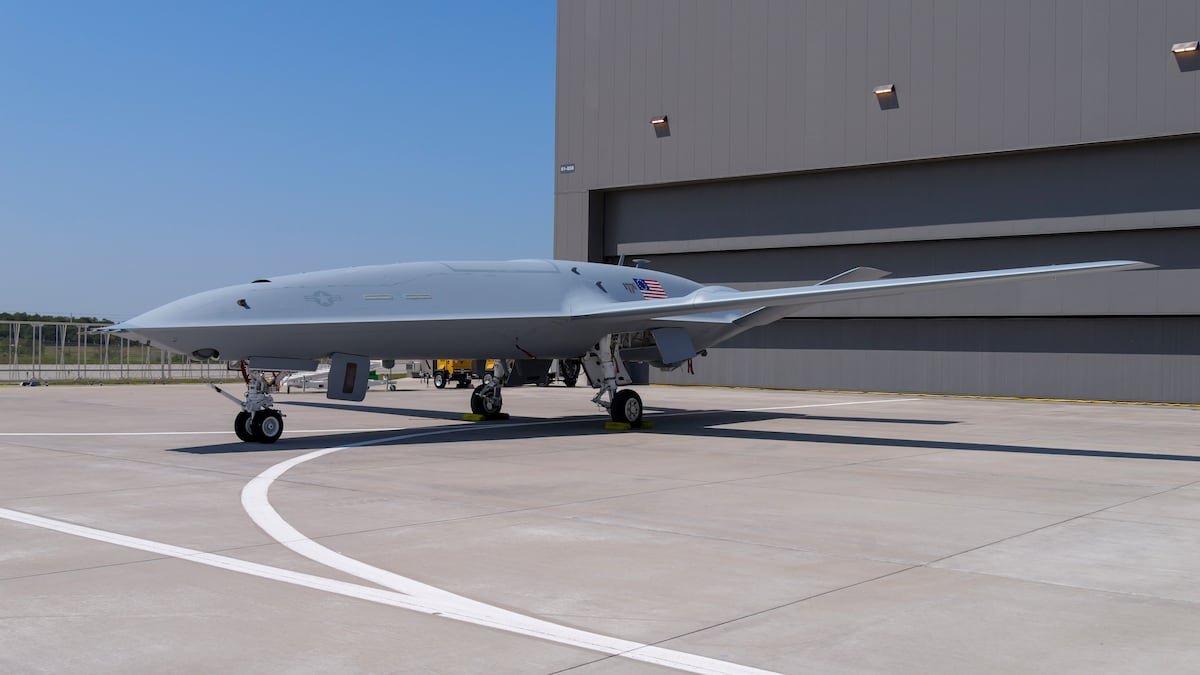
The Navy awarded a $562 million fixed-price incentive contract to Boeing on Monday to kick off Lot 1 Low Rate Initial Production of the MQ-25A Stingray unmanned tanker, the service announced.
Acting Secretary of the Navy Hung Cao teed up the LRIP and deployment announcement in May during a Senate Armed Services Committee Hearing. Boeing’s MQ-25A will become the Defense Department’s first unmanned tanker and the Navy’s first operational carrier-based unmanned aircraft.
The UAV is designed to extend the life of the Navy’s F/A-18 Super Hornets and relieve the fighter jets of their aerial refueling role so the aircraft can focus on strike missions.
The Stingray is supposed to deliver at least 14,000 pounds of fuel over 500 nautical miles, around the same capacity as the Super Hornets, according to an August report from the Government Accountability Office.
The contract covers three LRIP Lot 1 MQ-25As and includes additional funding for components to support three Lot 2 MQ-25As, the Navy stated in its release. Initial Lot 1 deliveries are slated for 2029. The MQ-25 program of record includes 67 operational aircraft and nine test aircraft.
Boeing is forging ahead with production after several snags in the MQ-25 program. The Navy completed its first successful Stingray test flight on April 25, though that demonstration lagged a year behind the service’s initial plans. The Navy estimates it will continue flight tests through the end of this year.
The Pentagon’s April 2026 Modernized Selected Acquisition Report painted a pessimistic picture for the MQ-25’s timeline, noting that technical risks and the Boeing Union labor strike contributed to delays.
According to the report, the Pentagon expects the UAV could reach initial operational capability in 2029, four years later than initially planned.
The report also highlighted a milestone for the Navy, noting that in March, the USS Theodore Roosevelt became the first Navy carrier equipped with an Unmanned Air Warfare Center supporting the MQ-25A.
The Navy’s Stingray program has wound a complicated path from conception to production.
Originally envisioned as a stealthy ISR and strike drone known as the Unmanned Carrier Launch Airborne Surveillance and Strike (UCLASS) platform, both the Pentagon and the GAO pushed the Navy to tighten its program’s scope.
By 2016, the service pivoted from a strike and intelligence mission to a carrier-based UAV mission.
