

Key Points
- Lockheed Martin’s Skunk Works is building four additional Vectis combat drones, bringing the program’s total to five aircraft.
- The tailless, stealth-focused drone is designed to fly alongside crewed fighters like the F-35, with a first flight targeted by the end of 2027.
Lockheed Martin is building four more of its newest combat drones, the company announced September 14, doubling down on a program that’s still more than a year away from ever leaving the ground.
The news came from the company’s secretive Skunk Works division, following a major Air Force conference near Washington, D.C., where Skunk Works also unveiled a full-scale model of the aircraft, called Vectis, for the first time.
If you haven’t heard of Vectis yet, here’s the short version: it’s a drone designed to fly into combat alongside piloted fighter jets like the F-35, acting as a kind of robotic wingman. The Air Force calls this category of aircraft a “Collaborative Combat Aircraft,” or CCA, and the idea is straightforward even if the acronym isn’t. Building more fighter jets with pilots inside them is expensive and slow. Building smart, semi-autonomous drones that can fly in formation with those jets, carry weapons or sensors, and take on some of the riskier parts of a mission is, at least in theory, cheaper and faster to scale up.
– ADVERTISEMENT – CONTINUE READING BELOW –
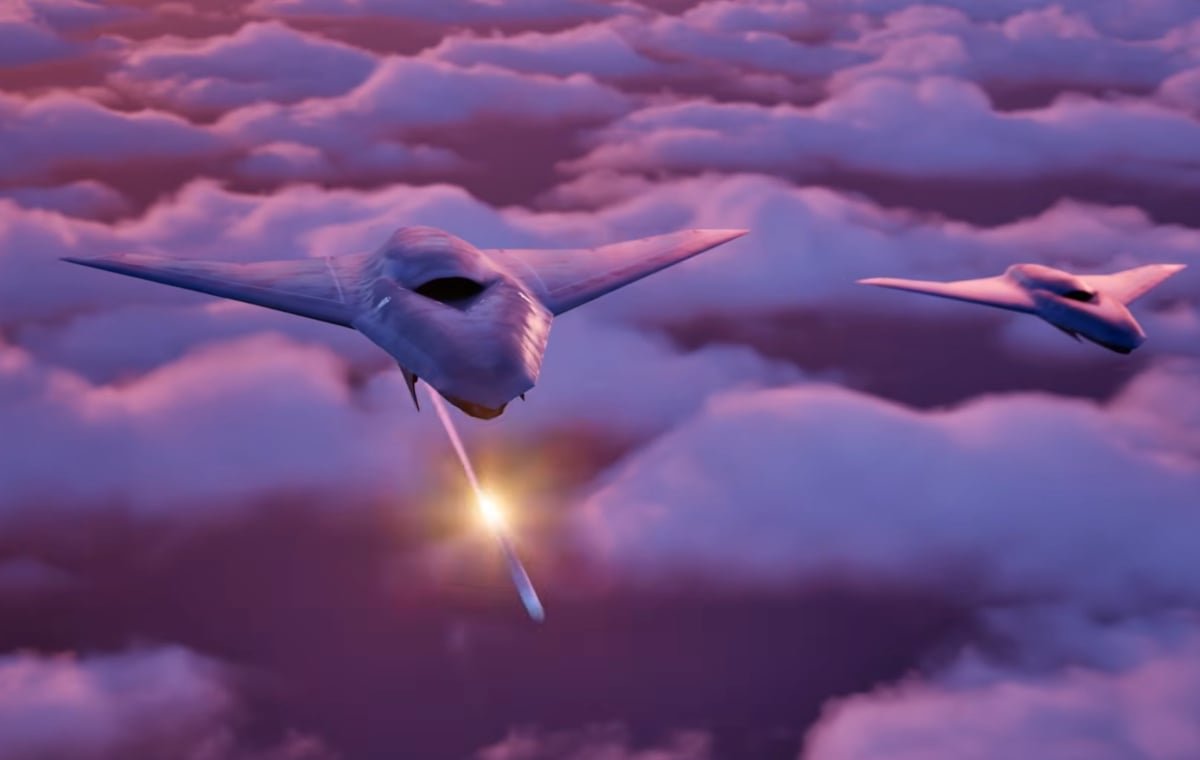
Lockheed first showed off Vectis a year ago, in September 2025, but the design has changed since then. The version unveiled this week has no tail and a deeply recessed air intake built into the top of the fuselage, both features meant to make the aircraft harder to spot on radar. Ron Fehlen, the vice president and general manager of Skunk Works, told reporters the team is eager to see the pieces coming together.
“The team is extremely excited as these parts start to come together, to actually get the wheels off the ramp by the end of 2027,” Fehlen said.
That end-of-2027 target is when Lockheed expects the first Vectis prototype to actually fly. In the meantime, the company is now building four additional aircraft, bringing the total to five once the original prototype is included. Lockheed hasn’t said publicly what those extra four aircraft will be used for, whether that’s more flight testing, demonstrations for potential buyers, or something else.
For scale, Vectis is about 34 feet long with a 38-foot wingspan, which puts it roughly in the same size class as the Air Force’s MQ-9 Reaper drone in length, with wings about as wide as an F-35’s. It falls into a weight and altitude category the Air Force calls Group 5, meaning it weighs more than 1,320 pounds and is built to fly above 18,000 feet, the same bracket as the two CCA drones already chosen for the Air Force’s first round of the program. Lockheed hasn’t said what weapons Vectis might carry, what kind of engine powers it, or how much each aircraft is expected to cost.
– ADVERTISEMENT – CONTINUE READING BELOW –
That first round of the CCA program didn’t go to Lockheed. The Air Force picked General Atomics and Anduril Industries instead, and their aircraft, known as the YFQ-42A and YFQ-44A, are being built mainly for air-to-air combat missions. The Air Force has said it eventually wants at least 1,000 of these drones total, built out over several future rounds, and it’s aiming to keep the cost of each aircraft around $20 million, not counting the sensors and other equipment that would go inside. Fehlen said Vectis isn’t necessarily being built for one specific future round of the competition, but that Lockheed sees potential customers well beyond the Air Force, including the Navy and militaries overseas.
One thing Lockheed has been eager to talk about is how quickly the Vectis team has been moving. According to the company, engineers went from an initial sketch to testing a model in a wind tunnel in under two months. The first complete digital design of the aircraft came together in six months, and the team had manufactured its first physical part within eight months of starting the program. Lockheed says that speed comes from manufacturing and design tools built up over years of other Skunk Works projects, not from cutting corners on this one specifically.
Whether Vectis ends up winning a future Air Force contract, getting picked up by the Navy, or drawing interest from an allied country overseas is still an open question. For now, what’s confirmed is that Lockheed is putting real money and staff behind five aircraft instead of one, with a flight test still more than a year away.
