

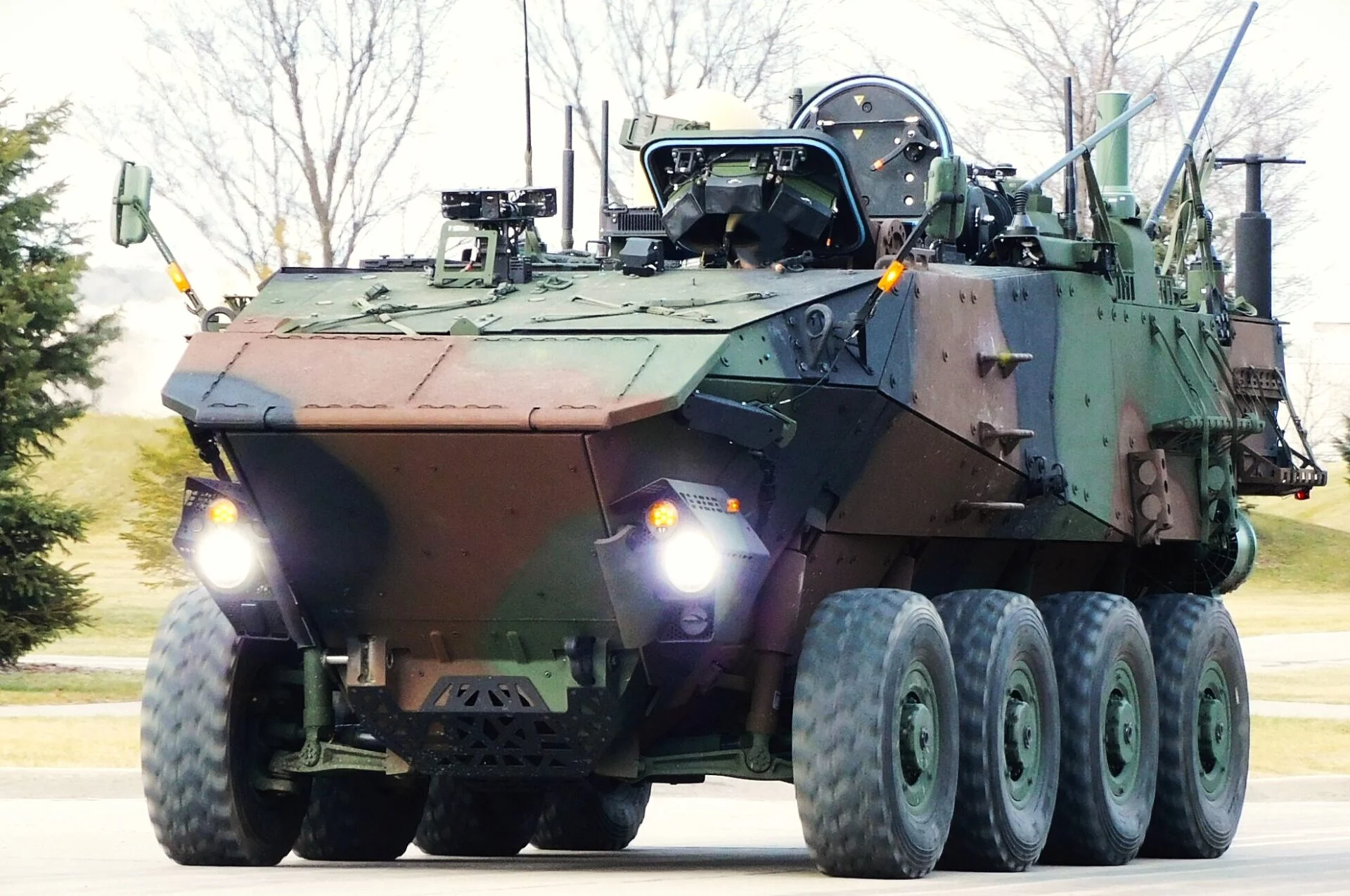

The US Marine Corps on 2 April 2026 awarded follow-on contracts to General Dynamics Land Systems and Textron Systems to move forward with the next Rapid Prototyping phase of their competing Advanced Reconnaissance Vehicle (ARV) development.
Each firm will prepare and delivery system variants for each of the variant configurations for the ARV-C4UAS (Command, Control, Communications, and Computers Unmanned Aerial System), ARV-30 (30mm Autocannon/Anti-armour), and ARV-LOG (Logistics) Pre-Production vehicles. These proto-types would be delivered in mid-2028 to support further test and evaluation toward supporting a production decision in late 2030.
The ARV is to replace the current Light Armoured Vehicles originally fielded in the 1980s. It is to be a family of vehicles that will meet the requirements for reconnaissance, fire support, and command and control on a future mobile expeditionary battlefield. Efforts directed toward development of the ARV hardware were initiated in July 2021 with first prototype contacts issued to GDLS and Textron.
The Textron Cottonmouth 6 X 6 and GDLS 8 x 8 automotive prototypes were delivered in December 2022 and tested at the Nevada Automotive Test Center beginning in February 2023. Initial efforts focused on the C4UAV variant which is intended to provide an intelligence collection and networked command node. Subsequently in March 2024 contracts were awarded for each firm to provide an ARV-30. These use the same 30mm unmanned weapon station as the Amphibious Combat Vehicle (ACV), has been developed to provide direct fire support and anti-armour capability. This latest contract (according to the US Marines 2025 report to the US Congress) should provide for four logistics variant prototypes, the refinement of the earlier provided ACV-C4UAS designs and delivery of six vehicle, and six ACV-30s.These Engineering Manufacturing Development (EMD) contracts will provide pre-production configurations. The test and evaluation of these vehicles and the competitor’s proposals will provide the basis for a single vendor production contract.

Currently the Marines have twelve LAV companies. How the ARV units will be structured and the total number of vehicles and variant mix that will be required remains unclear. However, the Congressional Research Service reflects an estimated number of five hundred have been stated. Other sources have also suggested that the Marines may also be considering additional variants of the ARV including a Recovery version, a Counter-Unmanned Aerial System configuration, and a loitering/precision guided munition carrier version. Addition of these capabilities could influence the total actual numbers acquired over the life of the ARV program.
by Stephen W. Miller
