

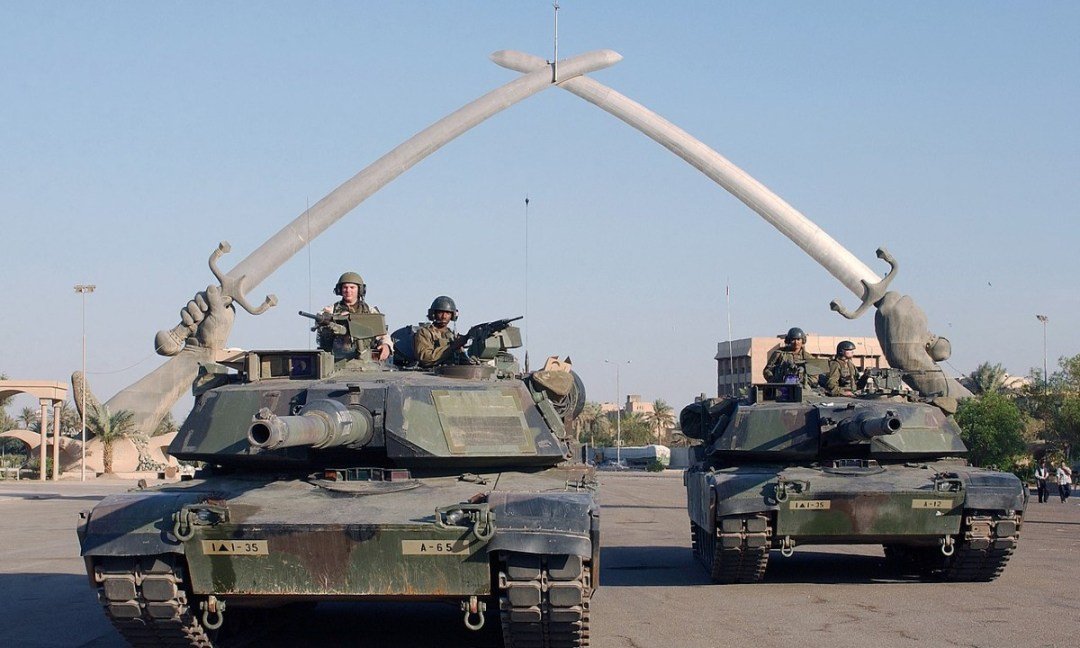
In this episode of the Urban Warfare Project Podcast, John Spencer sits down with retired General David Perkins to examine one of the most consequential urban operations in modern military history: the 2003 Battle of Baghdad and the armored “thunder runs” that collapsed Saddam Hussein’s regime. Drawing from his firsthand experience as the commander of 2nd Brigade Combat Team, 3rd Infantry Division during the battle, General Perkins recounts how roughly a thousand American soldiers conducted two thunder runs—rapid and aggressive assaults into Baghdad—and during the second seized and held the center of a city of six million against entrenched Republican Guard forces. He describes how US soldiers overwhelmed stiff enemy resistance with speed, combined arms integration, disciplined mission command, and relentless momentum.
General Perkins walks listeners through the major events and decision points in the intense urban battle, from the fight at Objective Saints and the first armored push to the airport to the second run into the regime district where the brigade had to decide whether to withdraw or stay. He explains the challenges of maintaining interior lines of communication, securing bridges under fire, pushing fuel and ammunition forward, evacuating casualties, and conserving combat power in a dense and hostile city. At critical moments, including the four-hour fuel decision point, success depended not on perfect information but on soldiers who understood the commander’s intent and acted with disciplined initiative. The result was not simply a tactical penetration, but the rapid collapse of organized resistance in the Iraqi capital.
You can listen to the episode below or find it on Apple Podcasts, Stitcher, Spotify, TuneIn, or your favorite podcast app. Be sure to subscribe, and if you’re enjoying the Urban Warfare Project Podcast, please take a minute and leave the podcast a review or give it a rating!
Image credit: Technical Sergeant John L. Houghton, Jr., US Air Force
