

Key Points
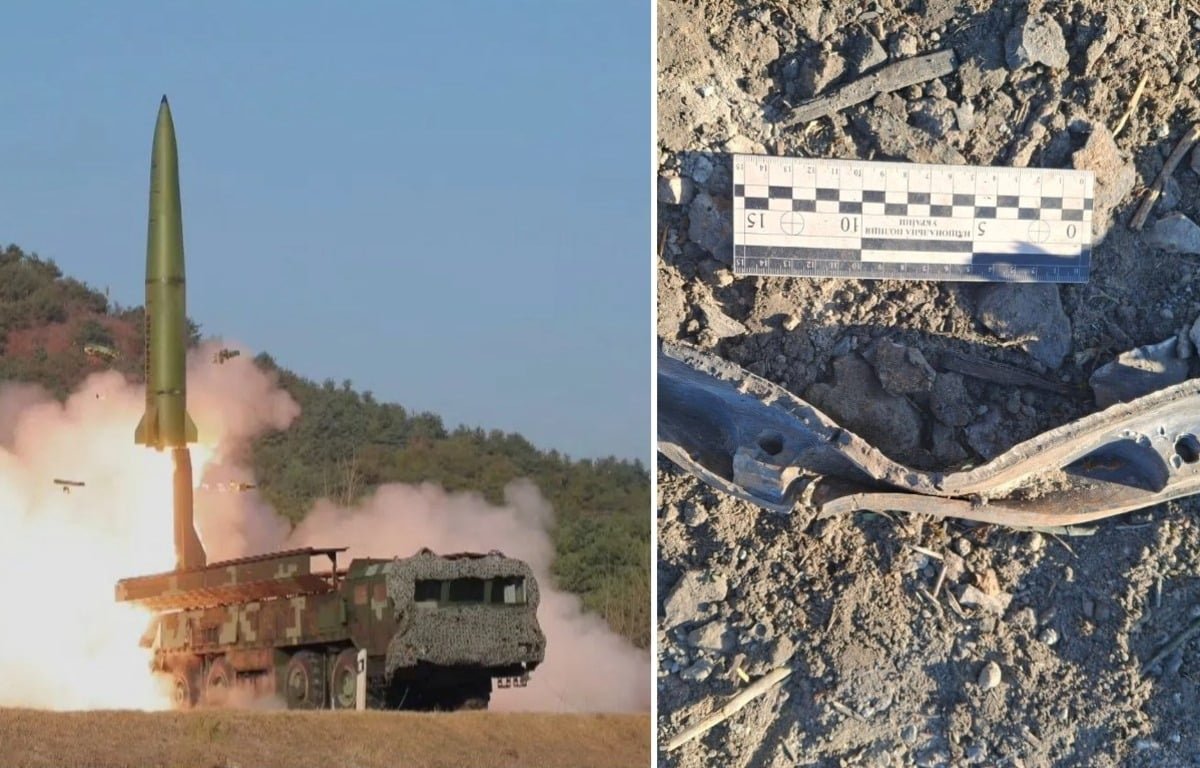
- Ukrainian officials confirmed a second North Korean KN-23 ballistic missile crater was found 3.5 kilometers (2.2 miles) from a strike that killed six people in Radushne on July 30, 2026.
- Presidential commissioner Vladyslav Vlasiuk said the KN-23 closely mirrors Russia’s Iskander-M missile and shares identical components, including Western-made parts.
Investigators have found a second impact crater from a North Korean ballistic missile fired at Ukraine, and the distance between that crater and the ruins of a family home that killed six people tells its own story about how these weapons actually behave once they leave the launch pad.
Vladyslav Vlasiuk, the Ukrainian president’s commissioner for sanctions policy, confirmed the discovery in a statement, identifying the missile as a KN-23, a North Korean short-range ballistic missile that closely mirrors Russia’s own Iskander-M system in both design and performance. Vlasiuk said Russia fired the missile during a broader overnight assault on Ukraine on July 30, 2026, and that this second missile struck an open field rather than a populated area.
“A crater from the fall of a second North Korean ballistic missile KN-23, which Russia used during the shelling of Ukraine on July 30, has been found,” Vlasiuk said.
– ADVERTISEMENT – CONTINUE READING BELOW –
That second missile came down roughly three and a half kilometers (2.2 miles) from where the first KN-23 struck a private home in the village of Radushne, near the city of Kryvyi Rih, in an attack that killed six people, including three children, according to Vlasiuk. He said five minors from the same household remained unaccounted for in the immediate aftermath. The KN-23 is a nuclear-capable, road-mobile ballistic missile North Korea has developed and tested extensively over recent years, and its close resemblance to the Russian Iskander-M has led military analysts to describe it as functionally interchangeable with Russia’s own arsenal, a similarity Vlasiuk pointed to directly in explaining why the weapon matters beyond this single strike.
Vlasiuk drew particular attention to the physical gap between where the two missiles actually landed, using it to make a pointed argument about the weapon’s accuracy and what that accuracy suggests about the intended target of the strike that killed the Radushne family.
“The first missile of this type hit a private home in Radushne near Kryvyi Rih. Six people died, including three children, and five minors are considered missing. The second KN-23 exploded in a field. Between these ‘hits’ is 3.5 km. There are no potential targets within a 5 km radius. Such precision,” Vlasiuk said.
That framing carries real weight because ballistic missiles like the KN-23 are marketed and designed as precision weapons, guided systems intended to strike a specific, predetermined target rather than falling somewhere in a general vicinity. A missile landing three and a half kilometers from where its companion actually killed civilians, in an area with no apparent military or infrastructure target nearby, raises the kind of accuracy and targeting questions that have repeatedly surfaced around Russian and North Korean missile strikes on Ukrainian population centers throughout the war, questions Vlasiuk’s statement leaves pointed but does not claim to resolve definitively.
Vlasiuk went on to detail the technical relationship between the KN-23 and its Russian counterpart, describing overlapping engineering that extends beyond simple design similarity into shared physical components.
“KN-23 is practically a full analog of the Russian Iskander. There are also identical components, including Western ones,” Vlasiuk said.
That claim of shared Western-origin components fits into a broader pattern Ukrainian officials and international investigators have documented repeatedly throughout the war, in which Russian weapons systems, despite sweeping international sanctions intended to cut Moscow off from Western technology, have continued turning up with foreign-manufactured electronics, sensors, and other critical parts sourced through complex international supply chains that sanctions enforcement has struggled to fully close. If North Korean-built missiles share those same components, it would suggest the sanctions evasion networks supplying Russia’s own missile programs extend into North Korea’s defense industry as well, either through direct technology transfer or a shared reliance on the same illicit supply routes.
Vlasiuk placed the KN-23 strike within the broader context of North Korea’s deepening military relationship with Russia, a partnership that has expanded substantially since Russia’s full-scale invasion of Ukraine began in February 2022.
“One of the examples of Russia’s dependence on North Korea’s military assistance. North Korean missiles kill Ukrainian civilians just like Russian ones do. And everyone who ensures the military partnership between Moscow and Pyongyang and the supply of critical components for the defense industry must bear responsibility for this,” Vlasiuk said.
North Korea’s support for Russia’s war effort has grown well beyond missile transfers alone in recent years, with Pyongyang reportedly supplying millions of artillery shells and, according to Ukrainian and Western intelligence assessments, thousands of North Korean troops deployed to support Russian operations, a partnership that has drawn sustained international condemnation and additional sanctions from Ukraine’s allies, none of which has so far stopped the flow of North Korean weapons reaching the front lines and, as this latest strike demonstrates, Ukrainian civilian neighborhoods hundreds of miles from any battlefield.
